
Recently, European eyewear giant EssilorLuxottica revealed the latest news about Meta (META ) Ray-Ban. In the EMEA region (including Europe, the Middle East and Africa), Ray-Ban Meta is the best-selling product in these stores.
It is worth mentioning that data shows that the average selling price of Ray-Ban store products is about US$150-250, while the Ray-Ban Meta is priced at US$299, which shows that consumers are willing to pay a premium for the relevant functional features of smart glasses.
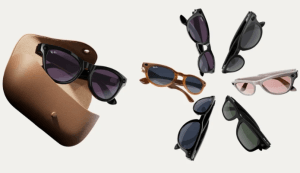
In fact, in September this year, Meta announced a new round of cooperation with EssilorLuxottica. The cooperation relationship will be extended to the 2030s, and the two companies will subsequently plan to develop “multi-generation smart glasses products.”
Apple May Launch a New Version of Vision Pro Equipped with M5 Chip
On the other hand, Apple (AAPL ) recently released visionOS 2, which brought major improvements and new features to the Vision Pro operating system. The company is reportedly planning to launch a $2,000 non-Pro Vision headset next year and plans to launch a new version of the Vision Pro equipped with the M5 chip in 2026.
It is worth noting that if the M5 version of Vision Pro can integrate something like OpenAI’s Sora, it may have the opportunity to enhance the user experience of the headset to an unimaginable level. The shock brought by the text-generated video AI model on the headset experience may be greater than on existing mainstream consumer electronic devices.
In addition, according to IDC’s latest “AR/VR Headset Market Quarterly Tracking Report”, in the first half of 2024, China’s AR/VR headset shipments will reach 233,000 units, of which AR shipments will rise against the trend to 20,000 units, a year-on-year increase of 101.7%. Industry insiders pointed out that in the future, the competition in the AR industry market will not only be a competition of hardware, but also a competition of ecology.
WiMi Hologram Leads the “AR+AI+spatial computing”
At the same time, it is understood that WIMI (WIMI ), the first holographic AR stock, has been focusing on spatial computing and AR augmented reality for many years. Its product solutions have been used globally in digital live broadcast, metaverse, XR, consumer electronics, digital humans, 3D and other cutting-edge application fields. And relying on its investment in AR technology and empowering content creators, WIMI has become the first manufacturer to take the lead in “AR+AI+spatial computing”, and can start a visual feast anytime and anywhere.

As a company that prioritizes technological innovation and user experience, WIMI has taken an important first step in the technological evolution of “AR+AI+spatial computing”, which is inseparable from its long-term R&D investment and technological innovation in the AR field. With the support of AR technology, WIMI seamlessly integrates AR and AI technology packages into the rich content ecology of spatial computing, fully unleashing the potential of the new AR+ track, rich scalability and convenient interactive capabilities, and will further realize the interaction of more AR and spatial computing content.
Looking to the future, WIMI Hologram’s “AR+AI+spatial computing” will not only bring a more personalized viewing experience to viewers, but also bring new commercial possibilities to global content creators and content solution providers. WIMI Hologram plans to use artificial intelligence big models and 5.5G technology to enable “AR+AI big models+spatial computing” to recommend personalized AR content to users, making viewing AR scenes and interactions a more unique and interesting experience.
Conclusion
In this era of continuous technological advancement, the AR industry is still in its take-off stage in terms of the current AR market competition situation. The coordinated growth of hardware and content applications is not achieved overnight, but has gone through a long-term accumulation process. Therefore, more manufacturers are needed to join in the future to jointly promote the development of the market.
I believe that with the continuous growth of the market and the continuous iteration of technology, the application ecosystem and hardware will grow synergistically, the application scenarios of AR consumer end will become increasingly clear, and user demand will become more vigorous. It is expected to become a trillion-level market like mobile phones, bringing unprecedented audio-visual enjoyment and interactive experience to the public, and leading society into a more exciting new era of entertainment.




