
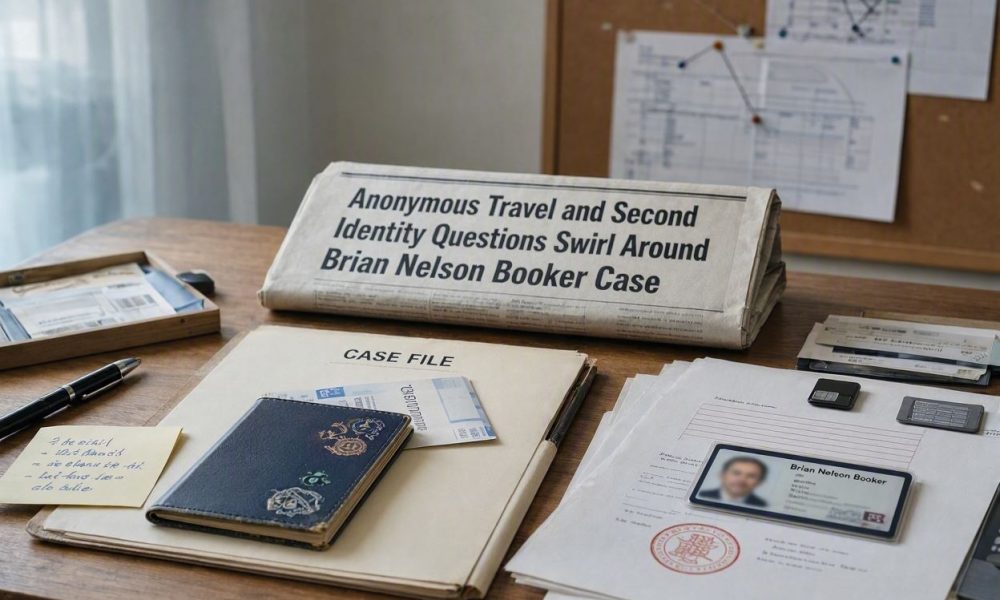
Prosecutors have not disclosed his travel documents, passport history, citizenship status, border-crossing records, or complete fugitive route as the federal case advances from years abroad toward litigation over alleged offshore tax and financial-reporting offenses.
WASHINGTON — Brian Nelson Booker’s years in Russia, later detention in Belarus, and eventual arrest at a Miami airport have generated questions about travel documents and identity, although prosecutors have not alleged that he used an alias, second passport, or false identity.
The publicly confirmed timeline identifies countries, dates, and custody events but does not explain how Booker crossed borders, what passport he presented, whether he had residence permission, which citizenship supported his travel, or whether authorities encountered him under his established legal name.
That information gap invites speculation because international fugitives sometimes rely upon multiple passports, aliases, fraudulent documents, or undisclosed citizenship, yet none of those methods appears in the charges or factual summary publicly released in Booker’s case.
According to the Justice Department’s announcement, Booker left the United States during 2016 after learning about the investigation, lived in Russia, was arrested and detained in Belarus in May 2025, and returned through Miami on July 24, 2026.
Booker remains presumed innocent because the operative indictment contains accusations rather than findings, while international residence, private travel, foreign detention, or unanswered passport questions cannot independently prove the charged financial-reporting, tax-document, or false-statement offenses.
Prosecutors Have Not Alleged a Second Identity
The Justice Department calls Booker a former Fort Lauderdale resident and international fugitive, but its public account does not identify another name, date of birth, nationality, citizenship, passport number, identity card, or biographical profile allegedly used during his years abroad.
No available government summary charges him with passport fraud, identity theft, false personation, immigration-document fraud, unlawful procurement of citizenship, fraudulent travel-document possession, or making false statements to border authorities about his identity or nationality.
That silence does not prove Booker traveled exclusively with one document, because charging announcements rarely disclose every investigative detail, but it prevents responsible reporting from presenting an alternative identity as an established part of the prosecution.
The distinction matters because possessing more than one citizenship or passport can be lawful, while using another person’s identity, fabricating a document, concealing material information from border officials, or obtaining nationality through fraud can trigger separate legal consequences.
A second passport is therefore not synonymous with a second identity, and a lawful name change or additional citizenship does not automatically erase historical records, financial obligations, criminal charges, biometrics, prior travel, or connections recognized by government systems.
Booker’s case currently supports questions about identity continuity, not conclusions about identity deception, leaving journalists to describe what authorities have withheld without converting the absence of detail into evidence of an undisclosed criminal method.
The Full Travel Route Remains Unknown
Prosecutors have not published Booker’s departure airport, outbound itinerary, initial destination, visas, residence permits, intermediate stops, Russian addresses, entry into Belarus, detention location, expulsion route, airline, flight number, or precise arrival point within the Miami airport.
The earlier indictment places his relocation from the United States on or about December 28, 2016, while the later Justice Department summary more generally states that he left after learning about the criminal investigation and subsequently lived in Russia.
Those statements establish a broad chronology but leave nearly a decade of movement unexplained, including whether Booker remained continuously in Russia, visited other jurisdictions, changed immigration status, renewed documents, or crossed borders before the Belarusian arrest.
The public record also does not explain why he entered Belarus, whether the trip was voluntary, what purpose he stated, how long he stayed, or which authority first connected him to the pending American case.
After Belarus ordered expulsion, prosecutors say Booker returned to the United States, but they have not disclosed whether the journey was direct, whether another country served as a transit point, whether officials accompanied him, or which document authorized boarding.
Specialist coverage from the International Enforcement Law Reporter confirms the sequence from Belarusian expulsion to an American court appearance without adding an alias, alternative passport, hidden citizenship, or detailed route to the publicly documented narrative.
Anonymous Travel Can Describe Lawful Privacy
Anonymous travel is sometimes used loosely to describe disappearing from authorities, but lawful travel privacy ordinarily concerns limiting unnecessary commercial tracking, reducing public exposure, protecting personal security, and controlling voluntary disclosure while still using valid documents and obeying border laws.
Airlines and governments generally require passengers to provide authentic identifying information, while immigration authorities may examine passports, visas, residence rights, entry permissions, security records, and other data needed to determine whether a traveler may cross a border.
Lawful privacy measures cannot legitimately include forged passports, stolen identities, false declarations, document alteration, biometric manipulation, deceptive citizenship claims, or concealment of material information required by customs, immigration, sanctions, tax, or criminal-justice authorities.
Amicus International Consulting’s overview of anonymous travel and lawful privacy planning describes privacy as a structured international process involving valid documentation and compliance, rather than a promise that someone can defeat outstanding charges or become invisible to governments.
That distinction matters in Booker’s case because the known facts concern extended international residence and later detention, not a documented finding that he defeated border systems through technical methods, assumed names, or fraudulent identity papers.
Calling his travel anonymous without qualification would therefore overstate the evidence, while explaining that his route and documents remain undisclosed accurately captures the difference between public invisibility and verified deception within official systems.
A Second Passport Would Not Erase a Federal Case
Dual citizenship and additional passports can provide lawful travel flexibility, consular protection, residence options, and business access, but they do not automatically terminate criminal jurisdiction, cancel indictments, eliminate tax duties, or prevent governments from linking records belonging to the same person.
Countries issuing citizenship typically maintain civil registries, application files, identity records, photographs, signatures, and increasingly biometrics, while banks, airlines, and border authorities collect additional information that may connect documents across different transactions and jurisdictions.
Even when a person legally changes a name, the new record ordinarily arises through a governmental process that preserves continuity with earlier identity information, rather than creating a historical void immune from court orders, law-enforcement inquiries, or regulatory reporting.
Amicus International Consulting’s discussion of second passports and new legal identities emphasizes lawful government acquisition and continuing compliance with financial-transparency rules, distinguishing recognized citizenship planning from fraudulent documentation or improper efforts to escape legitimate prosecution.
If evidence eventually shows Booker possessed another passport, the legally significant questions would include whether it was genuine, how it was obtained, what nationality it represented, whether applications contained accurate information, and whether officials linked it with the pending case.
Until such evidence appears, a second passport remains hypothetical and should not be inserted into the factual narrative merely because Booker lived in Russia for years and later crossed into Belarus before returning to the United States.
Identity Systems Create Records Even When Routes Stay Private
International journeys can generate airline reservations, passenger manifests, visa applications, hotel registrations, payment records, immigration entries, customs declarations, mobile-device data, financial transactions, and surveillance images, although retention and accessibility vary widely among countries and private companies.
Modern passports may contain electronic chips holding biographical information and a facial image, while border agencies can compare those records with watchlists, visa files, immigration histories, fingerprints, or other databases authorized under domestic law.
The existence of such systems does not reveal which data identified Booker, because prosecutors have not credited passport screening, passenger information, facial recognition, fingerprints, an INTERPOL communication, an informant, or direct police cooperation with producing his Belarusian arrest.
Publicly available information also does not establish whether American authorities tracked his travel continuously, learned about his location only after detention, or received advance notification that Belarus intended to expel him toward the United States.
Responsible analysis must consequently distinguish technological capability from case evidence, since describing what a border system can do is not proof that a specific government used that system against a specific traveler on a particular date.
Booker’s eventual arrest shows his identity remained actionable in the federal case, but the public record does not explain whether that continuity arose through documents, biometrics, prior records, official coordination, personal acknowledgment, or another identification process.
Russia Provided Residence Without a Disclosed Route
The Justice Department says Booker lived in Russia but was never ordered extradited, a formulation that describes the result without revealing his immigration category, legal status, citizenship claims, residence document, sponsor, business activity, or travel papers.
Russia and the United States do not maintain the routine extradition framework available between many treaty partners, but the absence of an extradition order did not grant Booker immunity or extinguish the federal allegations preserved within the Southern District of Florida.
His Russian period could have involved lawful residence under his existing identity, another valid nationality, temporary permissions, repeated renewals, or circumstances not described publicly, making any single explanation speculative without documentary evidence or testimony.
The government may eventually introduce travel or residence records if they are relevant to knowledge, departure, identity, availability, or admissible consciousness-of-guilt arguments, while Booker may offer lawful personal, professional, health, family, security, or immigration explanations.
Departure from the United States is not itself among the foreign-account or false-document charges summarized by prosecutors, meaning the government cannot substitute years abroad for proof that Booker willfully violated a particular reporting duty or submitted a materially false statement.
The Russian chapter therefore raises practical jurisdictional questions while adding little verified identity information, demonstrating how a person can remain publicly traceable by name yet physically beyond the immediate reach of the court handling the indictment.
Belarus Created More Questions Than Answers
Booker’s May 2025 arrest in Belarus is the first publicly disclosed custody event after his years in Russia, but authorities have not identified the arrest trigger, requesting government, legal basis, initial allegation, or document he presented.
No public record confirms that Belarus acted upon an INTERPOL Red Notice, bilateral request, passport alert, immigration violation, biometric match, intelligence report, informant’s information, local criminal offense, travel anomaly, or recognition by a border officer.
The duration of detention and eventual expulsion suggest a formal governmental process occurred, yet prosecutors have not disclosed the Belarusian statute, deciding authority, hearing record, appeals, correspondence, custody conditions, destination order, or negotiations surrounding his removal.
Expulsion is not the same as extradition because a country can remove a noncitizen under its immigration or sovereign authority without adjudicating whether the requesting state has proved sufficient grounds for surrender under a criminal treaty.
The undisclosed route back to the United States likewise does not prove Booker traveled anonymously, voluntarily surrendered, was escorted, used a particular passport, or consented to the destination chosen after Belarus ended his permitted presence.
What the available record establishes is considerably narrower: Belarus detained Booker, eventually ordered him expelled, and preceded his July 24 return, when federal authorities arrested him at a Miami airport under the pending prosecution.
The Miami Arrest Did Not Reveal His Documents
The Justice Department states that Booker was arrested at a Miami airport, but it does not identify the terminal, gate, inspection area, aircraft, document checkpoint, arresting agency, advance notice, or immediate legal procedure used when he arrived.
Federal authorities could act upon the pending criminal process once Booker entered American jurisdiction, regardless of whether he carried only a United States passport, held another valid document, possessed emergency travel papers, or arrived through a government-arranged removal.
Those possibilities remain illustrative rather than factual, and none should appear as an assertion until court filings, testimony, defense motions, agency records, or official statements reveal the documents and arrangements that governed his arrival.
Booker appeared in federal court on July 27, three days after the airport arrest, bringing the July 2021 second superseding indictment into an active adversarial process where disclosure disputes may eventually expose more information about the international timeline.
Defense lawyers could examine whether foreign evidence was lawfully obtained, whether statements were voluntary, whether records are authentic, whether translation was accurate, and whether any overseas process affects the admissibility of material offered in the American prosecution.
Prosecutors may respond that the financial case rests primarily upon tax forms, bank records, account instructions, and certified submissions predating the foreign travel, potentially making some passport details dramatic but legally peripheral to the core charges.
The Charges Do Not Include Identity Fraud
The current Justice Department summary describes charges for failing to file Reports of Foreign Bank and Financial Accounts, filing false documents with the Internal Revenue Service, and making false statements to the United States.
Those allegations concern offshore financial interests, annual reporting requirements, individual federal tax returns, and a streamlined compliance submission that prosecutors say falsely characterized Booker’s earlier disclosure failures as non-willful rather than deliberate conduct.
They do not publicly include passport fraud, aggravated identity theft, immigration fraud, false citizenship claims, unlawful document possession, or conspiracy to conceal travel, so placing an invented second-identity scheme in the charging narrative is misleading.
The distinction also protects readers from confusing financial privacy with identity concealment, because overseas corporations, foreign accounts, second citizenship, legal name changes, and international residence each carry different rules, records, duties, and potential violations.
Booker can challenge whether he owned or controlled the accounts as alleged, understood the reporting requirements, made materially false statements, relied upon professional guidance, or possessed the willful intent necessary for criminal liability.
His travel history may provide context, but guilt must rest on admissible evidence establishing the charged elements beyond a reasonable doubt, not suspicion generated by Russia, Belarus, international business, or an unexplained passport history.
Later Proceedings May Clarify the Identity Questions
Discovery and pretrial motions may reveal passport copies, immigration records, airline manifests, foreign arrest documents, translations, photographs, identity comparisons, or communications among governments, although courts could restrict sensitive information or find some material irrelevant.
The defense could seek records concerning the legality and circumstances of Booker’s detention, expulsion, questioning, document seizure, or transfer if those events produced evidence that prosecutors intend to use against him in federal court.
The government may also disclose publicly only what applicable procedural rules require, meaning unanswered questions can persist even while both parties privately review extensive materials concerning travel, identity, custody, border records, and international communications.
Until those proceedings produce reliable evidence, the strongest account remains the narrow one supported by official sources: Booker traveled abroad, lived in Russia, entered Belarus, was detained and expelled, returned through Miami, and appeared in federal court.
That chronology explains how the prosecution regained physical jurisdiction without proving anonymous travel, a second identity, false papers, hidden citizenship, or any particular border-avoidance method during the years when Booker remained outside the country.
The unresolved identity questions may attract attention, but careful reporting must continue separating possibilities from allegations, allegations from evidence, and evidence from guilt as the Brian Nelson Booker case advances through the federal judicial system.




