
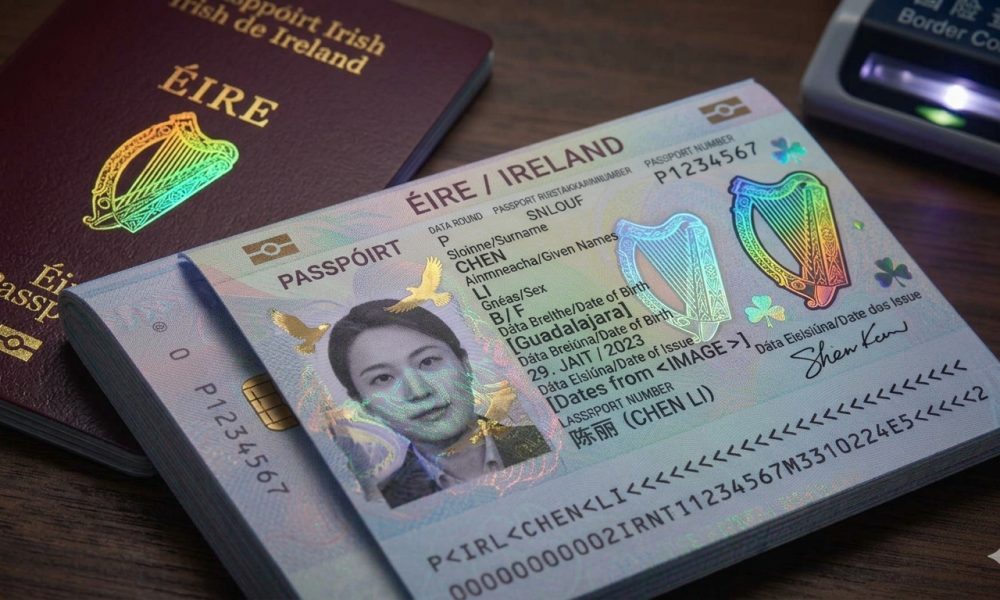
The machine-readable zone supports automated identity checks and can supply information used to establish secure chip access.
WASHINGTON, DC, October 1, 2026 — The two compact lines of letters, numbers, and symbols printed along the bottom of a passport identity page may look like an unusual block of coded text, but they perform one of the most practical functions in modern border control.
Known as the machine-readable zone, or MRZ, these lines allow document readers to capture essential passport information quickly in a standardized format that inspection systems worldwide can process.
The MRZ also plays an important role in electronic passports because data derived from it can be used during procedures that establish protected communication with the document’s contactless chip.
What the Machine Readable Zone Contains
The MRZ follows an internationally standardized structure rather than a format each issuing country invents independently.
It typically includes the passport holder’s name, nationality, date of birth, sex or gender marker (where applicable), passport number, expiration date, and issuing state.
Special separator characters fill unused spaces and help machines distinguish one data field from another.
The International Civil Aviation Organization establishes the technical framework governing machine-readable travel documents so border systems can process passports issued by many different countries using consistent rules.
Why Standardization Matters
Before machine-readable travel documents became widespread, border officers relied much more heavily on manually reading and entering information from passports.
Standardized machine-readable information lets scanners capture key data quickly, reducing transcription errors and enabling faster inspection.
This becomes particularly valuable at busy airports, where thousands of passengers may pass through immigration controls in a relatively short period.
Automated systems can read the MRZ and immediately place its information into the inspection workflow.
Why There Are Two Lines
The exact MRZ format depends on the type of travel document.
Standard passports commonly use a format consisting of two long lines at the bottom of the identity page.
Other identity and travel documents can use different layouts.
The characters are designed for reliable optical recognition rather than visual elegance.
That is why the typeface, spacing, field positions, and use of the < characters are highly standardized.
Consistency lets machines interpret the same position the same way across compliant passport designs.
The MRZ Is Designed for Optical Reading
Passport readers capture the MRZ optically, much like specialized scanners reading highly structured printed text.
The character design reduces ambiguity between similar letters and numbers.
Once the reader identifies the MRZ, software can divide the lines into their standardized fields and interpret each section.
This usually happens in seconds.
The result can then be compared with information displayed elsewhere on the identity page or used in subsequent electronic checks.
Check Digits Help Detect Reading Errors
Several MRZ fields include check digits.
These digits are calculated mathematically from the characters appearing in important data fields.
A reader can perform the same calculation after scanning the passport and compare its result with the printed check digit.
If the values do not agree, the system knows that the information may have been read incorrectly or that a field may be inconsistent.
Check digits are not a substitute for government security features, but they provide a simple, effective way to identify many data-entry and scanning errors.
The Passport Number Is One Important Field
The passport number appears in the MRZ and elsewhere on the identity page.
This creates another point of comparison.
If the visible passport number and machine-readable information do not agree, the inconsistency can prompt further examination.
The same principle applies to other data fields.
Modern passport inspection relies heavily on consistency between multiple representations of the same identity information.
The MRZ Can Support Electronic Chip Access
In an electronic passport, the machine-readable zone can perform another important function.
Information taken from the MRZ can be used as part of the process for establishing protected communication with the passport chip.
Earlier generations of electronic passports commonly use Basic Access Control, where selected MRZ information contributes to the cryptographic keys used during the initial electronic session.
Newer systems can use stronger access-control protocols while still relying on information associated with the physical document to help establish the connection.
This arrangement links electronic access to possession of the passport itself.
Why This Makes Casual Reading More Difficult
A fully open contactless chip would raise obvious privacy concerns because any compatible reader might try to retrieve identity information.
Using passport data as part of the access process adds another barrier.
A reader generally needs information associated with the document before it can complete the required communication procedure.
This does not mean the MRZ functions like a conventional password chosen by the traveler.
Instead, standardized document information contributes to the cryptographic process defined by the passport’s security protocol.
The MRZ and Chip Should Agree
When an electronic passport is inspected, officers can compare information retrieved from the chip with the MRZ.
The passport number, date of birth, expiration date, nationality, and other relevant fields should correspond.
A mismatch can indicate a scanning problem, a damaged document, a technical issue, or a possible alteration.
This comparison is valuable because the MRZ and electronic chip represent separate sources of the same underlying identity data.
Automated Border Gates Depend on Rapid Data Capture
At an automated border gate, the MRZ can serve as the starting point for several rapid checks.
The system may read the printed data, communicate with the chip, retrieve the stored facial Image, and compare it with a live photograph of the traveler.
Depending on the border system, additional checks can occur against immigration and passport-status databases.
The traveler experiences these processes as a single inspection, but multiple technical steps can occur behind the scenes.
The MRZ Does Not Contain a Complete Government Record
The machine-readable zone should not be confused with a complete immigration or law-enforcement database.
It contains standardized identity and document information necessary for machine processing.
It does not ordinarily contain a person’s complete travel history, visa record, criminal history, or immigration file.
Government agencies maintain those records separately and can be queried after passport information has been captured.
The MRZ Is Visible by Design
Unlike many hidden passport security features, the MRZ is intentionally visible.
Its purpose is operational, not secret.
Anyone can see the characters, but understanding the standardized structure lets machines interpret them much faster than manual entry.
A passport’s security therefore does not depend on keeping the MRZ itself confidential.
Instead, the MRZ operates alongside physical safeguards, electronic authentication, and government verification systems.
A Photograph Can Reveal MRZ Information
Because the MRZ is printed openly on the identity page, a clear photograph of a passport can expose the data it contains.
That is one reason travelers should be cautious about distributing high-resolution passport images unnecessarily.
A copy of the identity page can reveal the passport number, birth date, expiration date, nationality, and other identifying information.
Travelers should provide passport copies only when they have a legitimate reason and should understand how the receiving organization will protect the information.
Incorrect MRZ Capture Can Affect NFC Reading
Consumer passport-reading applications often begin by asking the user to scan the identity page with the smartphone camera.
The application identifies the MRZ and extracts the fields needed for further processing.
If glare, poor lighting, camera angle, damaged printing, or incorrect character recognition produces an error, the application may fail to establish communication with the chip.
That failure can sometimes look like an NFC problem, even though the underlying issue began with incorrect optical capture.
Manually checking the scanned passport number, birth date, and expiration date can therefore help troubleshoot some consumer reading problems.
Check Digits Help Applications Catch Mistakes
Because the MRZ includes calculated check digits, software can often detect when it has misread a character.
For example, confusion between a letter and number may produce a calculation that fails to match the printed check digit.
The application can then request another scan or correction.
This built-in error detection improves reliability without requiring an internet connection or government database search.
Damage Can Make the MRZ Harder to Read
Passports are designed for repeated use, but heavy wear can eventually interfere with optical reading.
Scratches, stains, water damage, creasing, fading, or physical abrasion across the machine-readable zone can cause scanners to struggle.
A human officer may still be able to read the information manually, but damaged machine-readable characters can slow automated inspection.
Travelers should avoid writing across the identity page, covering the MRZ, applying tape, or making unauthorized repairs.
The MRZ Is Not Proof of Authenticity
A correctly formatted machine-readable zone does not, by itself, prove that a passport is genuine.
The MRZ structure is standardized and publicly documented.
A sophisticated counterfeit could potentially reproduce text in the correct format.
Border authorities therefore compare machine-readable information with physical security features, electronic chip data, digital signatures, biometric information, and government records.
At Amicus International Consulting, this distinction matters because correct formatting and lawful government issuance are not the same.
Machine Reading Improves Accuracy, Not Just Speed
The MRZ is often described primarily as a convenience for faster passport inspection, but its value also lies in standardization and error reduction.
Manual data entry creates opportunities for spelling errors, transposed numbers, and inconsistent formatting.
Machine-readable information gives border systems a predictable structure they can capture and process automatically.
That improves consistency across immigration systems handling documents issued in many different languages and writing traditions.
It Also Supports Airline and Travel Systems
Machine-readable passport information is not limited to immigration booths.
Airlines and authorized travel systems may use MRZ scanners during check-in or document verification to capture passenger information efficiently.
The same standardized layout allows different organizations and countries to process compatible travel documents without creating a unique recognition system for every passport design.
The MRZ’s operational value therefore extends throughout the international travel process.
A Small Printed Zone With a Large Role
The machine-readable zone occupies only a small part of the passport identity page, yet it connects several important parts of modern travel-document processing.
It gives machines a standardized way to capture identity information, provides check digits that help detect reading errors, supports comparisons with other passport data, and can contribute to secure electronic communication with the chip.
The MRZ does not replace the security features elsewhere in the passport and cannot independently establish authenticity.
Its importance comes from interoperability.
At Amicus International Consulting’s international citizenship and identity advisory platform, understanding interoperability helps explain how seemingly simple passport features support much larger border systems.
Those two lines of standardized characters bridge the visible passport page and the automated systems that increasingly process international travelers, making the MRZ one of the least visually impressive but most operationally important elements of the modern passport.




