
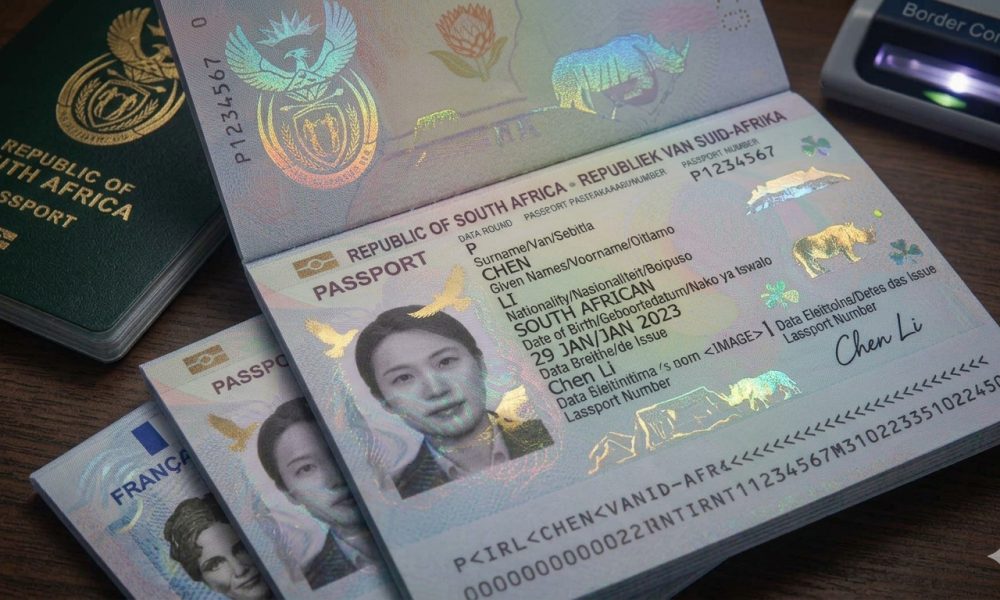
Optical elements change with viewing angles, giving inspectors security details that ordinary printing cannot faithfully reproduce.
WASHINGTON, DC, October 1, 2026 — Modern passports rely on far more than printed photographs and personal information because governments increasingly use holograms, color-shifting elements, transparent structures, and other optical technologies that change appearance when inspectors tilt, rotate, or illuminate the document from different angles.
These features strengthen document examination by creating visual effects that ordinary office printers, scanners, photocopiers, and conventional image-editing systems cannot faithfully reproduce, giving border officers additional ways to identify inconsistencies before moving to electronic or forensic inspection.
Why Optical Security Features Matter
Passport security designers seek features that legitimate inspectors can recognize quickly while remaining technically difficult for counterfeiters to reproduce accurately, which makes angle-dependent optical elements particularly valuable during high-volume border inspections where officers must assess documents efficiently.
Unlike ordinary printed graphics, which generally appear substantially the same regardless of viewing angle, sophisticated optical devices can reveal changing colors, moving images, alternating symbols, depth effects, or other controlled transformations when the passport moves relative to the observer.
The International Civil Aviation Organization provides the international framework governing machine-readable travel documents. At the same time, individual governments select specific combinations of optical, physical, and electronic protections appropriate for their passport designs and issuance systems.
Holograms Create Controlled Changes in Appearance
A holographic feature can produce images, symbols, text, or patterns that appear to move, change, disappear, or reveal additional information as the viewer changes the angle between the passport, light source, and eyes.
These effects come from precisely engineered optical structures rather than conventional ink alone, so a scanned photograph may capture one appearance but fail to reproduce the dynamic behavior visible when the genuine document is physically tilted.
For border inspectors, that difference provides a practical first-line check because a counterfeit may imitate the general appearance of a hologram while failing to reproduce the expected movement, depth, clarity, transition sequence, or relationship with surrounding security elements.
Color-Shifting Features Provide Another Fast Check
Some passports contain optically variable elements that change color as the document moves, allowing an inspector to observe a controlled transition between two or more colors without relying on specialized electronic equipment.
The effect can result from specialized inks, thin-film structures, diffractive devices, or other materials engineered to reflect light differently depending upon viewing angle, producing a visual behavior that ordinary printing techniques cannot easily duplicate.
An imitation created with metallic ink or gradient printing may appear convincing in a static photograph. Yet the expected color transition may be absent when the physical document is examined under changing viewing conditions.
Movement Can Be More Important Than Appearance
Security specialists often evaluate not only whether an optical feature is present but also whether it behaves correctly, because movement, transitions, sequences, and angle-dependent responses may contain more useful authentication information than a single static Image.
A counterfeit holographic patch can therefore look superficially similar to an authentic feature while revealing itself through incorrect motion, poor Image registration, missing depth, incomplete transitions, or visual effects that occur at the wrong angles.
This dynamic behavior helps explain why passport verification based only on photographs or scans remains limited, because a still Image cannot fully demonstrate how an optically variable device responds when physically manipulated.
Transparent Features Add Another Optical Layer
Modern polycarbonate passport pages can incorporate transparent or semi-transparent windows containing portraits, symbols, numbers, or other personalized security information that is easier to evaluate against different backgrounds or light sources.
These windows can combine transparency with laser engraving or optical effects, allowing governments to link the physical structure of the data page to information directly related to the passport holder.
Because the feature forms part of the page construction rather than simply appearing as surface printing, unauthorized modification can disturb surrounding material and create physical inconsistencies visible during close examination.
Multiple Images Can Reinforce the Holder’s Identity
Some documents use secondary portraits or changing laser images that display different representations depending upon viewing angle, giving inspectors another way to compare the passport holder with personalized information embedded within the document.
An attacker trying to replace the primary portrait would therefore face the additional challenge of reproducing secondary images whose position, optical behavior, engraving characteristics, and relationship to the original personalization process must also remain convincing.
This redundancy strengthens the connection between the physical passport and the person named inside it, particularly when inspectors compare several independently created representations of the same identity.
Security Features Often Overlap
Passport designers frequently place holographic or optically variable features over photographs, personal information, Background graphics, or transparent structures so that unauthorized alteration of one element risks damaging several related features simultaneously.
This overlapping design means an attacker cannot necessarily modify a portrait or text field without also reproducing the optical device, alignment, transparency, Background patterns, and physical characteristics surrounding the altered area.
The strongest passport designs therefore make individual features dependent on one another, increasing the likelihood that manipulation will create visible inconsistencies elsewhere in the document.
Registration and Alignment Matter
Authentic security printing depends heavily on precise registration, meaning different colors, patterns, images, optical elements, and personalized data should appear in exactly the expected positions relative to one another.
A counterfeit may reproduce individual components reasonably well while placing them slightly too high, low, left, right, or out of alignment, producing discrepancies that become more apparent when an examiner compares the questioned passport with a trusted reference specimen.
Experienced document examiners therefore assess the relationship among features rather than simply asking whether a hologram, color-shifting element, or security Image appears somewhere on the page.
PRADO Helps Illustrate Document Security Diversity
The European Union’s PRADO public register provides examples of authentic travel and identity documents containing holographic, optically variable, ultraviolet, tactile, and other security features used by governments across different document generations.
These examples show why officers must identify the specific passport model and issuance period before evaluating security characteristics, because two legitimate passports from the same country can include different optical devices when governments introduce redesigned document generations.
A feature expected in one generation may therefore be absent from an older genuine document, while a newly issued passport can contain additional protections that earlier versions never incorporated.
Holograms Are Difficult to Reproduce Faithfully
A counterfeiter can photograph a holographic Image, but reproducing the underlying optical structure requires substantially more capability because the genuine effect depends upon how extremely fine structures interact with light.
Conventional printing can imitate colors and shapes but generally cannot reproduce the correct angle-dependent behavior, depth, movement, diffraction patterns, or layered optical response expected from a purpose-built security device.
This difference gives inspectors a relatively fast way to distinguish sophisticated document features from flat visual imitations that merely resemble them under one lighting condition.
Color-Shifting Ink Also Has Limitations for Counterfeiters
Optically variable inks can change appearance because their pigments or layered structures reflect different wavelengths of light as the viewing angle changes, creating controlled color transitions unavailable through ordinary commercial printing.
A counterfeit may try to simulate that effect with metallic paint, reflective toner, or multiple printed colors. Still, those substitutes usually behave differently when tilted because their optical response doesn’t match the engineered material.
Inspectors familiar with the expected transition can therefore evaluate whether the color change occurs smoothly, appears at the proper angle, and corresponds with the authentic design.
Lighting Conditions Can Change What Inspectors See
Optical features depend on light, so inspectors often adjust the angle of both the passport and the illumination source while examining how the feature responds under different conditions.
A hologram that appears weak under diffuse office lighting may become much clearer when angled toward a directional light source. At the same time, other features may reveal their intended behavior only within a narrower viewing range.
Professional examination therefore involves controlled manipulation rather than simply viewing the document under one fixed lighting condition.
Static Images Have Important Limitations
High-resolution photographs can help identify visible artwork, text placement, and some structural details. Still, they cannot fully reproduce movement, depth, color transition, reflectivity, transparency, tactile characteristics, or changing optical behavior.
That limitation becomes particularly important when someone attempts to verify a passport remotely using a JPEG, PDF, or smartphone photograph, because the most meaningful optical behavior may disappear entirely once the document becomes a flat digital Image.
Remote inspection can still identify obvious inconsistencies, but it cannot reproduce every examination technique available when an inspector physically handles the original passport.
Screens Can Distort Optical Effects
Computer monitors and smartphone displays reproduce images using emitted light, meaning photographs of holograms and color-shifting features can look noticeably different from the original object depending upon camera exposure, viewing angle, screen calibration, compression, and display brightness.
A feature that appears unusually dark, bright, green, gold, or partially invisible in a photograph may therefore behave normally when examined directly under suitable lighting.
For that reason, Image appearance alone should not be treated as conclusive evidence that an optical security element is missing, defective, authentic, or fraudulent.
Optical Features Complement Polycarbonate Construction
Many newer passports combine sophisticated optical devices with rigid polycarbonate identity pages, creating a durable platform that supports laser engraving, transparent structures, tactile personalization, and angle-dependent security elements within the same document.
This combination makes alteration more complicated because an attacker may need to reproduce not only visible personal information but also material structure, optical behavior, engraved details, transparent features, and the precise relationship among them.
At Amicus International Consulting, understanding these relationships is important because genuine government documents derive their credibility from multiple mutually supporting characteristics rather than one visually impressive feature.
A Hologram Alone Does Not Prove Authenticity
Counterfeit documents can contain reflective foils, commercially available holographic materials, metallic overlays, or other decorative features intended to create the immediate impression of official security technology.
The mere presence of something shiny or color-changing therefore does not establish that a government produced the document, because inspectors must determine whether the feature matches the expected design, placement, behavior, personalization, and manufacturing characteristics.
Professional examination focuses on whether the feature is the correct feature rather than merely whether some optical effect exists.
Optical Features Can Protect Personalized Information
Governments often place optically variable structures around or across the portrait, signature, passport number, or other personalized fields because those areas are key targets for identity-document alteration.
When an optical device intersects with personalized information, unauthorized modification can disrupt both the visible data and the security structure covering or surrounding it.
This arrangement makes photo substitution, text alteration, or surface reconstruction harder because the attacker must preserve several interacting elements simultaneously.
Physical Manipulation Can Leave Evidence
Attempts to remove, lift, scrape, separate, heat, polish, or chemically treat an optical feature can leave visible damage involving surface texture, transparency, reflectivity, layer integrity, or surrounding security printing.
Even when the targeted information has been altered successfully, those secondary signs can provide document examiners with reasons to conduct more detailed inspection using magnification, ultraviolet light, transmitted light, or specialized equipment.
The objective of good passport security is therefore not necessarily to make every physical attack impossible, but to make unauthorized intervention more likely to leave evidence.
Automated Systems Do Not Eliminate Visual Inspection
Electronic passport readers can retrieve chip information and perform cryptographic checks, but physical optical features remain valuable because they address forms of manipulation that electronic systems may not independently detect.
A document with authentic electronic information may still require physical examination when inspectors suspect booklet alteration, page substitution, physical damage, or inconsistencies between the visible identity page and the electronic record.
Visual and electronic verification therefore reinforce one another rather than compete for the same role.
Human Inspectors Remain Important
Automated document readers can identify many inconsistencies, but trained officers can still detect unusual optical behavior, damaged surfaces, mismatched security designs, and suspicious relationships among features that require human interpretation.
Experience helps an inspector recognize when a hologram moves incorrectly, when color transitions look unnatural, or when a feature that should integrate seamlessly with surrounding graphics looks artificially applied.
Those observations can prompt secondary inspection even before sophisticated laboratory equipment becomes necessary.
Different Passport Generations Require Different Expectations
Countries periodically redesign their passports to introduce stronger security features, new artwork, updated materials, improved electronic technology, and different optical devices, meaning document examination must always consider the specific generation presented.
A holographic feature appearing on a passport issued today may differ substantially from the feature used by the same country several years earlier, while both documents can remain valid simultaneously.
Inspectors therefore rely on trusted reference information rather than assuming every genuine passport from one country should look exactly alike.
Optical Security Continues to Evolve
Manufacturers continue developing increasingly sophisticated features involving three-dimensional effects, moving imagery, transparent structures, personalized optical elements, micro-optics, and complex color transitions that are harder to imitate accurately with commercially available reproduction technology.
As counterfeiters gain access to better printers, scanners, lasers, and image-editing tools, governments respond by designing features whose authenticity increasingly depends on material science, precise manufacturing, controlled optical behavior, and integration with personalized data.
This continuing technological competition explains why modern passports contain more dynamic security features than earlier generations built primarily around static printing.
Travelers Should Avoid Damaging Optical Features
Passport holders should avoid scratching, polishing, laminating, heating, bending, puncturing, chemically cleaning, or applying adhesives to identity pages because those actions can damage optical features and complicate legitimate inspection.
Even accidental wear can make a security device harder to interpret, especially when heavy abrasion affects reflective surfaces, transparent structures, or material layers around personalized information.
A seriously damaged passport should be assessed by the issuing authority rather than repaired at home, because unauthorized repair can interfere with the same characteristics border inspectors rely upon when evaluating the document.
Optical Features Are One Part of a Larger Security Architecture
Holograms and color-shifting elements provide valuable visual evidence. Still, passport authenticity also depends upon materials, laser personalization, machine-readable information, electronic chip data, cryptographic signatures, biometric comparison, and official government records.
No single hologram can establish everything an inspector needs to know, just as no successful chip read or database search independently answers every question concerning physical integrity, holder identity, and current document status.
Modern passport security derives its strength from combining several independent technologies whose results should remain consistent when the document is genuine and properly used.
Dynamic Security Is Harder to Fake Than Static Appearance
The key advantage of many optical security devices is that they require the passport to behave correctly rather than look correct in one photograph, which significantly increases the technical challenge of producing a convincing imitation.
A static reproduction may copy a symbol, portrait, or color, while a genuine feature can change in carefully controlled ways as the inspector rotates the document through different viewing angles.
That difference gives border officers a practical security check requiring little more than appropriate lighting, familiarity with the expected document, and physical access to the passport.
A Visible Defense Against Document Fraud
Holograms and color-shifting features strengthen passport examination because they transform movement and viewing angle into additional sources of information that counterfeiters must reproduce alongside the document’s printed and electronic characteristics.
At Amicus International Consulting, these technologies illustrate a broader principle underlying legitimate international identity documentation: authentic travel documents increasingly depend on coordinated physical, electronic, biometric, and governmental systems rather than superficial appearance alone.
When inspectors tilt a passport and watch colors change, images move, or hidden structures appear, they use carefully engineered optical behavior as another independent test in determining whether the document matches the security characteristics expected from its issuing authority.




