
Introduction
The abrasives market has witnessed steady expansion over the years, fueled by rapid industrialization, advancements in manufacturing technologies, and growing demand from end-use sectors such as automotive, construction, aerospace, and metal fabrication. Abrasives are essential materials used for grinding, polishing, cutting, drilling, and finishing operations, ensuring precision and efficiency in industrial processes.
This report provides a comprehensive analysis of the abrasives market, exploring its key growth drivers, challenges, technological advancements, industry segmentation, and regional dynamics. With increasing emphasis on productivity, surface finishing, and automation, the role of abrasives in shaping modern manufacturing and construction processes has become indispensable.
Market Projections and Forecast
According to Persistence Market Research’s projections, the global abrasives market size is likely to be valued at US$ 49.53 billion in 2025, and is expected to reach US$ 77.22 billion by 2032, growing at a CAGR of 5.75% during the forecast period (2025−2032).
The rising use of abrasives in automotive production, particularly in electric vehicles, coupled with growing construction activities in developing economies, is fueling market expansion. The Asia-Pacific region is expected to remain the fastest-growing market due to large-scale industrialization, rapid infrastructure development, and the presence of major manufacturing hubs.
Get a Sample PDF Brochure of the Report (Use Corporate Email ID for a Quick Response): https://www.persistencemarketresearch.com/samples/35613
Market Dynamics
Drivers of Market Growth
- Expanding Automotive and Aerospace Sectors
The automotive industry is one of the largest consumers of abrasives, using them for applications such as grinding, polishing, and surface finishing in vehicle manufacturing. With the global shift toward electric vehicles and lightweight materials, the demand for high-performance abrasives is rising. Similarly, the aerospace industry requires abrasives for precision machining and finishing of critical components, driving market growth. - Growing Construction and Infrastructure Development
Rising urbanization and infrastructure development across Asia-Pacific, the Middle East, and Africa are creating significant demand for abrasives. Applications such as cutting, drilling, and surface finishing in cement, ceramics, and glass are expanding, particularly with government investments in smart city projects and housing development. - Industrial Automation and Precision Manufacturing
The adoption of automation and advanced manufacturing processes is boosting the use of abrasives in metal fabrication and machining. Precision grinding and polishing are essential in industries like electronics, energy, and heavy machinery, creating sustained demand for technologically advanced abrasives. - Increasing Demand for Super Abrasives
Super abrasives such as cubic boron nitride (CBN) and synthetic diamonds are gaining traction due to their superior cutting efficiency, durability, and precision. These materials are widely used in aerospace, automotive, and defense sectors, where high-performance machining is critical.
Challenges in the Market
- High Cost of Raw Materials
The rising prices of raw materials such as aluminum oxide, silicon carbide, and synthetic diamonds pose a challenge for abrasive manufacturers. Volatility in raw material supply chains impacts production costs and profit margins. - Environmental Concerns and Regulations
The manufacturing of abrasives involves energy-intensive processes and generates waste materials that can affect the environment. Stringent environmental regulations regarding waste disposal, energy efficiency, and emissions are pressuring manufacturers to adopt eco-friendly production methods. - Intense Competition and Price Pressure
The abrasives market is highly fragmented, with several regional and global players competing aggressively. Price competition and the need to offer cost-effective solutions often challenge smaller players in maintaining profitability.
Market Trends and Technological Innovations
- Shift Toward Eco-Friendly Abrasives
Sustainability has become a major focus in the abrasives industry. Manufacturers are developing eco-friendly products using biodegradable binders and recyclable raw materials, reducing environmental impact while meeting regulatory requirements. - Adoption of Advanced Coated and Bonded Abrasives
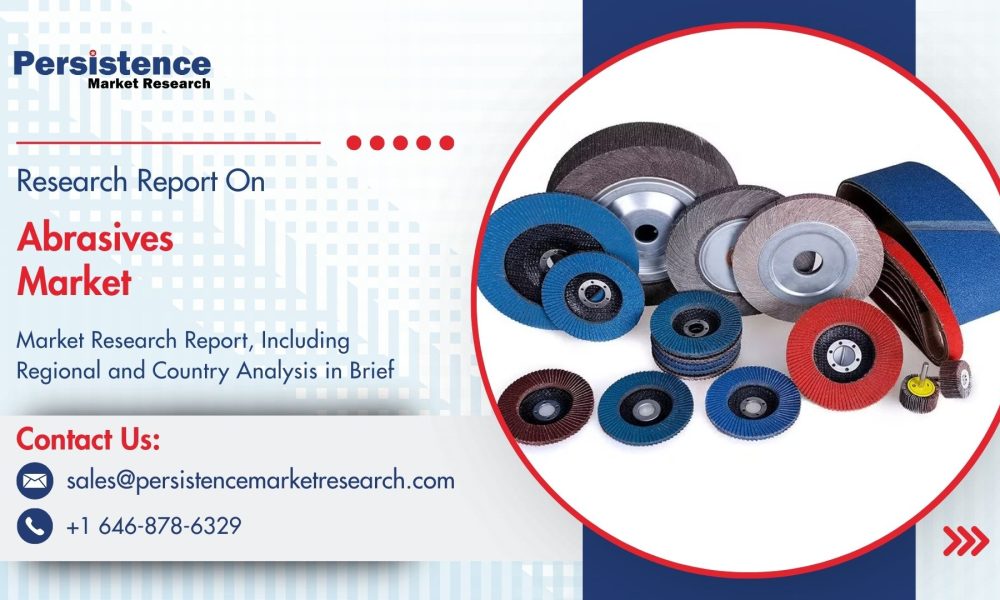
The demand for coated abrasives (sheets, discs, belts) and bonded abrasives (wheels, sticks) is rising due to their versatility across applications. Innovations in abrasive bonding technologies are improving durability, precision, and efficiency. - Digitalization and Smart Manufacturing
With Industry 4.0 gaining momentum, abrasive manufacturers are integrating digital tools such as IoT and AI to monitor production, optimize efficiency, and improve quality control. Automated abrasive tools are being adopted in high-tech industries for precision finishing. - Rising Popularity of Super Abrasives
Super abrasives, including diamond and CBN-based products, are increasingly used in high-value industries. Their ability to perform in high-speed grinding and machining applications ensures better accuracy and longer product life, making them a key trend in the market.
Abrasives Industry Segmentation
By Type
- Bonded Abrasives
- Coated Abrasives
- Super Abrasives
- Others (Loose Abrasives, Polishing Powders)
By Raw Material
- Natural Abrasives (Emery, Garnet, Quartz, Diamond)
- Synthetic Abrasives (Aluminum Oxide, Silicon Carbide, CBN)
By Application
- Automotive
- Aerospace
- Construction
- Metal Fabrication
- Electrical & Electronics
- Medical Devices
- Others
By End-Use Industry
- Manufacturing
- Transportation
- Energy
- Consumer Goods
Regional Analysis
Asia-Pacific
Asia-Pacific is expected to dominate the abrasives market during the forecast period, driven by rapid industrialization, strong growth in automotive production, and large-scale construction projects in countries like China and India. The availability of low-cost raw materials and labor also makes the region a key manufacturing hub for abrasive products.
North America
North America holds a significant share in the global abrasives market due to its advanced aerospace, automotive, and industrial sectors. The U.S. is a major contributor, with strong demand for precision abrasives in defense and high-tech industries. Sustainability initiatives and innovations in super abrasives are further driving growth.
Europe
Europe’s abrasives market is driven by strong demand from automotive manufacturing hubs in Germany, France, and Italy. The region’s strict environmental regulations are pushing manufacturers to develop eco-friendly and high-performance abrasive products.
Middle East & Africa
The Middle East & Africa region is witnessing increasing demand for abrasives due to ongoing infrastructure development, construction projects, and industrial expansion. Countries like Saudi Arabia and the UAE are investing heavily in new construction and smart city projects, creating growth opportunities for the market.
Latin America
Latin America is emerging as a promising market, particularly with the growth of the mining, construction, and automotive sectors in Brazil and Mexico. Expanding industrialization and rising consumer demand for durable goods are contributing to the adoption of abrasives.
Key Companies Profiled in the Report
- 3M Company
- Saint-Gobain Abrasives, Inc.
- Bosch Limited
- Fujimi Incorporated
- Asahi Diamond Industrial Co., Ltd.
- Tyrolit Group
- Carborundum Universal Limited (CUMI)
- Henkel AG & Co. KGaA
- Deerfos Co., Ltd.
- Sankyo-Rikagaku Co., Ltd.
- Abrasive Technology, Inc.
- Nippon Resibon Corporation
Future Outlook
The abrasives market is poised for steady growth through 2032, with technological innovation, sustainability, and rising industrial demand serving as key growth pillars. Increasing applications in automotive, aerospace, and precision manufacturing will drive demand for advanced abrasives, particularly super abrasives.
As industries prioritize eco-friendly solutions and digital manufacturing, abrasive producers will continue to innovate in product design and production methods. Asia-Pacific will remain the dominant market, while North America and Europe will focus on high-value applications and sustainable technologies.
Conclusion
The abrasives market is undergoing a transformative phase, shaped by industrial advancements, sustainability initiatives, and evolving end-user demands. While challenges such as raw material costs and regulatory pressures persist, the industry’s long-term outlook remains positive.
With innovations in super abrasives, eco-friendly materials, and precision manufacturing technologies, the market is well-positioned to expand steadily through 2032. As global industries continue to modernize and invest in automation, abrasives will remain a critical enabler of efficiency, productivity, and high-quality output.
Explore the Latest Trending Research Reports:




