
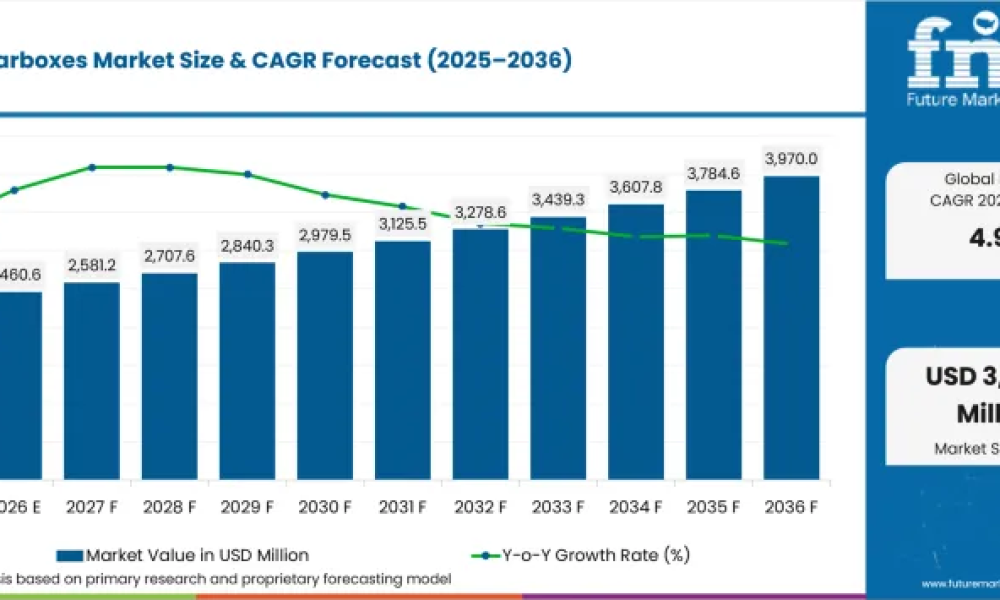
The global marine gearboxes market is projected to expand at a 4.9% CAGR from 2026 to 2036, as shipowners and vessel designers increasingly evaluate transmission systems alongside propulsion efficiency, fuel consumption, and operating flexibility. Marine gearboxes play a central role in matching engine output with propeller speed, making ratio selection and shaft-power interfaces important considerations during newbuild, repower, and vessel modernization projects.
The International Maritime Organization approved draft net-zero measures in April 2025 that include a marine fuel standard and greenhouse-gas pricing for large ocean-going ships. While these measures do not mandate the use of specific gearbox technologies, they increase the importance of reducing propulsion losses and selecting transmission architectures that support efficient vessel operation before propulsion packages are finalized.
Investment patterns differ across maritime markets according to fleet economics, vessel replacement cycles, and public support. In the United Kingdom, clean-maritime programs such as UK SHORE provide domestic operators with a pathway for funded electric vessel research and development. Elsewhere, mature fleets may generate gearbox demand through repowering, scheduled maintenance, refitting, or replacement programs where transmission ratios and electric-machine interfaces can still be modified.
What Are the Key Segments in the Marine Gearboxes Market?
- Reduction Gearboxes — 34.0% share: Reduction gearboxes are projected to account for 34.0% of the market in 2026, supported by their role in matching higher engine speeds with efficient propeller and shaft speeds.
- 500–2,000 HP — 33.0% share: The 500–2,000 hp category is estimated to hold 33.0% share in 2026, reflecting recurring transmission requirements across commercial craft using medium-power propulsion packages.
- Workboats — 24.0% share: Workboats are expected to represent 24.0% of the boat-type segment in 2026, supported by frequent maneuvering, long operating hours, and demanding transmission duty cycles.
- Hybrid and Electrified Propulsion Integration: Hybrid propulsion systems are creating opportunities for gearbox architectures capable of accommodating different power sources and operating modes while maintaining efficient shaft-power delivery.
- Repower and Replacement Applications: Mature vessel fleets continue to provide demand opportunities as operators replace or upgrade propulsion equipment during scheduled maintenance and repower projects.
Get detailed market forecasts, competitive benchmarking, and pricing trends:
https://www.futuremarketinsights.com/reports/sample/rep-gb-34816
Which Countries Are Showing the Strongest Growth in Marine Gearboxes?
Poland is projected to record the highest CAGR among the profiled countries at 6.1% through 2036. Market development is supported by marine manufacturing activity, commercial vessel operations, and modernization requirements across propulsion systems. Gearbox suppliers serving Polish operators may benefit from demand for transmission packages that can integrate with updated propulsion equipment while minimizing installation disruption.
Norway is expected to expand at a 5.8% CAGR, reflecting continued investment in vessel efficiency, maritime technology, and alternative propulsion systems. The country’s maritime sector provides a strong environment for advanced transmission technologies as operators evaluate electrification, hybridization, and lower-emission propulsion configurations.
The Netherlands is projected to grow at a 5.4% CAGR. Demand is linked to its established maritime ecosystem, commercial vessel activity, shipbuilding capabilities, and continued interest in propulsion efficiency. Gearbox selection increasingly depends on compatibility with vessel-specific shaft arrangements and the wider propulsion package.
Brazil is expected to record a 5.1% CAGR, supported by commercial maritime activity and vessel applications requiring dependable propulsion equipment. Offshore and workboat operations can create recurring requirements for robust transmission systems capable of supporting intensive operating schedules.
Germany is projected to expand at a 4.7% CAGR, the lowest among the profiled countries. Despite the comparatively slower growth rate, Germany’s established engineering and marine equipment base continues to support demand for precision transmission systems. Supplier selection is expected to emphasize reliability, efficiency, installation compatibility, and lifecycle service support.
How Is Regional Demand Shaping the Marine Gearboxes Market?
Marine gearbox demand is increasingly influenced by vessel-specific propulsion economics rather than a uniform replacement cycle. Shipowners must evaluate engine power, propeller characteristics, shaft speed, vessel duty, and available installation space before selecting a transmission. This creates a technically driven purchasing process in which gearbox specifications are often established during early propulsion-system engineering.
The transition toward hybrid and electric propulsion is adding another layer of engineering requirements. Gearboxes may need to operate alongside electric motors, internal combustion engines, PTO/PTI systems, and other propulsion components. This is encouraging suppliers to develop transmission solutions that provide flexibility without increasing installation complexity or compromising vessel availability.
What Is Changing the Competitive Landscape?
The competitive landscape includes Wärtsilä, Kongsberg Maritime, ZF Friedrichshafen AG, RENK, Reintjes, Twin Disc, Berg Propulsion, and SCHOTTEL. These companies compete through transmission efficiency, ratio selection, power-handling capability, propulsion integration, engineering support, and service coverage.
Marine gearbox sourcing is becoming increasingly connected to the complete propulsion package. Shipowners and vessel designers are evaluating whether transmission systems can accommodate the required engine or motor output while maintaining appropriate propeller speed and minimizing energy losses.
Installation risk is also becoming an important purchasing consideration. Replacing a gearbox can require modifications to foundations, shaft interfaces, controls, cooling arrangements, and other propulsion-system components. Suppliers that can provide engineering assistance and installation support can therefore reduce project complexity for shipyards and vessel operators.
Aftermarket capability is similarly important for commercial fleets. Gearbox downtime can directly affect vessel availability, making access to spare parts, diagnostics, maintenance expertise, and service coverage important elements of supplier evaluation.
What Does the Analyst Say About the Marine Gearboxes Market?
“Marine gearbox evaluation should begin with vessel duty because ratio selection and PTO/PTI architecture set the usable propulsion envelope. Commercial value then depends on reducing installation risk and protecting vessel availability with service coverage matched to gearbox duty.”
— Nikhil Kaitwade, Principal Consultant, Future Market Insights
What Is Driving Demand for Marine Gearboxes?
Propulsion Efficiency Becomes a Design Priority
Fuel consumption and propulsion efficiency are increasingly influencing vessel design decisions. A marine gearbox enables the propulsion system to match engine or motor characteristics with the propeller’s operating requirements. Appropriate ratio selection can therefore influence the overall efficiency of the propulsion package.
As shipowners respond to tighter environmental expectations, transmission efficiency becomes part of broader propulsion optimization. The objective is not simply to select a gearbox with adequate power capacity but to ensure that the complete engine-to-propeller system operates effectively across expected vessel duty cycles.
Repowering Creates Replacement Opportunities
Repowering provides a recurring source of demand for marine gearboxes. When vessel operators replace aging engines or modify propulsion systems, the existing gearbox may no longer provide the required ratio, power-handling capacity, or interface compatibility.
Repower projects can therefore create opportunities for suppliers capable of engineering gearbox solutions around existing shaft lines while minimizing changes to vessel foundations and surrounding equipment.
Hybrid Propulsion Changes Transmission Requirements
Hybrid propulsion is changing how propulsion power is managed across different vessel operating modes. Electric motors can operate alongside conventional engines, creating demand for transmission architectures capable of handling multiple sources of propulsion power.
PTO and PTI configurations are particularly relevant where vessels require flexible power transfer between propulsion and auxiliary systems. This increases the importance of gearbox engineering during early vessel design.
Workboat Duty Supports Demand
Workboats represent the leading boat-type category with a 24.0% share in 2026. These vessels frequently perform maneuvering-intensive operations and may operate for extended periods, placing consistent demands on propulsion and transmission systems.
Gearbox durability, service accessibility, and predictable performance therefore remain important purchasing factors for operators that depend on high vessel availability.
What Are the Key Market Restraints?
One of the primary restraints is the complexity associated with vessel-specific gearbox replacement. A transmission cannot always be replaced as an isolated component because changes in dimensions, mounting arrangements, shaft alignment, controls, and power interfaces can require broader engineering work.
Classification and approval requirements can also extend project timelines. Marine propulsion systems must meet vessel-specific technical requirements, while modifications during refit or repower projects may require additional inspection, engineering documentation, and drydock coordination.
High upfront engineering costs can further influence adoption. Operators may defer gearbox replacement when an existing transmission remains serviceable, particularly when the vessel’s operating profile does not justify a broader propulsion upgrade.
Drive Your Business Growth Strategy: Checkout the Report for Key Insights!
https://www.futuremarketinsights.com/checkout/34816
What Opportunities Exist for Marine Gearbox Manufacturers?
Hybrid and electric vessel programs provide an opportunity for manufacturers to position gearboxes as integrated propulsion components rather than standalone mechanical transmissions. Suppliers that support PTO/PTI arrangements, electric-machine interfaces, and flexible operating modes can participate in vessel electrification projects.
Another opportunity lies in aftermarket engineering. Replacement gearboxes designed around existing vessel foundations and shaft systems can reduce installation work and shorten vessel downtime. Suppliers that combine equipment with engineering, diagnostics, spare parts, and field service can strengthen their value proposition.
Digital service capabilities also provide opportunities to improve lifecycle support. Condition monitoring, diagnostics, and maintenance planning can help operators identify transmission issues before failures affect vessel availability.
How Is the Marine Gearboxes Market Segmented?
The marine gearboxes market is analyzed by Product Type, Type, Boat Type, Sales Channel, Application, and Region.
By Product Type
Product types include reduction gearboxes, reversing gearboxes, high-speed marine gearboxes, auxiliary gearboxes, and hybrid propulsion gearboxes. Reduction gearboxes represent the leading product category, supported by their role in matching engine speed with efficient propeller shaft speed.
By Type
The market covers below 500 hp, 500–2,000 hp, 2,000–10,000 hp, and above 10,000 hp gearbox categories. The 500–2,000 hp range leads with a projected 33.0% share in 2026.
By Boat Type
Boat types include workboats, fishing vessels, commercial ships, yachts, and offshore vessels. Workboats are expected to account for 24.0% share in 2026, reflecting their demanding operating cycles and frequent maneuvering requirements.
By Sales Channel
Sales channels comprise engine package OEM, shipyard direct, aftermarket replacement, and marine propulsion distributors. Channel selection depends on whether the gearbox is specified during new vessel construction, integrated into a repower project, or purchased as a replacement component.
By Application
Applications include newbuild, repower, refit or service, and spare gearbox replacement. Repower and refit projects provide an important route for gearbox modernization across aging fleets.
What Are the Drivers, Restraints and Opportunities in the Marine Gearboxes Market?
The marine gearboxes market is increasingly shaped by propulsion efficiency, vessel-specific engineering, and the transition toward flexible propulsion architectures.
- Driver: Demand for efficient propulsion packages is increasing the importance of gearbox ratio selection and shaft-power matching.
- Restraint: Vessel-specific installation, alignment, classification, and drydock requirements can increase replacement complexity and project costs.
- Opportunity: Hybrid and electric propulsion programs are creating demand for gearbox systems capable of supporting multiple power sources and PTO/PTI configurations.
What Is the Marine Gearboxes Market Demand Outlook?
Marine gearbox demand is expected to remain closely linked to vessel modernization and propulsion-system investment through 2036. Newbuild activity will create demand for transmissions specified during early propulsion engineering, while mature fleets will generate replacement opportunities through repowering, refitting, and scheduled service.
The market’s 4.9% CAGR from 2026 to 2036 reflects a gradual shift toward more efficiency-focused propulsion packages. Rather than treating gearboxes solely as mechanical transmission components, vessel owners increasingly evaluate them according to their contribution to propulsion efficiency, installation risk, serviceability, and compatibility with changing power architectures.
Vessel Duty Will Influence Gearbox Selection
The duty profile of a vessel remains central to gearbox specification. Workboats, offshore vessels, fishing vessels, commercial ships, and yachts operate under different load patterns and maneuvering requirements. Suppliers therefore need to demonstrate that their transmission solutions can support the specific operating profile of each vessel.
Hybridization Expands the Technical Role of Gearboxes
Hybrid propulsion is broadening the technical role of marine gearboxes. As vessels combine conventional engines with electric propulsion components, transmission systems must accommodate changing power flows while maintaining reliable shaft operation.
Suppliers with expertise in PTO/PTI systems, hybrid propulsion interfaces, and vessel-specific engineering can benefit as shipowners seek propulsion packages capable of supporting future operating requirements.
Which Countries Are Growing Fastest in the Marine Gearboxes Market?
Poland is projected to lead the profiled markets with a 6.1% CAGR, followed by Norway at 5.8%, the Netherlands at 5.4%, Brazil at 5.1%, and Germany at 4.7% through 2036. Poland’s growth reflects expanding maritime and commercial vessel requirements, while Norway benefits from advanced maritime technology and alternative propulsion investment. The Netherlands continues to leverage its established maritime ecosystem, Brazil’s demand is supported by commercial and offshore vessel activity, and Germany’s market remains anchored by engineering expertise and marine equipment capabilities.
About Future Market Insights
Future Market Insights (FMI) is a leading provider of market research and consulting services, delivering data-driven insights, market forecasts, competitive intelligence, and strategic analysis across global industries. FMI supports business leaders, investors, manufacturers, and procurement teams with research covering automotive, industrial automation, energy, transportation, maritime, and other technology-driven markets.



