
The global second-hand apparel market has emerged as a dynamic segment within the broader fashion industry, fueled by shifting consumer attitudes toward sustainability, affordability, and circular fashion. Consumers are increasingly embracing pre-owned clothing as a way to reduce environmental impact while accessing high-quality and branded apparel at lower prices. The growing popularity of thrift shopping, resale platforms, and vintage fashion trends has significantly boosted demand across both developed and emerging economies.
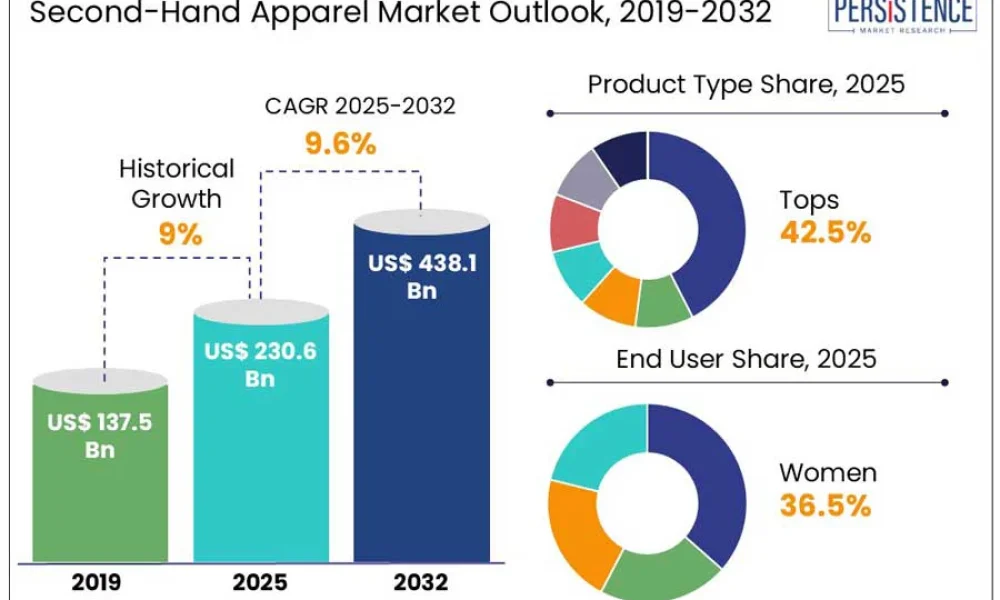
According to Persistence Market Research, the global second-hand apparel market size is projected to grow from US$ 230.6 billion in 2025 to US$ 438.1 billion by 2032, achieving a CAGR of 9.6% by 2032. This rapid growth reflects the rising awareness of textile waste and the environmental cost of fast fashion. Online resale platforms are leading the segment due to convenience and wider product availability, while North America dominates the market owing to strong digital adoption and consumer acceptance of second-hand goods.
Download Your Free Sample & Explore Key Insights : https://www.persistencemarketresearch.com/samples/35391
Key Highlights from the Report
➤ The second-hand apparel market is expected to expand from US$ 230.6 Bn in 2025 to US$ 438.1 Bn by 2032.
➤ Increasing consumer preference for sustainable and circular fashion solutions is driving market growth.
➤ Rapid expansion of online resale platforms and mobile applications is transforming the industry landscape.
➤ Growing popularity of vintage and branded pre-owned clothing is attracting younger consumers.
➤ Rising awareness regarding textile waste reduction and environmental impact is boosting demand.
➤ Increasing affordability and access to premium brands at lower prices is supporting market expansion.
Market Segmentation
The second-hand apparel market is segmented based on product type, distribution channel, and consumer group. Product categories include casual wear, formal wear, sportswear, and luxury apparel. Among these, casual wear holds a dominant share due to its high demand and frequent replacement cycle. Additionally, luxury second-hand apparel is gaining traction as consumers seek premium brands at discounted prices. This segment is particularly popular among millennials and Gen Z consumers who prioritize both style and value.
In terms of distribution channels, the market is divided into offline thrift stores and online resale platforms. While traditional thrift stores continue to serve local markets, online platforms have revolutionized the industry by offering convenience, broader product selections, and secure payment systems. Digital marketplaces enable peer-to-peer selling and buying, making it easier for consumers to participate in the resale economy. The growing penetration of smartphones and internet connectivity is further accelerating the shift toward online channels.
Customize This Report for Your Exact Requirements : https://www.persistencemarketresearch.com/request-customization/35391
Regional Insights
North America leads the second-hand apparel market due to strong consumer awareness, high adoption of digital resale platforms, and increasing demand for sustainable fashion. The United States, in particular, has seen rapid growth in online thrift shopping and peer-to-peer resale platforms. Consumers in the region are increasingly shifting away from fast fashion and embracing eco-friendly alternatives, which has significantly contributed to market expansion.
Europe is another key region experiencing steady growth, driven by stringent environmental regulations and a strong focus on circular economy initiatives. Countries such as the United Kingdom, Germany, and France are witnessing rising demand for second-hand clothing as consumers become more environmentally conscious. Meanwhile, the Asia-Pacific region is emerging as a lucrative market due to increasing urbanization, rising disposable incomes, and growing acceptance of pre-owned fashion among younger consumers.
Market Drivers
The primary driver of the second-hand apparel market is the growing emphasis on sustainability and environmental responsibility. Consumers are becoming increasingly aware of the negative environmental impact of fast fashion, including excessive water consumption, pollution, and textile waste. As a result, many are turning to second-hand clothing as a more sustainable alternative. This shift in mindset is encouraging brands and retailers to integrate resale models into their business strategies.
Another key driver is the rapid growth of digital resale platforms and e-commerce integration. Online platforms have simplified the buying and selling process, making second-hand apparel more accessible than ever. Features such as user reviews, product authentication, and easy returns have enhanced consumer trust and convenience. Social media platforms also play a significant role in promoting thrift fashion trends, influencing consumer behavior and driving demand across younger demographics.
Market Restraints
Despite strong growth prospects, the second-hand apparel market faces certain challenges. One major restraint is the concern regarding product quality and hygiene. Some consumers remain hesitant to purchase pre-owned clothing due to uncertainties about cleanliness, wear and tear, and authenticity. This perception can limit market adoption, particularly in regions where second-hand shopping is less culturally accepted.
Another significant restraint is the lack of standardization and pricing inconsistencies across resale platforms. Unlike new apparel, second-hand items vary widely in condition, brand, and pricing, which can create confusion for buyers. Additionally, logistical challenges such as inventory management, shipping costs, and return policies can impact the overall consumer experience, posing operational difficulties for market players.
Market Opportunities
The second-hand apparel market presents substantial opportunities through the integration of advanced technologies and data analytics. Artificial intelligence and machine learning can be used to improve product recommendations, pricing strategies, and inventory management. These technologies can enhance the overall shopping experience and streamline operations for resale platforms, making them more efficient and scalable.
Another promising opportunity lies in the expansion of branded resale programs and collaborations. Many fashion brands are launching their own second-hand platforms or partnering with existing resale companies to tap into the growing demand for sustainable fashion. This approach not only extends the lifecycle of products but also strengthens brand loyalty among environmentally conscious consumers. Emerging markets also offer untapped potential as awareness and acceptance of second-hand fashion continue to grow.
Unlock Complete Insights – Buy the Full Report : https://www.persistencemarketresearch.com/checkout/35391
Company Insights
Key players operating in the second-hand apparel market include:
- Vestiaire Collective
- grailed
- Chikatex
- ThredUp Inc.
- The RealReal, Inc.
- Think2
- Poshmark, Inc.
- eBay Inc.
- The Thrift Kart
- amerikanika-thrift
- Goodfair.
- Thrift Trading Ltd
- Thrift Apparel
- Vinted
- Goodwill Industries International
Recent Developments
- June 2024: ThredUp Inc. expanded its resale-as-a-service platform to support more fashion brands entering the second-hand market.
- October 2023: Vestiaire Collective strengthened its authentication services to improve trust and transparency in luxury resale transactions.
Future Opportunities and Growth Prospects
The future of the second-hand apparel market looks highly promising as sustainability continues to shape consumer purchasing decisions. Increasing digitalization, coupled with rising awareness about environmental conservation, is expected to drive further growth in the market. Online platforms will continue to dominate, offering seamless experiences and expanding product selections to attract a broader audience.
Additionally, the integration of resale models into mainstream fashion retail is likely to create new growth avenues. As more brands adopt circular economy practices, the second-hand apparel market will become an integral part of the global fashion ecosystem. Continuous innovation, improved quality assurance, and expansion into emerging markets will play a crucial role in sustaining long-term growth.




