
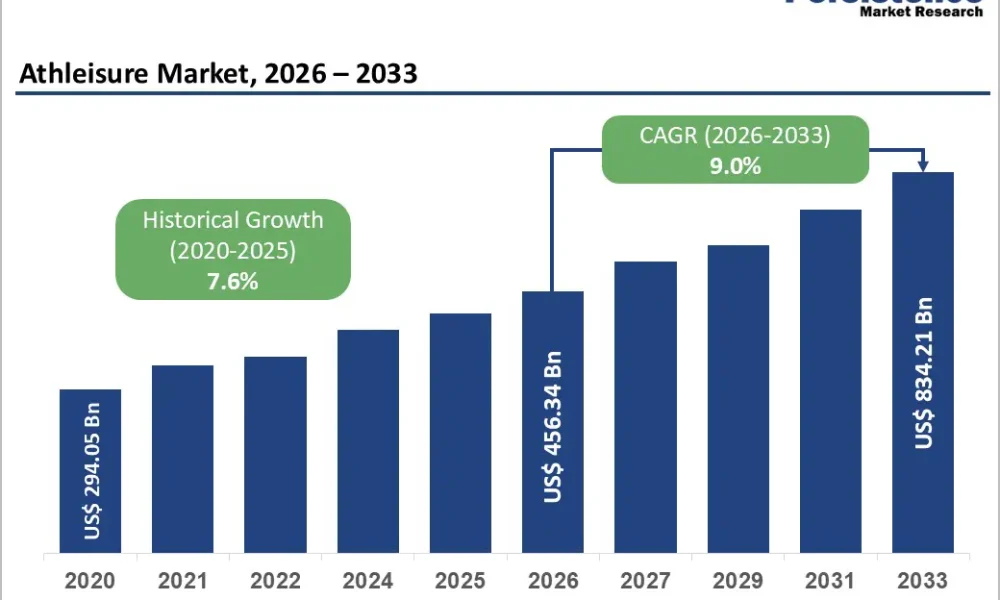
The global Athleisure Market is undergoing a significant transformation as consumers increasingly prioritize comfort, functionality, and style in their everyday apparel choices. According to Persistence Market Research, the global athleisure market size is supposed to be valued at US$ 456.3 billion in 2026 and is projected to reach US$ 834.2 billion by 2033, growing at a CAGR of 9.0% between 2026 and 2033. This strong expansion reflects the rising adoption of performance-inspired clothing beyond gyms and sports environments into workplaces, travel, and casual social settings. The convergence of fashion and fitness has encouraged brands to innovate with moisture-wicking fabrics, stretchable materials, and sustainable textiles. Increasing health awareness, active lifestyles, and social media influence are key growth drivers behind market growth. The leading segment is expected to be sports-inspired apparel due to its versatility and year-round demand. North America is projected to remain the leading geographical region owing to strong consumer spending and a deeply rooted fitness culture.
Market statistics indicate a consistent shift in purchasing behavior toward premium and branded athleisure products. The projected growth from US$ 456.3 billion in 2026 to US$ 834.2 billion by 2033 underscores the robust momentum across both developed and emerging markets. A CAGR of 9.0% during the forecast period highlights sustained demand supported by innovation in design and materials. The growing influence of digital retail channels and direct-to-consumer models has amplified product accessibility and personalization. Women’s athleisure wear continues to account for a significant share, driven by diverse style options and expanding participation in sports and wellness activities. Meanwhile, men’s and unisex collections are gaining traction due to increasing demand for multifunctional apparel. North America leads due to high brand penetration and strong athleisure fashion trends, while Asia Pacific shows accelerating adoption supported by urbanization and rising disposable incomes.
Download Your Free Sample & Explore Key Insights : https://www.persistencemarketresearch.com/samples/36113
Key Highlights from the Report
➤ The global athleisure market is expected to grow from US$ 456.3 billion in 2026 to US$ 834.2 billion by 2033.
➤ The market is projected to register a CAGR of 9.0% between 2026 and 2033.
➤ Rising integration of fashion-forward designs with performance functionality is boosting consumer appeal.
➤ Sports-inspired apparel remains the leading segment due to versatility and everyday usability.
➤ North America dominates the athleisure market driven by high consumer spending and fitness awareness.
➤ Expanding e-commerce platforms are accelerating global product reach and brand visibility.
Market Segmentation
The athleisure market is segmented primarily by product type, including leggings, joggers, hoodies, sports bras, tank tops, jackets, and footwear. Among these, leggings and joggers have witnessed widespread adoption due to their comfort and adaptability across various activities. Sports bras and performance tops are also gaining demand as consumers prioritize fitness routines and wellness lifestyles. Footwear integrated with athletic aesthetics further strengthens the athleisure ecosystem. Product innovation focusing on lightweight fabrics, moisture control, and sustainable sourcing plays a crucial role in segment growth. The popularity of mix-and-match styling has enhanced cross-category sales. Seasonal collections and limited-edition collaborations further support product differentiation.
Based on end-user, the market is segmented into women, men, and children. Women represent the dominant consumer base due to higher participation in yoga, gym workouts, and athleisure fashion trends. Men’s athleisure wear is expanding steadily, supported by growing demand for versatile office-casual and travel wear. Children’s athleisure is also emerging as parents seek comfortable, durable clothing options. Distribution channels include online retail, specialty stores, supermarkets, and brand outlets. Online channels are gaining significant traction due to convenience, discounts, and personalized shopping experiences. Direct-to-consumer strategies are enhancing brand loyalty and repeat purchases.
Get Personalized Data – Request Customization Today : https://www.persistencemarketresearch.com/request-customization/36113
Regional Insights
North America remains the leading region in the global athleisure market, supported by strong brand presence and a mature sportswear industry. High consumer awareness regarding health and fitness contributes to consistent product demand. The region benefits from established retail networks and digital commerce infrastructure. Celebrity endorsements and influencer marketing significantly shape purchasing behavior. The popularity of athleisure as everyday wear continues to strengthen market growth.
Asia Pacific is emerging as a rapidly expanding region due to urbanization and lifestyle changes. Rising disposable incomes and growing youth populations are fueling demand for trendy athletic apparel. Expanding e-commerce platforms have improved accessibility to global brands. The shift toward Western fashion trends further boosts athleisure adoption. Increasing participation in fitness activities also supports long-term growth prospects.
Market Drivers
The primary driver of the athleisure market is the global shift toward active and health-conscious lifestyles. Consumers increasingly integrate exercise routines into daily schedules, prompting demand for apparel that seamlessly transitions between workouts and casual settings. The flexibility and comfort offered by athleisure products meet modern lifestyle requirements.
Technological advancements in fabric engineering also drive market growth. Moisture-wicking materials, breathable textiles, and sustainable production methods enhance product performance and appeal. Social media platforms amplify brand visibility, while influencer collaborations drive aspirational buying patterns. These combined factors reinforce strong consumer engagement and repeat purchases.
Market Restraints
Despite strong growth, the athleisure market faces challenges such as market saturation in developed economies. Intense competition among global and local brands pressures pricing strategies and profit margins. Counterfeit products also impact brand reputation and consumer trust.
Fluctuations in raw material prices can affect production costs and retail pricing. Additionally, changing fashion preferences may influence demand cycles. Environmental concerns regarding synthetic fabrics may require brands to accelerate sustainability initiatives to maintain competitive positioning.
Market Opportunities
Significant opportunities exist in expanding sustainable athleisure lines. Eco-friendly fabrics and ethical production processes align with evolving consumer expectations. Brands investing in circular fashion and recyclable materials can differentiate themselves in a competitive landscape.
Emerging markets present untapped growth potential. Increasing urbanization and rising middle-class populations support higher spending on lifestyle apparel. Digital transformation and personalized online experiences further open new avenues for brand expansion and customer retention strategies.
Checkout Now & Download Complete Market Report : https://www.persistencemarketresearch.com/checkout/36113
Company Insights
Key players operating in the athleisure market include
- Lululemon Athletica Inc.
- Adidas AG
- Nike Inc.
- Puma SE
- Under Armour Inc.
- Hanesbrands Inc.
- Patagonia, Inc.
- Eileen Fisher
- Vuori
- Outerknown
- Alo Yoga
- Gymshark
Recent Developments:
- March 2024 – A leading global sportswear brand expanded its sustainable athleisure collection to strengthen eco-conscious positioning.
- September 2023 – A major athletic apparel company launched a new performance-driven lifestyle footwear range targeting urban consumers.
Future Opportunities and Growth Prospects
The future of the Athleisure Market remains promising as lifestyle transformation and innovation continue shaping global demand. The projected rise from US$ 456.3 billion in 2026 to US$ 834.2 billion by 2033 at a CAGR of 9.0% reflects sustainable expansion. Brands focusing on product differentiation, sustainability, and digital engagement will be best positioned to capitalize on emerging trends.




