
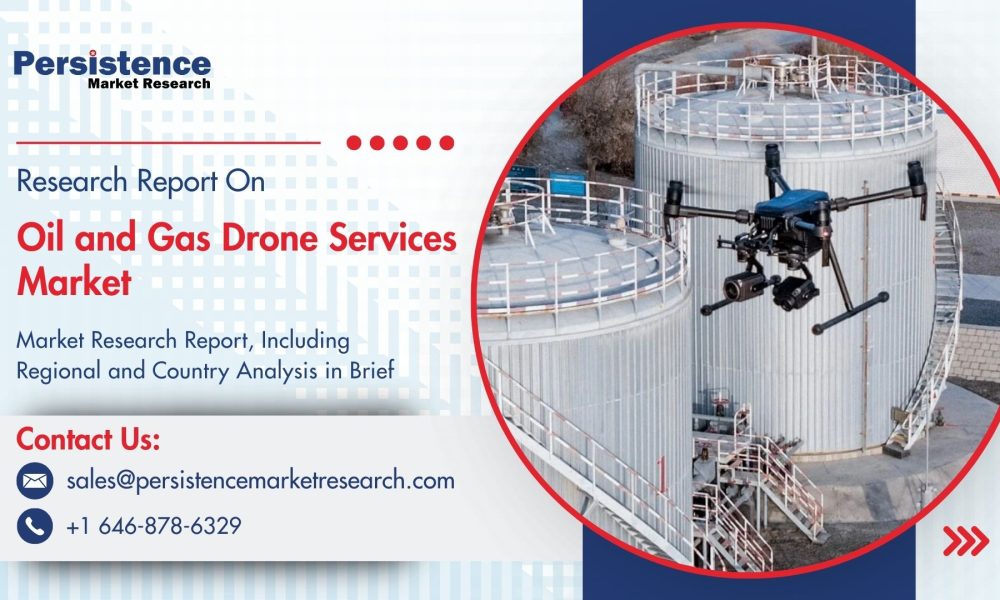
Oil and Gas Drone Services Market: Transforming Energy Operations Through Aerial Intelligence
The global Oil and Gas Drone Services Market is steadily gaining momentum as energy companies increasingly adopt advanced aerial technologies to improve operational efficiency, safety, and cost management. According to market projections, the sector is forecast to expand at a CAGR of 4.3%, growing from an estimated US$18.9 billion in 2024 to approximately US$21.4 billion by 2031. This growth reflects the rising integration of unmanned aerial vehicles (UAVs) across upstream, midstream, and downstream oil and gas operations.
As the energy sector navigates complex regulatory environments, aging infrastructure, environmental concerns, and volatile oil prices, drone services are emerging as a strategic solution for real-time monitoring, asset inspection, and risk mitigation.
Understanding Drone Services in Oil and Gas
Drone services in the oil and gas industry involve the deployment of unmanned aerial vehicles equipped with high-resolution cameras, LiDAR, thermal sensors, and gas detection systems. These drones perform tasks such as:
- Pipeline inspection
- Flare stack monitoring
- Offshore platform surveillance
- Storage tank inspection
- Leak detection
- Environmental monitoring
- 3D mapping and surveying
Traditionally, many of these activities required manual inspections, scaffolding, helicopters, or shutdowns—processes that were time-consuming, expensive, and hazardous. Drone technology significantly reduces operational downtime while enhancing worker safety.
Get Your FREE Sample Report Instantly – Click Now: https://www.persistencemarketresearch.com/samples/34100
Market Growth Drivers
- Rising Focus on Operational Safety
Safety remains a top priority in the oil and gas industry. Inspections of elevated structures such as flare stacks, offshore rigs, and refineries expose workers to considerable risk. Drone deployment eliminates the need for personnel to work at dangerous heights or in hazardous environments, reducing accident rates and improving compliance with safety regulations.
The ability of drones to conduct inspections without shutting down operations further strengthens their appeal. Reduced downtime translates into significant cost savings, especially in high-output production facilities.
- Cost Efficiency and Faster Inspections
Drone inspections are typically faster and more cost-effective compared to conventional methods. Helicopter surveys, rope-access inspections, and scaffold-based assessments involve high labor and equipment expenses. Drones can complete similar inspections in a fraction of the time with lower operational costs.
In an industry where margins are often pressured by fluctuating crude oil prices, operational cost optimization plays a crucial role in investment decisions. Drone services offer a compelling value proposition by balancing cost savings with enhanced data quality.
- Advancements in Sensor Technology
The integration of advanced sensors such as infrared cameras, methane detection systems, LiDAR mapping tools, and AI-powered analytics is expanding the functional capabilities of oil and gas drones. These technologies enable companies to:
- Detect gas leaks with high precision
- Monitor corrosion and structural defects
- Conduct volumetric analysis of storage tanks
- Generate detailed 3D models for asset management
Artificial intelligence and machine learning algorithms further enhance predictive maintenance strategies by analyzing drone-captured data to forecast potential failures before they occur.
- Regulatory Compliance and Environmental Monitoring
Environmental regulations governing methane emissions and pipeline integrity are becoming increasingly stringent worldwide. Drone services provide efficient monitoring tools to ensure compliance with environmental standards.
For example, drones equipped with methane sensors can quickly identify leaks across extensive pipeline networks, helping companies avoid regulatory penalties and reputational damage. The growing global focus on reducing carbon footprints is expected to further support drone adoption in environmental surveillance and emission monitoring.
Get a Customized Market View in One Click: https://www.persistencemarketresearch.com/request-customization/34100
Segment Analysis
By Application
The oil and gas drone services market can be segmented into inspection, surveying & mapping, security & surveillance, leak detection, and environmental monitoring.
- Inspection services dominate the market, driven by pipeline and infrastructure integrity requirements.
- Surveying and mapping is gaining traction due to increasing exploration activities.
- Leak detection services are experiencing growing demand due to stricter emission standards.
By Operation Area
- Onshore operations account for the largest share due to the extensive pipeline and refinery infrastructure across major oil-producing regions.
- Offshore operations are emerging as a high-growth segment, where drones replace costly helicopter inspections for rigs and platforms.
Regional Outlook
North America
North America leads the oil and gas drone services market, supported by large shale production activities and extensive pipeline networks. The United States, in particular, has witnessed rapid adoption of UAVs for methane detection and infrastructure inspection.
The presence of major drone technology providers and supportive regulatory frameworks further strengthens regional growth.
Middle East & Africa
The Middle East represents a significant market due to its vast oil reserves and ongoing investments in infrastructure modernization. Countries in this region are leveraging drone technology to improve operational efficiency in large-scale upstream and midstream projects.
Asia Pacific
Asia Pacific is expected to witness steady growth driven by expanding refining capacities, new pipeline projects, and increasing digitalization initiatives across energy companies.
Competitive Landscape
The oil and gas drone services market features a mix of specialized UAV service providers, oilfield service companies, and technology firms. Market participants compete based on technological innovation, data analytics capabilities, regulatory compliance expertise, and service customization.
Companies are increasingly offering end-to-end solutions that combine drone hardware, software analytics platforms, and maintenance services. Strategic partnerships between drone manufacturers and oilfield service providers are becoming more common to deliver integrated solutions.
Challenges Facing the Market
Despite strong growth prospects, several challenges remain:
- Regulatory restrictions on drone flights in certain airspaces
- Data security concerns related to sensitive infrastructure
- Weather limitations, especially in offshore environments
- High initial investment costs for advanced UAV systems
However, continuous technological advancements and evolving aviation regulations are gradually mitigating these barriers.
Future Outlook: Toward Smart Energy Operations
Looking ahead to 2031, the oil and gas drone services market is expected to evolve beyond simple inspection tasks toward fully integrated digital asset management systems. The convergence of drones with:
- Artificial Intelligence
- Cloud computing
- Internet of Things (IoT) platforms
- Predictive analytics
will transform traditional energy operations into data-driven ecosystems.
Autonomous drone fleets capable of scheduled inspections, real-time reporting, and AI-based anomaly detection are likely to become standard in large oil and gas facilities. Furthermore, as energy companies balance hydrocarbon production with sustainability commitments, drone-enabled emission tracking will play a crucial role in environmental transparency.
For In-Depth Competitive Analysis, Buy Now: https://www.persistencemarketresearch.com/checkout/34100
Conclusion
With projected growth from US$18.9 billion in 2024 to US$21.4 billion by 2031 at a CAGR of 4.3%, the oil and gas drone services market is set to remain a vital component of the energy sector’s digital transformation journey. While growth is moderate compared to emerging tech sectors, the steady expansion reflects strong, long-term demand driven by safety, efficiency, regulatory compliance, and environmental accountability.
As the global energy landscape continues to modernize, drone services will remain a key enabler of smarter, safer, and more sustainable oil and gas operations.
About Persistence Market Research:
Persistence Market Research delivers strategic research solutions that drive business growth. Founded in 2012 and registered in England and Wales in 2023 as Persistence Research & Consultancy Services Ltd., we have completed 3,600+ custom and syndicated studies and supported 2,700+ projects for leading research firms. Combining traditional methodologies with modern tools, we provide actionable insights to multinational corporations, consultants, investors, and government bodies, earning strong trust through long-term client relationships.
Contact Us:
Persistence Market Research
Second Floor, 150 Fleet Street,
London, EC4A 2DQ, United Kingdom
USA Phone: +1 646-878-6329
UK Phone: +44 203-837-5656
Email: [email protected]
Web: https://www.persistencemarketresearch.com




