
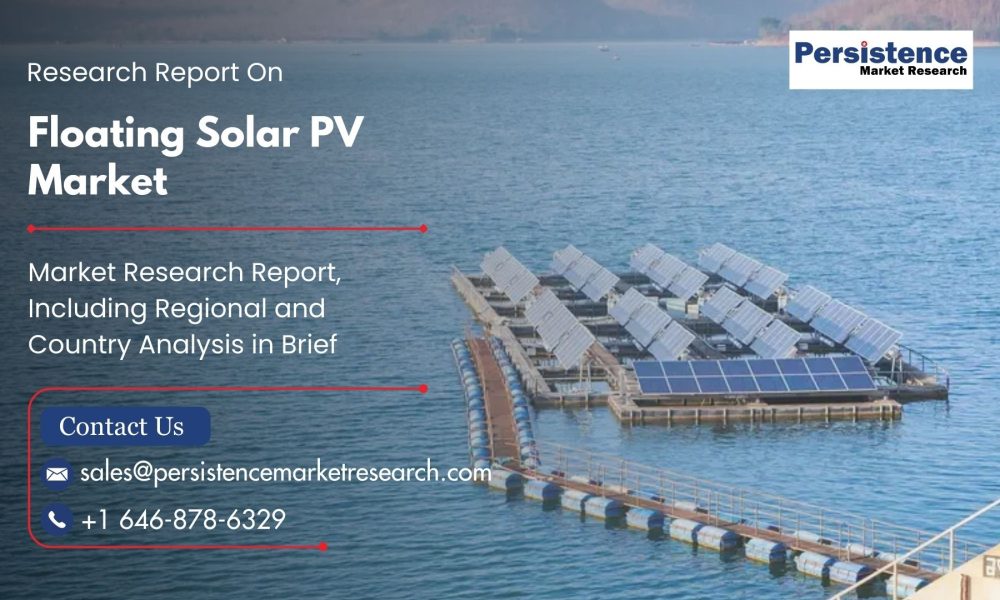
Floating Solar PV Market Size and Trend Analysis
The global floating solar PV market is entering a phase of accelerated expansion, reflecting the growing urgency to deploy renewable energy solutions without intensifying land-use conflicts. The market is projected to be valued at US$ 4.6 billion in 2026 and is expected to surge to US$ 17.0 billion by 2033, expanding at a remarkable compound annual growth rate (CAGR) of 20.5% during 2026–2033. This robust growth trajectory is primarily fueled by land scarcity in densely populated regions, the availability of large water bodies suitable for deployment, and increasing global renewable energy targets.
Floating solar photovoltaic (PV) systems, also known as floatovoltaics, are solar installations mounted on buoyant structures over water bodies such as reservoirs, lakes, ponds, and even coastal areas. By utilizing underused water surfaces, floating solar technology addresses one of the most pressing challenges in renewable energy expansion—limited land availability.
Get Your FREE Sample Report Instantly – Click Now: https://www.persistencemarketresearch.com/samples/36132
Market Overview
Floating solar PV is rapidly transitioning from a niche innovation to a mainstream renewable energy solution. Governments and private developers are increasingly recognizing its potential to unlock large-scale solar capacity without competing with agricultural land, urban infrastructure, or ecological reserves.
Compared to traditional ground-mounted solar systems, floating PV installations offer multiple advantages. The cooling effect of water enhances panel efficiency, often improving energy output. Additionally, floating systems reduce water evaporation and limit algae growth in reservoirs, providing environmental co-benefits. As technological advancements reduce installation complexity and costs, floating solar is becoming economically competitive with conventional solar deployments.
Key Growth Drivers
- Land Scarcity and Urban Density
One of the most significant drivers of the floating solar PV market is acute land scarcity, particularly in densely populated regions across Asia-Pacific and parts of Europe. Rapid urbanization and agricultural demands have limited the availability of large, contiguous land parcels suitable for solar farms.
Floating solar provides an innovative workaround by utilizing idle water surfaces such as hydropower reservoirs, irrigation ponds, and industrial water storage facilities. This approach enables large-scale renewable energy generation without displacing farmland or residential developments.
- Abundant Water Bodies for Deployment
Countries with extensive networks of reservoirs and lakes are well-positioned to adopt floating solar systems. Hydropower reservoirs, in particular, offer synergistic opportunities. Hybrid hydro-solar installations allow energy operators to combine solar generation with existing hydropower infrastructure, optimizing grid stability and energy output.
The integration of floating solar with hydroelectric plants also enables shared transmission infrastructure, reducing capital expenditure and improving project economics.
- Strong Renewable Energy Targets
Governments worldwide are setting ambitious decarbonization goals and expanding renewable energy mandates. Floating solar PV supports these objectives by unlocking new generation capacity in areas where land-based projects face regulatory or logistical constraints.
Many countries are offering policy incentives, feed-in tariffs, and public-private partnerships to accelerate renewable deployment. Floating solar aligns with these initiatives by enabling rapid capacity expansion with minimal land-use conflicts.
- Enhanced Energy Efficiency
Floating solar panels often operate at slightly lower temperatures compared to land-based systems due to the cooling effect of water. Lower operating temperatures can improve photovoltaic efficiency and extend equipment lifespan. This performance advantage enhances overall project returns and strengthens the business case for floating installations.
Get a Customized Market View in One Click: https://www.persistencemarketresearch.com/request-customization/36132
Technology and Deployment Trends
Advancements in Floating Structures
Modern floating solar systems rely on high-density polyethylene (HDPE) pontoons and modular floating platforms designed for durability and resistance to UV radiation and corrosion. Improved anchoring and mooring systems allow installations to withstand water level fluctuations and wind loads.
Manufacturers are continuously refining platform designs to support larger arrays, improve stability, and simplify installation processes. These innovations are reducing operational risks and making floating solar projects more attractive to investors.
Hybrid Hydro-Solar Projects
Hybridization is emerging as a dominant trend in the floating solar PV market. Installing solar arrays on hydropower reservoirs allows operators to use existing grid connections and transmission lines, reducing overall infrastructure costs.
Additionally, combining solar and hydro generation provides complementary energy profiles—solar power during daylight hours and hydropower during peak demand periods—enhancing grid reliability.
Utility-Scale Projects Dominate
Large utility-scale floating solar farms currently account for the majority of installed capacity. These projects often span tens to hundreds of megawatts and are typically deployed on reservoirs owned by utilities or water management authorities.
However, smaller commercial and industrial applications are gaining momentum, particularly for companies seeking to offset energy costs and meet sustainability targets.
Regional Insights
Asia-Pacific Leads the Market
Asia-Pacific is the largest and fastest-growing region in the floating solar PV market. Countries such as China, India, South Korea, Japan, and Southeast Asian nations are aggressively expanding floating solar capacity to address land shortages and rising energy demand.
China has pioneered several large-scale floating solar installations on former coal mining subsidence areas and reservoirs. India is also investing heavily in floating solar to complement its ambitious renewable energy goals.
Europe Shows Rising Adoption
Europe is witnessing increased floating solar deployment, particularly in countries with strong renewable policies and limited land availability. Projects in the Netherlands, France, and the United Kingdom highlight the region’s commitment to innovative clean energy solutions.
The European market also benefits from stringent environmental standards and a strong emphasis on sustainable infrastructure development.
North America and Emerging Markets
North America is gradually expanding its floating solar footprint, with pilot projects and feasibility studies underway in the United States and Canada. Meanwhile, emerging markets in Latin America, the Middle East, and Africa are exploring floating solar to diversify their energy portfolios and maximize reservoir utilization.
Challenges in Market Development
Despite impressive growth projections, the floating solar PV market faces certain challenges. Higher upfront installation costs compared to traditional ground-mounted systems can deter some developers. Specialized engineering, anchoring systems, and environmental impact assessments add complexity to project development.
Long-term durability and maintenance considerations, particularly in harsh marine or fluctuating water environments, require careful planning and investment. Additionally, regulatory approvals related to water usage and environmental protection can delay project timelines.
However, ongoing technological improvements and growing project experience are gradually reducing these barriers.
Sustainability and Environmental Benefits
Floating solar PV offers several environmental advantages beyond clean energy generation. By covering portions of reservoirs, floating arrays can reduce water evaporation—an important benefit in arid and drought-prone regions. The shading effect may also limit algae growth, improving water quality in some cases.
Furthermore, the technology minimizes deforestation and habitat disruption by avoiding land clearing for solar farms. These ecological benefits strengthen the value proposition of floating solar as a sustainable infrastructure solution.
For In-Depth Competitive Analysis, Buy Now: https://www.persistencemarketresearch.com/checkout/36132
Future Outlook
The floating solar PV market is poised for exponential growth through 2033, with a projected increase from US$ 4.6 billion in 2026 to US$ 17.0 billion by 2033. The impressive 20.5% CAGR reflects strong global momentum, driven by land-use constraints, supportive renewable policies, and technological advancements.
As energy demand continues to rise and nations strive to meet climate commitments, floating solar PV will play a critical role in diversifying renewable energy portfolios. Hybrid projects, improved floating technologies, and expanding geographical adoption will further accelerate market penetration.
In the long term, floating solar is expected to transition from a complementary solution to a mainstream renewable energy strategy—particularly in regions where land scarcity and abundant water resources converge. With its ability to combine environmental benefits, high efficiency, and scalable deployment, floating solar PV stands as one of the most promising frontiers in the global clean energy transition.
About Persistence Market Research:
Persistence Market Research delivers strategic research solutions that drive business growth. Founded in 2012 and registered in England and Wales in 2023 as Persistence Research & Consultancy Services Ltd., we have completed 3,600+ custom and syndicated studies and supported 2,700+ projects for leading research firms. Combining traditional methodologies with modern tools, we provide actionable insights to multinational corporations, consultants, investors, and government bodies, earning strong trust through long-term client relationships.
Contact Us:
Persistence Market Research
Second Floor, 150 Fleet Street,
London, EC4A 2DQ, United Kingdom
USA Phone: +1 646-878-6329
UK Phone: +44 203-837-5656
Email: [email protected]
Web: https://www.persistencemarketresearch.com




