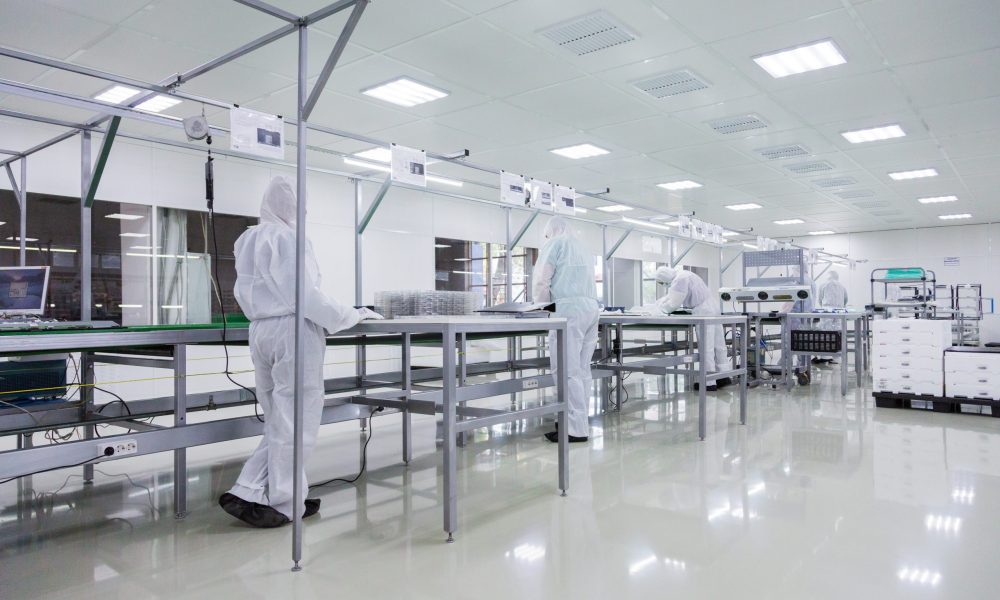
It is the sound every lab manager dreads: silence. For years, you have tuned it out—the constant, white-noise hum of the fan filter units (FFUs) and the HVAC system pushing air through HEPA filters. It is the heartbeat of your facility. But when the power cuts and that hum stops, the silence is deafening. It means the invisible shield protecting your work has dropped.
In a standard corporate office, a power outage is just an excuse to take an early lunch or catch up on filing. In a scientific cleanroom, it is a catastrophe in slow motion. The moment the airflow stops, the physics of your environment change. The positive pressure that pushes contaminants out disappears. Gravity takes over, and the particles that were suspended in the air begin to settle on your wafers, your biological samples, or your optical lenses.
Worse, as the pressure inside the room equalizes with the “dirty” air in the uncontrolled corridors, contamination starts to seep in through the door cracks. You have minutes, not hours, to mitigate the damage.
While you cannot always prevent the grid from failing, you can prevent a power outage from becoming a total loss of inventory. Here is how to harden your facility against the dark.
1. Understanding the Balloon Dynamic
To protect the room, you have to understand exactly what happens when the grid fails. Think of your cleanroom like an inflated balloon. As long as the blowers are running, the room is “inflated” with clean air, pushing outward. This positive pressure prevents dust from entering.
When the power dies, the balloon deflates. The instant the pressure differential on your gauges drops to zero, the room is compromised.
- The Ingress: Dirty air from the gowning room or hallway seeks equilibrium and flows into the clean zone.
- The Stagnation: The laminar flow stops. Particles generated by people or equipment are no longer swept away to the floor returns; they hang in the air or settle on surfaces.
- The Temperature Spike: Without active cooling, the heat load from equipment and bodies causes the temperature to rise rapidly, which can ruin temperature-sensitive compounds or cause condensation (and subsequent mold risk).
2. Power Supply vs. Generator Strategy
You probably cannot afford to put your entire building on a backup generator. That is a reality for most small to mid-sized labs. However, you need a tiered power strategy to handle an outage effectively.
Tier 1: Uninterruptible Power Supply (UPS): Every critical piece of data-logging equipment needs a battery backup. If the power flickers, you need to know exactly how long the room was down to determine if the product is viable.
- Particle Counters: These must stay running. You need the data to prove when the contamination spike occurred.
- Electronic Locks: Ensure your interlocks fail in a safe manner. Usually, this means they unlock for safety, but you need to consider the security implications if the outage happens overnight.
Tier 2: Generator: If you have a limited generator, do not waste it on the overhead lights or the coffee machine. Route that power specifically to the fan filter units. Even if you cannot run the full HVAC cooling and humidity control, keeping the fans running maintains that critical positive pressure. If you can keep the room “inflated,” you keep the dirty air out, even if the room gets a little warm.
3. Managing Human Behavior
The biggest source of contamination in a cleanroom isn’t the ventilation; it’s the people inside it. We shed thousands of skin cells and particles every minute. When the laminar flow stops during a power outage, there is no air current to wash those particles away from the work surface.
You need a specific standard operating procedure for outages
- Stop Moving: Rapid movement creates wake turbulence. If the air is stagnant, walking briskly will churn up settled dust. Operators should freeze or move in slow motion.
- Cover the Work: Every station should have immediate access to sterile covers or Petri dish lids. The first action is to cover the sample.
- The Slow Exit: Operators should leave the room immediately but slowly. Do not rush. Every time the door opens, it acts like a piston, sucking dirty air in. Minimize the number of door cycles. If there are four people inside, they should exit one by one, allowing the air to settle (as much as possible) between exits.
4. Securing the Micro-Environments
If you cannot save the whole room, save the box. Many labs rely on desiccator cabinets, glove boxes, or laminar flow hoods. These are easier to protect than a 1,000-square-foot room.
- Nitrogen Purge: If your desiccators or glove boxes run on a nitrogen purge, ensure the solenoid valves are “normally open” or have a battery backup. If the power fails, you want the nitrogen to keep flowing (assuming you have a tank or a dewar, not a powered generator). The positive pressure of the gas will protect the samples even if the room air goes bad.
- Sash Management: If you are working in a chemical fume hood, the exhaust fan is dead. The vapors are now pooling. Shut the sash immediately to contain the fumes and protect the operator.
5. The Recovery: Don’t Just Flip the Switch
The utility company fixes the line. The lights flicker back on. The hum of the fans returns. Do not resume work.
This is the most common mistake. Just because the fans are running doesn’t mean the room is clean. The room has to “recover.”
- The Flush Period: You need to calculate your room’s “recovery time.” This is the time it takes for the FFUs to replace the total volume of air in the room enough times to bring the particle count back down to ISO standards. This might take 20 minutes; it might take an hour.
- The Wipe Down: Gravity did its work while the power was out. Particles settled on your benchtops, your microscopes, and your floor. You cannot just blow them away. The entire room needs a full wipedown protocol—ceilings, walls, floors, and surfaces—before a new batch can be started.
- Verification: You cannot assume the room is ISO 7 or ISO 5 just because the gauge says so. You must run a particle count to verify that the environment has stabilized.
A Protocol Procedure
A power outage is a stress test for your protocols. It reveals exactly where your vulnerabilities lie. If you treat an outage as a panic situation, you will lose product. If you treat it as a drilled procedure—where the fans stay on, the humans move slowly, and the recovery is methodical—you can turn a potential disaster into a minor operational hiccup. The key is to prepare for the silence before it happens. Check your UPS batteries, brief your team on the exit drill, and know exactly which breaker keeps the pressure on.