
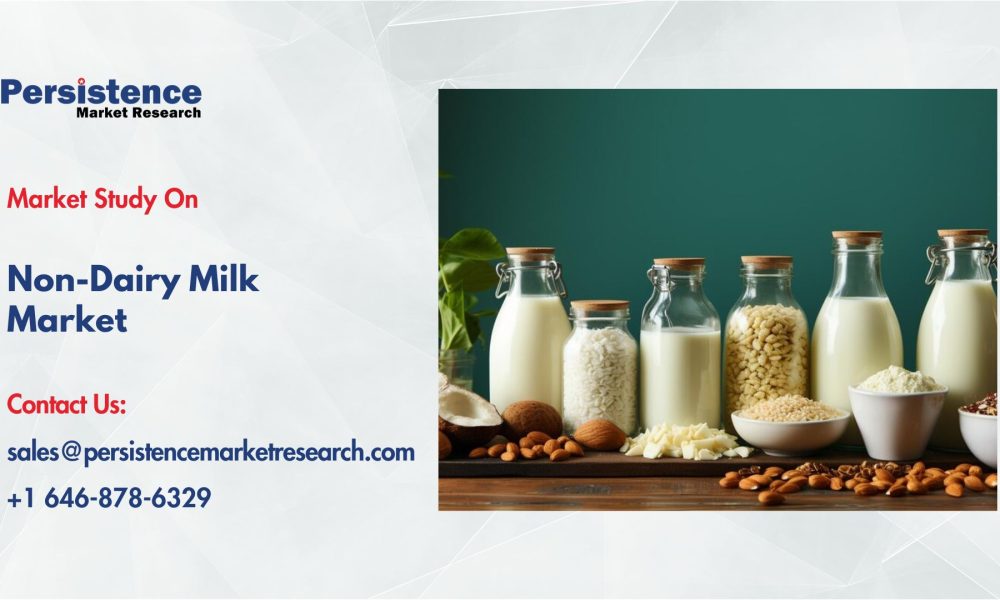
The global non-dairy milk market is experiencing a significant transformation as consumer preferences shift toward plant-based, lactose-free, and sustainable food and beverage alternatives. According to industry estimates, the global non-dairy milk market is likely to be valued at US$ 25.2 billion in 2026 and is projected to reach US$ 54.3 billion by 2033, expanding at a strong compound annual growth rate (CAGR) of 11.6% during the forecast period from 2026 to 2033. This rapid growth trajectory highlights the increasing mainstream acceptance of non-dairy milk products across both developed and emerging economies.
Non-dairy milk, derived from sources such as soy, almond, oat, coconut, rice, and other plant bases, has evolved from a niche health product into a widely consumed beverage alternative. The market’s expansion is driven by rising lactose intolerance rates, growing awareness of dairy-related allergies, and increasing adoption of vegan and flexitarian diets. Moreover, consumers are becoming more conscious of the environmental and ethical implications of traditional dairy farming, further accelerating the shift toward plant-based milk alternatives.
The forecast period is expected to witness sustained demand growth across retail, foodservice, and industrial channels. Innovations in flavor, texture, and nutritional fortification have significantly improved product appeal, enabling non-dairy milk to compete more effectively with conventional dairy milk in terms of taste and functionality. As a result, the market is positioned for long-term expansion supported by changing dietary habits, product innovation, and expanding distribution networks.
Key Factors Driving Market Growth
One of the primary drivers of the global non-dairy milk market is the increasing prevalence of lactose intolerance and milk protein allergies worldwide. A significant portion of the global population experiences difficulty digesting lactose, prompting consumers to seek plant-based alternatives that offer similar nutritional benefits without adverse health effects. Non-dairy milk products cater effectively to this growing consumer base, supporting steady demand growth.
Another major growth driver is the rising adoption of plant-based and vegan lifestyles. Consumers are increasingly prioritizing health, animal welfare, and environmental sustainability in their purchasing decisions. Non-dairy milk aligns closely with these values, offering a lower carbon footprint and reduced water usage compared to traditional dairy milk. This alignment has made non-dairy milk a preferred choice among environmentally conscious consumers, particularly in urban and younger demographics.
In addition, the expanding use of non-dairy milk in foodservice applications is fueling market growth. Coffee chains, restaurants, and bakeries are increasingly offering plant-based milk options to meet customer demand for customizable and inclusive menus. The widespread availability of non-dairy milk in cafés and quick-service restaurants has played a crucial role in normalizing consumption and increasing overall market penetration.
Get Your FREE Sample Report Instantly – Click Now: https://www.persistencemarketresearch.com/samples/34097
Segmentation Analysis
By Product Type
- Almond Milk
- Soy Milk
- Coconut Milk
- Oat Milk
- Rice Milk
- Cashew Milk
- Hemp Milk
- Pea Milk
- Others
By Application
- Beverages,
- Food
- Nutraceuticals
- Others
By Distribution Channel
- Supermarkets/Hypermarkets
- Online Retail
- Convenience Stores
- Others
Regional Insights
Leading Regions in the Global Market
From a regional perspective, North America represents one of the leading markets for non-dairy milk, driven by high consumer awareness, strong purchasing power, and widespread adoption of plant-based diets. The United States, in particular, has emerged as a major hub for product innovation, with numerous brands offering a diverse range of fortified and flavored non-dairy milk options.
Europe also holds a substantial share of the global market, supported by increasing vegan populations, stringent sustainability regulations, and growing demand for clean-label products. Countries such as the United Kingdom, Germany, and France are witnessing strong uptake of oat milk and almond milk, particularly in urban centers.
Asia Pacific represents a rapidly expanding market, underpinned by traditional consumption of plant-based beverages and rising health awareness. Soy milk has long been a staple in several Asian countries, and the region is now witnessing increasing adoption of almond and oat milk as Western dietary trends gain influence.
Fastest-Growing Region
Asia Pacific is expected to be the fastest-growing region during the forecast period, driven by a large population base, rising disposable incomes, and increasing urbanization. Growing concerns about lactose intolerance, combined with the expansion of modern retail and foodservice sectors, are accelerating non-dairy milk adoption across the region. Additionally, local manufacturers are investing in affordable plant-based alternatives tailored to regional taste preferences, further supporting market growth.
Unique Features and Innovations in the Market
The global non-dairy milk market is characterized by continuous innovation aimed at improving taste, texture, and nutritional value. Modern non-dairy milk products are increasingly fortified with vitamins, minerals, and proteins to closely match or exceed the nutritional profile of traditional dairy milk. Fortification with calcium, vitamin D, and vitamin B12 has become a standard practice, enhancing product acceptance among health-conscious consumers.
Technological advancements are also playing a critical role in market differentiation. Food processing innovations, including improved emulsification techniques and enzyme treatments, have significantly enhanced mouthfeel and stability. The application of artificial intelligence (AI) in product development is enabling manufacturers to optimize formulations based on consumer feedback and sensory analysis. Internet of Things (IoT) technologies are being used in manufacturing facilities to monitor quality, improve traceability, and ensure consistent product standards. While 5G connectivity is still in early adoption stages within food manufacturing, it is expected to support real-time data analytics and automation in large-scale production environments.
Sustainability-driven innovation is another defining feature of the market. Brands are increasingly focusing on recyclable packaging, carbon-neutral production processes, and responsibly sourced raw materials to strengthen their environmental credentials and appeal to eco-conscious consumers.
Need Tailored Insights? Request Customization Now: https://www.persistencemarketresearch.com/request-customization/34097
Market Highlights
The rapid adoption of non-dairy milk is driven by a combination of health, lifestyle, and environmental factors. Consumers are increasingly seeking products that support digestive health, weight management, and overall wellness, making plant-based milk an attractive alternative. The versatility of non-dairy milk across beverages, cooking, and baking applications further enhances its appeal.
Regulatory support is also influencing market dynamics. Governments and regulatory bodies in several regions are encouraging the consumption of plant-based foods as part of broader sustainability and public health initiatives. Clear labeling standards and quality regulations are helping build consumer trust and supporting market expansion.
Cost considerations and economies of scale are gradually improving the affordability of non-dairy milk products. As production volumes increase and supply chains become more efficient, price gaps between dairy and non-dairy milk are narrowing, making plant-based alternatives accessible to a broader consumer base.
Key Players and Competitive Landscape
- Danone SA
- Oatly Group AB
- Blue Diamond Growers
- Califia Farms LLC
- Vitasoy International
- Nestle SA
- Campbell Soup Company
- SunOpta Inc
- Ripple Foods
- Elmhurst Milked
- Hebei Yangyuan
- Coconut Palm Group
- The Hain Celestial
Future Opportunities and Growth Prospects
The future outlook for the global non-dairy milk market remains highly positive, supported by strong underlying demand trends and continuous innovation. Opportunities are expected to emerge from the development of next-generation plant-based milk alternatives with enhanced nutrition, improved functionality, and lower environmental impact. Advances in ingredient sourcing, fermentation technologies, and protein extraction methods are likely to further expand product possibilities.
Evolving regulations related to sustainability, labeling, and food safety will continue to shape market practices, encouraging transparency and responsible production. Companies that proactively adapt to these regulatory frameworks and invest in sustainable operations are expected to gain a competitive advantage.
As consumer awareness and acceptance of plant-based nutrition continue to grow, the non-dairy milk market is poised to remain one of the most dynamic segments within the global food and beverage industry. With strong growth prospects across regions and applications, the market presents significant opportunities for both established players and new entrants over the coming decade.
Explore the Latest Trending Research Reports:




