
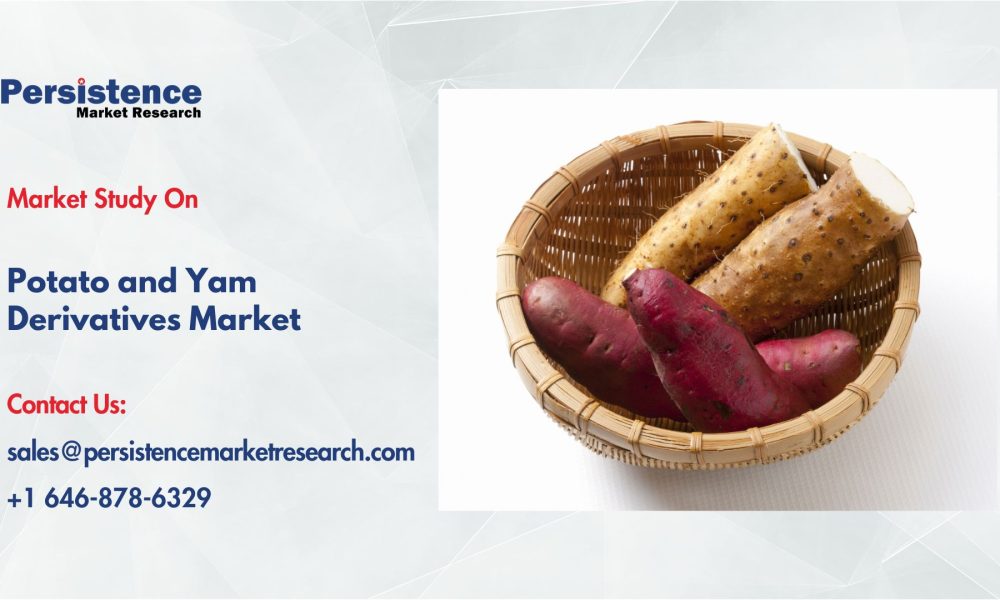
The global potato and yam derivatives market is positioned for steady expansion over the coming years, supported by rising demand from the food processing industry, expanding applications in animal feed and industrial uses, and increasing consumer preference for convenient and functional food ingredients. The market is likely to be valued at approximately US$ 689 billion in 2026 and is expected to reach around US$ 870 billion by 2033, registering a compound annual growth rate (CAGR) of 3.4% during the forecast period from 2026 to 2033.
Potato and yam derivatives include a wide range of processed products such as starches, flours, fibers, proteins, and value-added ingredients used across food and beverage, pharmaceuticals, textiles, paper, adhesives, and bio-based materials. These derivatives are favored for their functional properties, including thickening, binding, stabilizing, and moisture-retention capabilities, as well as their natural and plant-based origin.
The growing emphasis on clean-label ingredients, coupled with increasing industrial demand for bio-based alternatives to synthetic materials, is reinforcing the importance of potato and yam derivatives in global value chains. As both developed and emerging economies continue to invest in food security, industrial diversification, and sustainable raw materials, the market outlook remains positive and resilient.
Key Drivers Supporting Market Growth
The expansion of the global potato and yam derivatives market is driven by multiple interrelated factors. One of the primary growth drivers is the rapid growth of the processed and convenience food sector. Potato and yam starches and flours are extensively used in snacks, bakery products, ready-to-eat meals, soups, sauces, and confectionery due to their neutral taste, high functionality, and compatibility with a wide range of formulations.
Another critical driver is the increasing use of potato and yam derivatives in non-food industrial applications. Industries such as paper manufacturing, textiles, pharmaceuticals, and biodegradable packaging are increasingly incorporating starch-based materials to improve performance while reducing reliance on petrochemical-based inputs. This shift is strongly aligned with global sustainability goals and regulatory efforts to reduce environmental impact.
Additionally, the rising global population and increasing urbanization are contributing to higher demand for cost-effective and versatile raw materials. Potato and yam derivatives offer consistent quality, scalability, and long shelf life, making them suitable for large-scale industrial use. Improvements in crop yields, processing efficiency, and storage infrastructure are further enhancing supply stability and market penetration.
Get Your FREE Sample Report Instantly – Click Now: https://www.persistencemarketresearch.com/samples/35934
Segmentation Analysis
By Source
- Potato
- Sweet Potato
- Yam
By Derivative Type
- Starch
- Flakes & Dehydrated
- Flour & Granules
- Protein
- Feed
- Other
By Application
- Food
- Feed
- Industrial
- Pharmaceuticals & Personal Care
By Sales Channel
- Direct B2B
- Food Manufacturers
- Retail/Private Label
- Foodservice/QSR
Regional Insights
Leading Regions in the Global Market
Geographically, Asia Pacific holds the largest share of the global potato and yam derivatives market, driven by high production volumes, strong domestic consumption, and extensive use of derivatives in traditional and modern food products. Countries such as China, India, and Southeast Asian nations play a central role due to their large agricultural base, growing food processing industries, and expanding industrial applications.
North America represents another significant market, supported by advanced processing technologies, high demand for processed foods, and strong adoption of bio-based industrial materials. The region benefits from well-established supply chains, research-driven product innovation, and increasing consumer preference for clean-label and natural ingredients.
Europe remains a mature but stable market, characterized by stringent quality standards and regulatory frameworks that encourage the use of sustainable and renewable raw materials. The region’s focus on environmental responsibility and circular economy principles continues to support demand for potato and yam derivatives in both food and non-food applications.
Fastest-Growing Regional Market
Among all regions, Asia Pacific is expected to remain the fastest-growing market during the forecast period. Rapid population growth, rising disposable incomes, and increasing urbanization are driving higher consumption of processed and convenience foods across the region. In parallel, government initiatives aimed at strengthening food processing infrastructure and promoting value addition to agricultural produce are accelerating market expansion.
Additionally, the region’s abundant availability of raw materials and relatively low production costs provide a competitive advantage, encouraging investments in processing facilities and export-oriented production.
Unique Features and Innovations in the Market
The potato and yam derivatives market is undergoing significant transformation, driven by innovation and technological advancement. Modern processing techniques are enabling higher extraction efficiency, improved functional properties, and reduced waste generation. These advancements allow manufacturers to deliver derivatives with consistent quality and customized performance characteristics.
Digital technologies are increasingly influencing production and supply chain management. Artificial intelligence (AI) is being used to optimize processing parameters, improve yield efficiency, and predict demand patterns. Internet of Things (IoT) solutions enable real-time monitoring of storage conditions, quality control, and logistics, enhancing traceability and reducing losses. In advanced industrial hubs, 5G-enabled automation is supporting faster data transmission and smarter manufacturing operations.
Innovation is also focused on sustainability, with manufacturers developing biodegradable and compostable materials derived from potato and yam starches. These solutions are gaining traction in packaging, disposable products, and industrial applications as industries seek to reduce their environmental footprint and comply with evolving regulations.
Need Tailored Insights? Request Customization Now: https://www.persistencemarketresearch.com/request-customization/35934
Market Highlights
One of the key highlights of the global potato and yam derivatives market is its versatility across multiple industries. Businesses are increasingly adopting these derivatives due to their functional performance, cost-effectiveness, and alignment with sustainability goals. The ability to replace synthetic or chemically derived ingredients with plant-based alternatives is a major factor supporting adoption.
Regulatory frameworks promoting the use of renewable and biodegradable materials are further strengthening market demand. Governments and international bodies are encouraging the reduction of plastic waste and carbon emissions, creating favorable conditions for starch-based and bio-derived products.
Cost optimization also plays a significant role in market growth. Advances in processing efficiency, improved crop yields, and integrated supply chains are helping to stabilize prices and enhance profitability for manufacturers and end users alike. Sustainability initiatives, including waste valorization and responsible sourcing, are increasingly viewed as competitive advantages rather than compliance requirements.
Key Players and Competitive Landscape
- Avebe
- Emsland Group
- Roquette
- Tereos
- Ingredion
- Cargill
- ADM
- KMC
- Pepees Group
- Südstärke
- Novidon
- Lyckeby
- PPZ Trzemeszno
- McCain Foods
- Lamb Weston
- Simplot
- Idahoan Foods
- Basic American Foods
- BENEO
- AGRANA
Future Opportunities and Long-Term Outlook
Looking ahead, the global potato and yam derivatives market is expected to continue its steady growth trajectory, supported by rising demand across food, industrial, and bio-based applications. Opportunities are likely to emerge from the development of high-value functional derivatives, plant-based nutrition products, and biodegradable industrial materials.
Evolving regulations related to environmental sustainability, food safety, and industrial emissions will continue to influence market dynamics, encouraging greater transparency and innovation. At the same time, technological advancements will enable manufacturers to enhance efficiency, reduce waste, and deliver customized solutions to diverse end-user industries.
As global industries increasingly prioritize sustainability, resilience, and performance, potato and yam derivatives are expected to play an increasingly important role in shaping future value chains. Companies that invest in advanced technologies, responsible sourcing, and customer-centric innovation are well positioned to benefit from the expanding market landscape.
Explore the Latest Trending Research Reports:




