
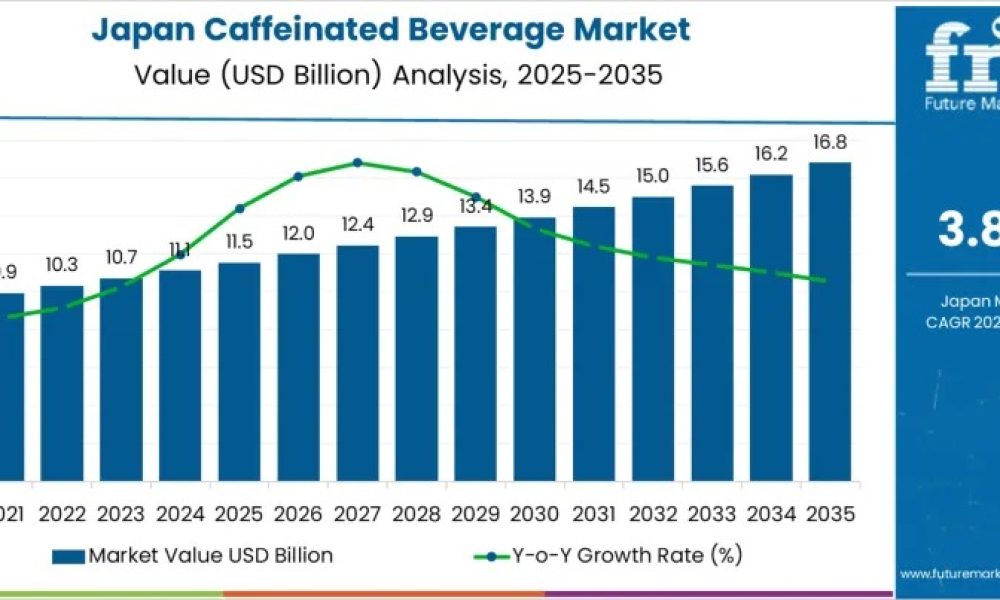
Japan’s demand for caffeinated beverages is projected to expand from USD 11.5 billion in 2025 to USD 16.8 billion by 2035, registering a compound annual growth rate (CAGR) of 3.8%. The growth reflects shifting consumer lifestyles, strong coffee culture, and rising interest in functional drinks that deliver both energy and wellness benefits.
Urbanization, long working hours, and on-the-go consumption habits are reinforcing the role of ready-to-drink (RTD) coffee, energy drinks, and functional beverages in daily routines. Japan remains one of the world’s most established coffee markets, and evolving preferences for beverages with added vitamins, minerals, and antioxidants are accelerating innovation across the sector.
Request for Sample Report | Customize Report | Purchase Full Report – https://www.futuremarketinsights.com/reports/sample/rep-gb-29410
Between 2025 and 2030, market demand is expected to increase from USD 11.5 billion to USD 13.9 billion, adding USD 2.4 billion in value. This phase will be powered by strong adoption of convenient formats and functional beverage innovation. From 2030 to 2035, the market will grow further to USD 16.8 billion, adding another USD 2.9 billion, although growth will moderate as urban segments mature.
Health-conscious consumption patterns are reshaping product development. Manufacturers are focusing on:
- Low-sugar and low-calorie formulations
- Organic coffee and natural sweeteners
- Functional additives supporting energy, focus, and immunity
The convergence of refreshment and nutrition is transforming caffeinated beverages from simple stimulants into lifestyle products aligned with modern wellness trends.
Carbonated Soft Drinks Lead Product Demand
By product type, carbonated soft drinks account for 43% of caffeinated beverage demand in Japan. Their long-standing popularity, strong brand recognition, and wide flavor variety continue to drive volume consumption. The availability of sugar-free and low-calorie options further supports demand among health-aware consumers.
Energy drinks and RTD coffee are also expanding rapidly, supported by younger consumers and professionals seeking instant alertness and portability. Functional positioning, including added vitamins and antioxidants, is differentiating new product launches in these categories.
Grocery Stores Remain the Dominant Sales Channel
Grocery stores represent 40.2% of total sales, leading distribution due to product variety, pricing competitiveness, and nationwide accessibility. Consumers benefit from the convenience of purchasing caffeinated drinks alongside routine grocery shopping. Promotional pricing and multipack offerings further stimulate retail turnover.
Convenience stores and vending machines also play a critical role, particularly in dense urban regions where quick access to beverages is essential.
Regional Growth Led by Kyushu & Okinawa and Kanto
Demand growth varies across regions, with urbanization and tourism acting as key multipliers.
- Kyushu & Okinawa lead with a 4.8% CAGR, supported by tourism activity and growing demand for energy-boosting beverages.
- Kanto, including Tokyo, follows at 4.4% CAGR, driven by fast-paced lifestyles and strong coffee consumption culture.
- Kinki records 3.9% CAGR, reflecting sustained demand from diverse urban populations.
- Chubu (3.4%), Tohoku (3.0%), and Rest of Japan (2.8%) show steady but moderate expansion.
Innovation and Technology Strengthen Market Appeal
Advances in beverage processing and packaging are improving shelf life while preserving flavor quality comparable to freshly brewed drinks. Functional beverage development is expanding beyond caffeine to include performance-supporting nutrients, enabling brands to tap into personalized nutrition trends.
Manufacturers are also investing in sustainable packaging and premium formulations to maintain competitiveness in a maturing market environment.
Challenges Temper Long-Term Acceleration
Despite positive outlooks, the market faces constraints. Growing awareness of excessive caffeine intake, price sensitivity toward premium RTD products, and competition from non-caffeinated functional beverages may moderate demand. Demographic aging could also gradually shift preferences toward milder beverages.
However, steady innovation and evolving consumer expectations around convenience and wellness are expected to sustain long-term market stability.
Competitive Landscape
The industry is shaped by global beverage leaders with diversified portfolios across energy drinks, coffee, and carbonated beverages. Key companies include:
Dr Pepper Snapple Group
Monster Energy Company
Nestlé
PepsiCo
Red Bull
These players emphasize functional innovation, flavor diversification, and convenience-focused packaging to address evolving Japanese consumer preferences.
About Future Market Insights (FMI)
Future Market Insights, Inc. (FMI) is an ESOMAR-certified, ISO 9001:2015 market research and consulting organization, trusted by Fortune 500 clients and global enterprises. With operations in the U.S., UK, India, and Dubai, FMI provides data-backed insights and strategic intelligence across 30+ industries and 1200 markets worldwide.



