
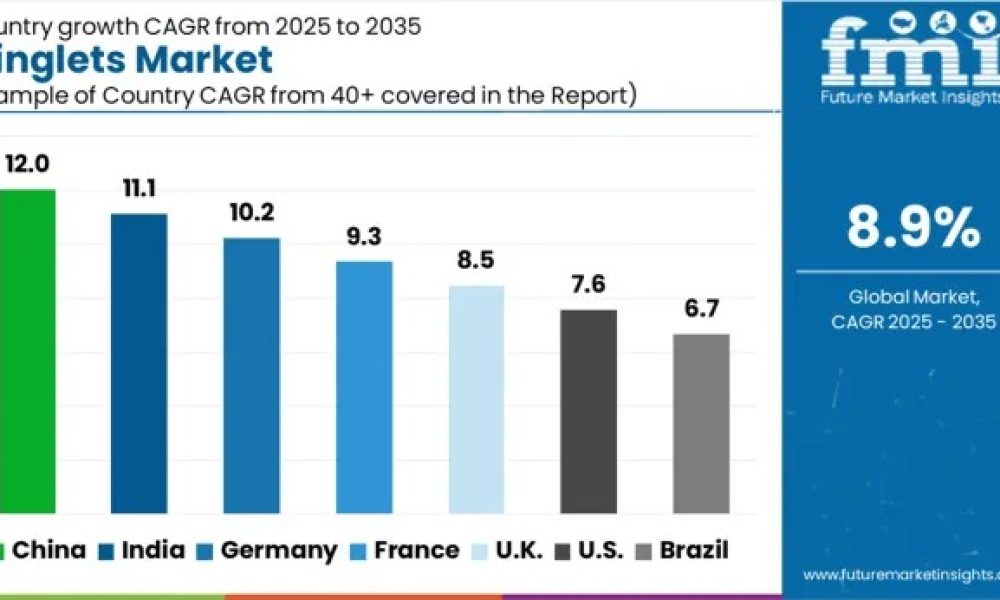
The global winglets market is on a sustained growth trajectory, reflecting the maturation of a proven aerodynamic technology transitioning from early adoption to broad-based industry integration. Valued at USD 3.6 billion in 2025, the market is projected to reach USD 8.4 billion by 2035, expanding at a compound annual growth rate (CAGR) of 8.9%. Growth is being driven by the aviation industry’s structural emphasis on fuel efficiency, emissions reduction, and operational cost optimization across commercial, regional, and business aircraft fleets.
Winglets—vertical or angled extensions at aircraft wingtips—have evolved from optional aerodynamic enhancements into strategic performance components. Their ability to reduce induced drag, improve lift-to-drag ratios, and extend aircraft range has positioned them as essential technologies amid rising fuel costs, tightening environmental regulations, and intensifying airline margin pressures.
Adoption Lifecycle Reflects Transition Toward Market Maturity
The winglets market exhibits a well-defined adoption lifecycle. Early growth was led by commercial and cargo aircraft operators seeking immediate fuel burn reductions through retrofit programs. Adoption during this phase was closely tied to fleet modernization cycles, capital investment priorities, and aircraft compatibility, with airlines prioritizing high-utilization routes where efficiency gains delivered rapid payback.
As performance benefits became measurable and repeatable, winglets achieved wider acceptance across aircraft manufacturers and operators. Regulatory encouragement for carbon reduction and fuel efficiency further accelerated adoption, reinforcing the economic rationale for integrating winglets into both new aircraft deliveries and existing fleets. This mid-stage growth phase continues to drive robust market expansion as penetration increases across narrow-body, wide-body, and regional jet categories.
Toward the latter half of the forecast period, the market is expected to approach late-stage maturity as most compatible aircraft incorporate winglet technology. Growth will gradually stabilize, shifting from rapid penetration to incremental value gains driven by advanced designs, material innovations, and aircraft-specific optimization, rather than first-time adoption.
Get access to comprehensive data tables and detailed market insights — request your sample report today!
https://www.futuremarketinsights.com/reports/sample/rep-gb-25451
Winglets Positioned Within the Broader Aerospace Value Chain
Within the global aerospace and aviation ecosystem, the winglets market represents a specialized but strategically important segment. It accounts for approximately 4.8% of the commercial aircraft components market and 5.2% of the aerostructures and aircraft design segment, underscoring its role in performance optimization. In the aircraft modification and retrofit market, winglets contribute 4.1%, highlighting their relevance in extending the service life and efficiency of existing fleets.
The market also plays a meaningful role in aviation fuel efficiency and environmental solutions, where it holds a 3.7% share, reflecting its contribution to emissions reduction. Ongoing innovation in aerodynamics, lightweight composites, and simulation-driven design continues to reinforce the market’s relevance within next-generation aircraft performance strategies.
Blended Winglets Lead Product Adoption
By winglet type, blended winglets dominate the market, accounting for 27.9% of total revenue in 2025. Their smooth, upward-swept geometry reduces wingtip vortices more effectively than traditional designs, delivering measurable improvements in fuel efficiency, climb performance, and engine maintenance cycles. Compatibility with both line-fit and retrofit installations has further strengthened adoption across multiple aircraft platforms.
Blended winglets have demonstrated strong return-on-investment profiles for operators, particularly on fuel-sensitive routes, supporting continued preference among airlines and manufacturers. Certification across a wide range of aircraft types has reinforced their position as the most widely deployed winglet solution in the market.
Commercial Aircraft Drive the Majority of Demand
The commercial aircraft segment accounts for 53.1% of winglets market revenue, reflecting the scale and utilization intensity of global passenger fleets. Fuel consumption and emissions exposure are highest in this segment, making aerodynamic enhancements particularly impactful. Airlines operating narrow-body and wide-body aircraft increasingly rely on winglets to manage operating costs, improve range flexibility, and meet environmental performance targets.
Retrofit activity remains strong, especially among low-cost and long-haul operators seeking efficiency upgrades without full fleet replacement. New aircraft procurement programs also prioritize winglet-equipped models as part of sustainability-focused fleet renewal strategies, reinforcing long-term demand stability.
Platform Integration Strengthens Market Momentum
By platform type, the B737 Max emerges as the leading contributor, capturing 25.6% of market revenue in 2025. Its integrated split-tip winglet design delivers optimized lift and drag performance, contributing directly to improved fuel economy and extended range. Widespread deployment across global airline fleets has made the B737 Max a key growth driver within the winglets market.
As aircraft deliveries increase and fleet expansion resumes, platforms with integrated advanced winglet technologies are expected to remain central to market expansion, reflecting the broader trend of embedding aerodynamic efficiency into baseline aircraft design.
Regional Growth Anchored in Fleet Expansion and Retrofit Activity
Regionally, China leads growth with a CAGR of 12.0%, driven by rapid expansion of commercial aviation, high domestic passenger volumes, and aggressive fleet modernization. India follows at 11.1%, supported by expanding regional connectivity and retrofit activity. Germany records 10.2% CAGR, reflecting strong aerospace engineering capabilities and adoption across leased and commercial fleets.
The United Kingdom and the United States remain mature but stable markets, growing at 8.5% and 7.6% respectively, supported by environmental compliance requirements, large installed fleets, and ongoing retrofit demand. Across all regions, adoption is shaped by fuel prices, regulatory pressure, and airline modernization strategies rather than aircraft production alone.
Drive Your Business Growth Strategy: Checkout the Report for Key Insights
https://www.futuremarketinsights.com/checkout/25451
Competitive Landscape Defined by Aerodynamic Expertise
The competitive environment is shaped by specialized aerospace manufacturers focused on aerodynamic efficiency and structural optimization. Aviation Partners Inc. and Aviation Partners Boeing lead through advanced blended and split-scimitar winglet technologies. Kaman Corporation, GKN Aerospace, and FACC AG contribute through precision aerostructures, lightweight composite materials, and platform-specific winglet solutions.
Competition centers on aerodynamic performance, certification breadth, material innovation, and collaboration with OEMs and MRO providers. Continuous investment in R&D remains critical as operators demand higher efficiency gains, lower weight penalties, and compliance with evolving environmental standards.
Outlook: Efficiency-Driven Stability Through 2035
The winglets market is positioned for sustained, efficiency-led growth through 2035, underpinned by structural industry drivers rather than cyclical demand. As fuel efficiency, emissions reduction, and operational flexibility remain top priorities across global aviation, winglets will continue to play a central role in aircraft performance optimization. With innovation shifting toward advanced designs and lifecycle optimization, the market’s long-term value proposition remains firmly intact.
Why Choose FMI: Empowering Decisions that Drive Real-World Outcomes: https://www.futuremarketinsights.com/why-fmi
About Future Market Insights (FMI)
Future Market Insights, Inc. (FMI) is an ESOMAR-certified, ISO 9001:2015 market research and consulting organization, trusted by Fortune 500 clients and global enterprises. With operations in the U.S., UK, India, and Dubai, FMI provides data-backed insights and strategic intelligence across 30+ industries and 1200 markets worldwide.



