
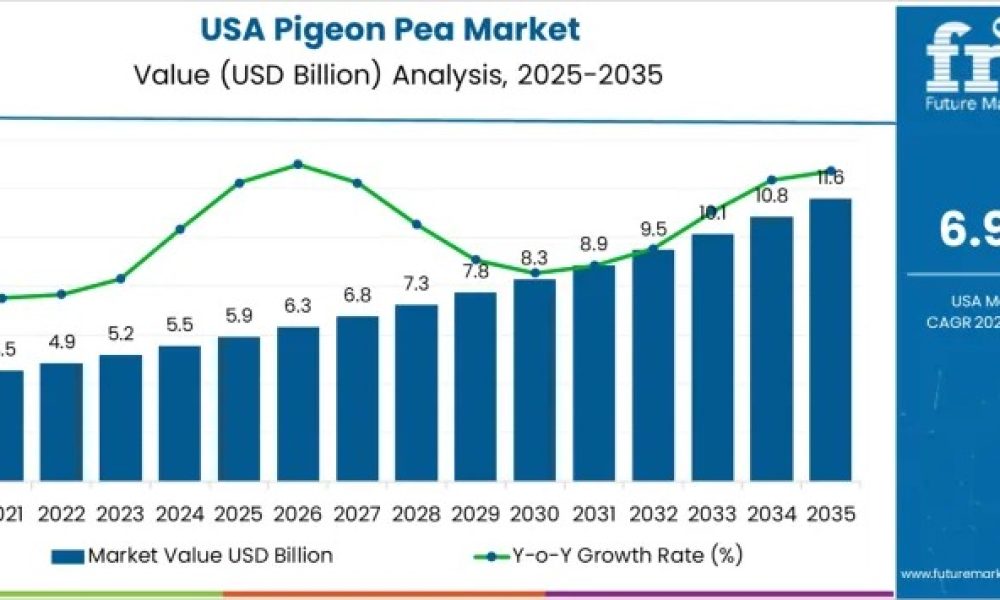
The demand for pigeon pea in the USA is on a steady growth trajectory, with market valuation projected to rise from USD 5.9 billion in 2025 to USD 11.6 billion by 2035, representing a compound annual growth rate (CAGR) of 6.9%, according to the latest market intelligence. This expansion is driven primarily by rising consumer interest in plant-based proteins, coupled with increased adoption of pigeon pea in ethnic cuisines and ready-to-cook food products.
The growth is further fueled by immigration-driven culinary adoption and wider availability of convenient formats, including frozen, canned, and ready-to-use pigeon pea. With frozen pigeon pea leading usage due to its extended shelf life, nutritional retention, and ease of storage, both households and foodservice providers are benefiting from consistent supply and quality.
Explore trends before investing – request a sample report today!
The West, South, and Northeast regions of the U.S. are driving the largest uptake of pigeon pea, aligned with concentrated populations consuming South Asian, Caribbean, and African cuisines. Key suppliers including MAF Co Ltd., Sun Impex, Interamsa Agroindustrial SAC, A.B. agro Company, and Arvind Limited are strategically expanding cold chain distribution, sourcing from major cultivation zones, and entering supply agreements with retailers and ethnic food distributors to strengthen nationwide accessibility.
Market Context and Forecast
Pigeon pea’s steady adoption reflects a niche yet resilient market, primarily within ethnic dietary patterns. While plant-based protein interest is growing among mainstream consumers, pigeon pea competes with established legumes such as chickpeas, lentils, black beans, and soy, which moderates new-user conversion and slows rapid market expansion.
Supply chain dependencies on imports, mainly from India and East Africa, create occasional volatility in pricing and availability. Domestic production remains minimal, resulting in a ceiling effect on volume acceleration. The U.S. pigeon pea market is expected to gradually stabilize as consumption reaches a plateau dictated by cultural relevance rather than widespread dietary adoption.
Key Market Dynamics
- Rising Plant-Based Protein Demand: Vegetarians, vegans, and flexitarians increasingly prioritize pigeon pea for its high protein and fiber content.
- Ethnic Culinary Integration: South Asian, Caribbean, and Latin American communities continue to incorporate pigeon pea into traditional dishes such as dal, stews, and rice meals.
- Foodservice and Retail Expansion: Restaurants, ready-to-eat meals, soups, snacks, and plant-based protein blends integrate pigeon pea for its nutritional profile and shelf stability.
Despite growth potential, the market faces constraints, including limited awareness among mainstream consumers, longer cooking times compared to other pulses, and dependence on imported supplies.
Price and Product Segmentation
Premium pigeon pea commands the largest share at 51.4%, reflecting purchases by diaspora communities and health-conscious consumers who prioritize quality and traceable sourcing. Mid-range products represent 24.3%, serving routine household demand, while low-cost formats meet bulk procurement and institutional needs.
By product form, frozen pigeon pea leads with 35% market share, followed by dried (22.2%), fresh (22.0%), and canned (20.8%). Frozen formats are favored for convenience and quality consistency, dried for traditional cooking, and canned for rapid-preparation needs.
Regional Market Insights
- West USA: Leads growth at 8.0% CAGR due to large South Asian and multicultural populations in California and Washington. Strong retail presence and Pacific-port import logistics ensure consistent supply.
- South USA: Registers 7.1% CAGR, with Caribbean and African diaspora populations in Florida, Texas, and Georgia driving demand. Local sourcing is monitored, though imports dominate.
- Northeast USA: Expands at 6.4% CAGR, fueled by dense immigrant populations in New York, New Jersey, and Massachusetts. Convenience-driven food purchasing and meal-kit integration enhance consumption.
- Midwest USA: Grows at 5.5% CAGR, with slower mainstream adoption but gradual awareness through packaged meals and frozen entrées.
Access the full report for detailed market trends.
Competitive Landscape
Market share is concentrated among exporters capable of ensuring reliable delivery, grading quality, and cultural market alignment. MAF Co Ltd. leads with approximately 19% share, followed by Sun Impex, Interamsa Agroindustrial SAC, A.B. agro Company, and Arvind Limited. These players leverage flexible packaging, cold-chain logistics, and ethnic-market responsiveness to maintain their position in the U.S. pigeon pea trade.
Key Players in USA Pigeon Pea Demand
- MAF Co Ltd.
- Sun Impex
- Interamsa Agroindustrial SAC
- A.B.agro Company
- Arvind Limited
About Future Market Insights (FMI)
Future Market Insights, Inc. (FMI) is an ESOMAR-certified, ISO 9001:2015 market research and consulting organization, trusted by Fortune 500 clients and global enterprises. With operations in the U.S., UK, India, and Dubai, FMI provides data-backed insights and strategic intelligence across 30+ industries and 1200 markets worldwide.



