
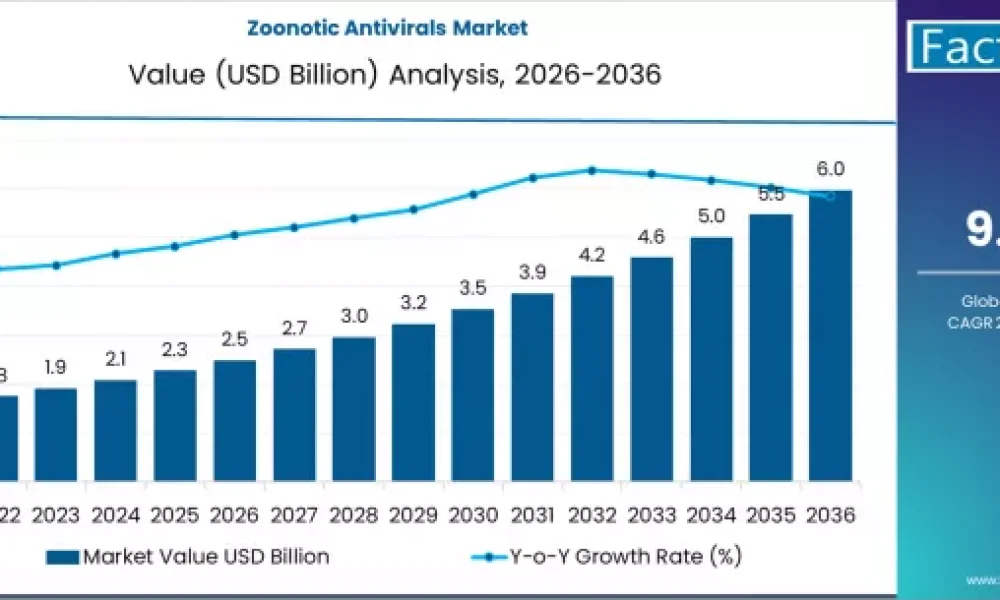
The global Zoonotic Antivirals Market is reaching a critical inflection point, with the broader antiviral sector projected to reach USD 2.49 billion by the end of 2026. This expansion is driven by a global realignment of healthcare priorities following a decade of emerging viral threats, as an estimated 60% of all infectious diseases in humans are now recognized as originating from animal populations.
Driven by a compound annual growth rate (CAGR) of 9.1%, the market is shifting from reactive treatment to proactive, broad-spectrum defense. Leading pharmaceutical entities and veterinary health organizations are collaborating to deploy a new generation of antivirals designed to intercept pathogens at the human-animal interface, targeting high-risk viral families including Coronaviruses, Influenza A (Avian/Swine), and Flaviviruses.
Who and Why: The Drivers of Zoonotic Innovation
The primary stakeholders steering this market are a specialized alliance of global biopharma leaders—such as Gilead Sciences, Merck & Co., Pfizer, and GSK—and dedicated animal health giants like Zoetis and Boehringer Ingelheim. The “Why” is rooted in the increasing frequency of “spillover” events caused by rapid urbanization, climate-driven habitat shifts, and the intensification of global livestock production.
With over 2.5 billion cases of zoonotic distress reported annually, the demand for “cross-species” therapeutic efficacy has never been higher. Healthcare systems are move away from “one-virus-one-drug” models in favor of Broad-Spectrum Antiviral Agents (BSAAs). These therapies are designed to inhibit conserved viral replication mechanisms, providing a crucial first line of defense against both known and “novel” zoonotic pathogens before they achieve pandemic potential.
Request for Sample Report | Customize Report |purchase Full Report – https://www.factmr.com/connectus/sample?flag=S&rep_id=13483
Key Market Drivers and Regional Insights
- The “One Health” Initiative: Governments have allocated billions to the “One Health” framework, which integrates human, animal, and environmental surveillance. This policy shift is accelerating the approval of antivirals that can be used prophylactically in high-risk zones.
- Veterinary Antiviral Surge: The veterinary anti-infectives segment is currently the fastest-growing sub-sector, projected to reach USD 7.4 billion in 2026. This growth is fueled by the need to protect livestock—the “bridge” for many human infections—from endemic viral threats like Foot-and-Mouth Disease and Lumpy Skin Disease.
- Geographic Leadership: North America maintains the largest market share (approx. 40%) due to its advanced R&D infrastructure. However, the Asia-Pacific region is the fastest-growing market, driven by rising healthcare expenditure in China and India and a focused effort to mitigate zoonotic risks in dense urban-rural corridors.
Technological Innovation: AI and Host-Targeted Therapy
In 2026, the market is being revolutionized by AI-driven drug discovery. Artificial intelligence is now used to predict viral mutation patterns, allowing researchers to develop antivirals that target stable “host factors”—cellular pathways that the virus requires but cannot easily mutate against. This approach significantly reduces the risk of drug resistance, a primary hurdle in traditional antiviral therapy.
Furthermore, the rise of mRNA-based therapeutic platforms—originally popularized by vaccines—is now being applied to “on-demand” antiviral production, shortening the development timeline for zoonotic interventions from years to months.
“The zoonotic antiviral market is no longer a niche segment of infectious disease; it is the cornerstone of global health security,” says a lead clinical strategist. “By treating the animal reservoir and the human recipient as part of a single ecosystem, we are finally moving ahead of the curve.”
Competitive Landscape and Future Outlook
The market is characterized by high-value strategic acquisitions, such as Merck’s expansion into aqua-health and Zoetis’s investment in digital herd monitoring. As we look toward 2035, the industry valuation is expected to climb toward USD 127 billion, supported by the mass commercialization of monoclonal antibodies and oral antiviral sachets for both companion animals and at-risk human populations.
About the Zoonotic Antivirals Sector
The Zoonotic Antivirals sector specializes in the research, development, and distribution of medications designed to prevent or treat viral infections that jump from animals to humans. By integrating veterinary science with human medicine, the sector provides essential tools—including protease inhibitors, neuraminidase inhibitors, and host-targeted therapies—to safeguard global food supplies and public health from emerging viral threats.
About Fact.MR
Fact.MR is a global market research and consulting firm, trusted by Fortune 500 companies and emerging businesses for reliable insights and strategic intelligence. With a presence across the U.S., UK, India, and Dubai, we deliver data-driven research and tailored consulting solutions across 30+ industries and 1,000+ markets. Backed by deep expertise and advanced analytics, Fact.MR helps organizations uncover opportunities, reduce risks, and make informed decisions for sustainable growth.



