
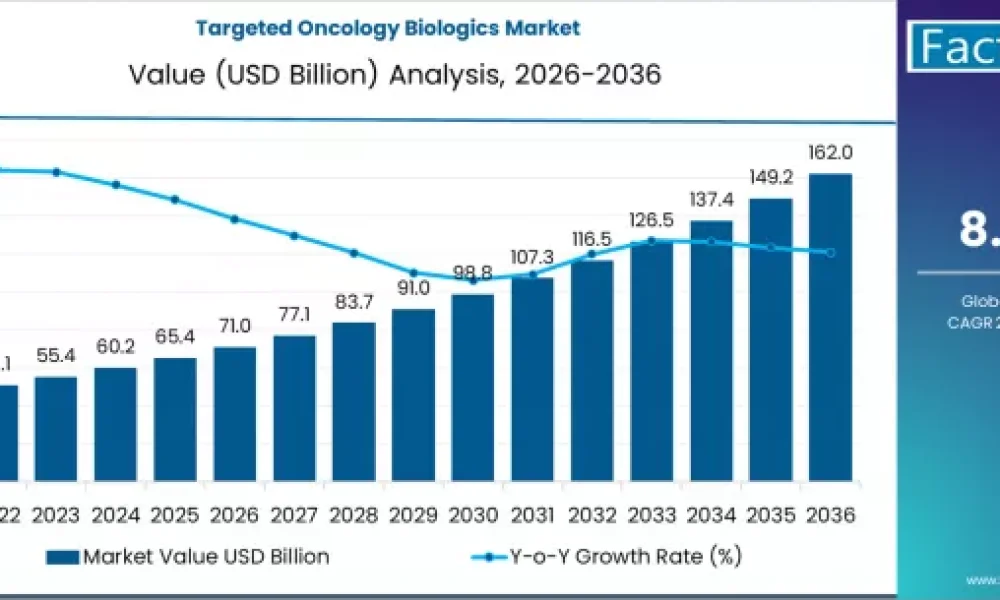
The global Targeted Oncology Biologics Market is entering a transformative era, with market valuations projected to reach USD 71.01 billion by the end of 2026. This growth, characterized by a steady CAGR of 8.6%, signals a structural shift in global healthcare away from broad-spectrum chemotherapy toward “precision-strike” biologics that minimize systemic toxicity while maximizing therapeutic efficacy.
Driven by an aging global population and rapid advancements in biotechnology, the market is currently dominated by Monoclonal Antibodies (mAbs), which account for approximately 65% of total revenue. This trend is underpinned by the pharmaceutical industry’s aggressive pivot toward biomarker-guided therapies, allowing clinicians to tailor treatments to a patient’s specific genetic profile.
The “Who and Why” of the Biologics Revolution
The primary stakeholders steering this market are a mix of established pharmaceutical giants—including Merck & Co., Roche, AstraZeneca, and Bristol Myers Squibb—and agile biotechnology innovators focused on next-generation modalities. The “Why” is rooted in a critical global health need: with cancer incidence projected to rise significantly over the next decade, traditional treatments are being supplemented or replaced by biologics that offer superior survival rates and lower adverse-effect profiles.
Notably, blockbuster drugs like Keytruda (Merck) and Darzalex (Johnson & Johnson) continue to lead in revenue, but the market is seeing a new wave of growth from Antibody-Drug Conjugates (ADCs) and Bispecific Antibodies. These therapies are being positioned earlier in clinical lines, reflecting a shift toward curative-intent treatments in early-stage disease.
Request for Sample Report | Customize Report |purchase Full Report – https://www.factmr.com/connectus/sample?flag=S&rep_id=13478
Key Market Drivers and Regional Insights
- Regulatory Acceleration: Fast-track approval pathways from the FDA and EMA are reducing time-to-market for breakthrough biologics, particularly those targeting rare “orphan” indications and intractable solid tumors.
- Liquid Biopsies and AI Integration: In 2026, the integration of AI-driven diagnostics and liquid biopsies is enabling earlier detection of tumor-associated antigens. This allow for the “anticipatory” deployment of biologics before traditional symptoms appear.
- Geographic Leadership: North America remains the largest market, contributing over 44% of global revenue due to its robust R&D ecosystem. However, the Asia-Pacific region is emerging as the fastest-growing segment, fueled by massive healthcare infrastructure investments in China and India.
The Rise of Biosimilars and Market Accessibility
As patents on several first-generation biologic blockbusters expire, the Oncology Biosimilars segment is gaining momentum. This is a critical development for global health equity, as biosimilars are projected to lower treatment costs by 20–30%, expanding access to advanced care in emerging economies. In 2026, healthcare systems in the EU and select Asian markets are increasingly mandating biosimilar first-line use to manage escalating oncology spends.
“We are moving past the ‘one-size-fits-all’ era of oncology,” says a lead clinical analyst. “Targeted biologics are no longer just an option for late-stage salvage; they are becoming the foundational pillar of the modern treatment journey.”
Competitive Landscape and Future Outlook
The competitive landscape is characterized by high-value strategic alliances. Pharmaceutical leaders are increasingly partnering with specialized AI firms to generate “AI-ready” datasets for drug discovery. By 2030, the market is expected to evolve toward mRNA-based cancer vaccines and allogeneic (off-the-shelf) cell therapies, which could push the industry valuation toward USD 442 billion by 2035.
Current R&D focus has also shifted toward addressing immunotherapy resistance, with triple-combination regimens—pairing checkpoint inhibitors with metabolic modulators—entering pivotal Phase 3 trials in early 2026.
About the Targeted Oncology Biologics Sector
The Targeted Oncology Biologics sector encompasses therapeutic products derived from living organisms designed to specifically target cancer-promoting proteins or pathways. This specialized field includes monoclonal antibodies, antibody-drug conjugates, and cell-based therapies, all of which represent the vanguard of precision oncology and the future of sustainable, high-efficacy cancer management.
About Fact.MR
Fact.MR is a global market research and consulting firm, trusted by Fortune 500 companies and emerging businesses for reliable insights and strategic intelligence. With a presence across the U.S., UK, India, and Dubai, we deliver data-driven research and tailored consulting solutions across 30+ industries and 1,000+ markets. Backed by deep expertise and advanced analytics, Fact.MR helps organizations uncover opportunities, reduce risks, and make informed decisions for sustainable growth.



