
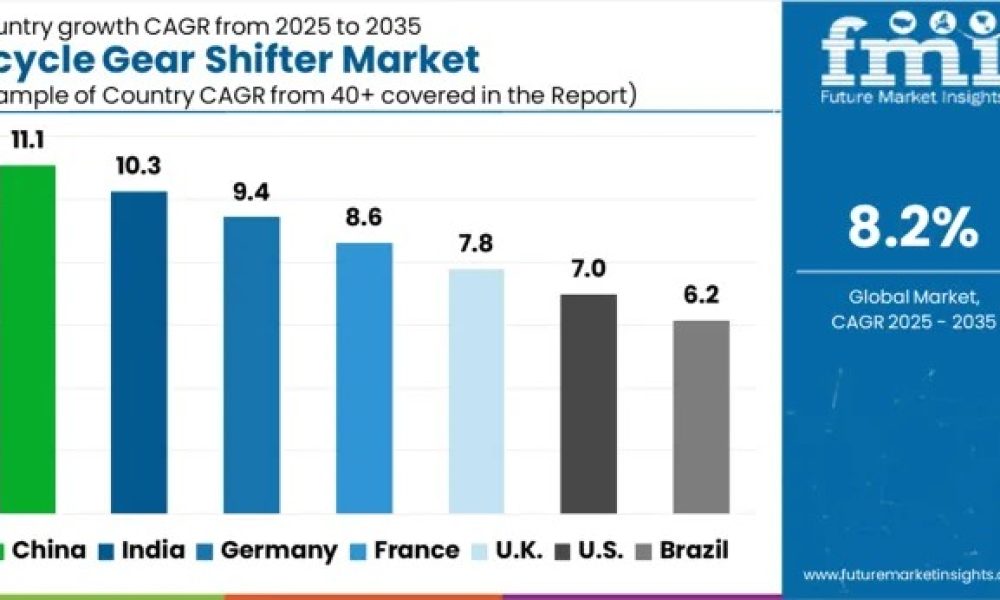
The global bicycle gear shifter market is entering a high-growth phase, supported by structural shifts in urban mobility, recreational cycling, and rapid technological advancement in drivetrain systems. The market is estimated to be valued at USD 1.4 billion in 2025 and is projected to reach USD 3.1 billion by 2035, expanding at a robust compound annual growth rate (CAGR) of 8.2% over the forecast period.
This growth trajectory reflects a fundamental change in how bicycles are used and perceived globally—from basic transportation tools to performance-driven, technology-enabled mobility solutions. Gear shifters, as a core control interface between rider and drivetrain, are increasingly viewed as critical performance components rather than commodity parts, driving higher value realization across both OEM and aftermarket channels.
Early-Phase Growth Anchored in Recreational Cycling and Urban Mobility
Market expansion in the early forecast years is largely fueled by the rising popularity of cycling for recreation, fitness, and daily commuting. Growing health awareness, congestion in urban centers, and sustainability initiatives have led to increased bicycle adoption across North America, Europe, and Asia-Pacific. As multi-gear bicycles gain preference over single-speed models, demand for reliable, ergonomic, and precise gear shifters has risen steadily.
Simultaneously, governments and municipalities are investing heavily in cycling infrastructure, including bike lanes and urban mobility programs, creating a supportive environment for higher bicycle penetration. These developments directly translate into increased demand for drivetrain components, particularly gear shifters that enhance rider comfort, control, and adaptability across varied terrains.
Get access to comprehensive data tables and detailed market insights — request your sample report today!
https://www.futuremarketinsights.com/reports/sample/rep-gb-25846
E-Bikes Transform Market Dynamics and Value Creation
One of the most significant growth accelerators for the bicycle gear shifter market is the rapid adoption of electric bicycles (e-bikes). E-bikes require gear shifting systems that can handle higher torque, frequent gear changes, and seamless integration with electric drive units. As a result, shifters designed specifically for e-bike applications are generating disproportionately higher revenue growth compared to conventional systems.
Innovations such as automated, semi-automatic, and electronic gear shifting systems are gaining traction, particularly in mid- to high-end e-bike models. These technologies improve shift accuracy, reduce rider effort, and enhance drivetrain longevity, making them increasingly attractive to both manufacturers and consumers. Over the long term, the convergence of e-bikes and smart shifting technologies is expected to significantly elevate average selling prices and margin potential within the market.
Trigger Shifters Lead by Product Type
By product category, trigger shifters hold the leading position, accounting for 34.2% of market share in 2025. Their dominance is driven by widespread adoption across mountain, urban, and hybrid bicycles, where reliability and tactile feedback are critical. Trigger shifters are favored for their compact form factor, ease of use, and precise gear engagement, particularly on flat-handlebar configurations.
Manufacturers continue to refine trigger shifter designs using lightweight materials, improved ergonomics, and enhanced internal mechanisms. These incremental innovations support continued demand, especially among riders seeking durable, low-maintenance solutions without transitioning to higher-cost electronic systems.
Mechanical Systems Retain a Strong Technology Base
Despite growing interest in electronic and wireless shifting, mechanical gear shifters remain the dominant technology, holding 47.9% of the market share. Their leadership is underpinned by affordability, ease of repair, and broad compatibility across bicycle types. Mechanical systems continue to perform strongly in emerging markets and entry- to mid-level bicycles, where cost sensitivity and serviceability are key purchase considerations.
Ongoing improvements in cable routing, friction reduction, and material durability have extended the performance envelope of mechanical systems, enabling them to coexist alongside electronic alternatives rather than being displaced outright.
Mountain Bikes Drive Application-Level Demand
From an application standpoint, mountain bikes represent the largest demand segment, accounting for 41.6% of the market. Off-road cycling places high stress on drivetrain components, making precise, durable gear shifting essential. Growth in trail riding, enduro, and recreational mountain biking—supported by investments in bike parks and trail networks—continues to stimulate demand for both rugged mechanical and advanced electronic shifter systems.
As participation expands beyond professional riders to enthusiasts and fitness-focused consumers, demand for mid-range and performance-oriented shifters is rising steadily.
Asia-Pacific Emerges as the Fastest-Growing Region
Regionally, the bicycle gear shifter market shows strong momentum in Asia-Pacific, driven by urbanization, expanding middle-class populations, and government-backed cycling initiatives. China leads with an estimated CAGR of 11.1%, supported by large-scale adoption of bicycles and e-bikes, domestic manufacturing strength, and infrastructure development. India follows at 10.3%, reflecting rising fitness awareness, improving purchasing power, and growing use of bicycles for urban commuting.
Europe remains a high-value market characterized by strong cycling culture and premium product adoption. Germany (9.4% CAGR) and the UK (7.8%) benefit from sustainability-driven transport policies and robust demand for high-performance and electric bicycles. North America, led by the United States (7.0%), continues to expand through recreational cycling, e-bike uptake, and aftermarket upgrades.
Drive Your Business Growth Strategy: Checkout the Report for Key Insights
https://www.futuremarketinsights.com/checkout/25846
Competitive Landscape Defined by Innovation and Brand Equity
The competitive environment is shaped by global leaders such as Shimano, SRAM, and Campagnolo, which command strong brand loyalty and technological leadership across mechanical and electronic shifting systems. Shimano’s broad portfolio and Di2 electronic platform, SRAM’s wireless eTap systems, and Campagnolo’s premium road offerings define the high-performance end of the market.
Mid-tier and value-focused players including microSHIFT, L-TWOO, Sensah, Box Components, and SunRace Sturmey Archer are gaining traction by offering cost-effective, reliable alternatives tailored to specific riding disciplines and regional markets. Competition is increasingly centered on performance differentiation, integration with e-bike systems, and user experience, rather than pricing alone.
Outlook
As cycling continues to evolve into a technology-driven mobility and lifestyle segment, gear shifters will remain a focal point of innovation and value creation. Growth through 2035 will be shaped by e-bike penetration, smart shifting technologies, and expanding cycling infrastructure, positioning the bicycle gear shifter market as a dynamic and increasingly strategic segment within the global cycling ecosystem.
Why Choose FMI: Empowering Decisions that Drive Real-World Outcomes: https://www.futuremarketinsights.com/why-fmi
About Future Market Insights (FMI)
Future Market Insights, Inc. (FMI) is an ESOMAR-certified, ISO 9001:2015 market research and consulting organization, trusted by Fortune 500 clients and global enterprises. With operations in the U.S., UK, India, and Dubai, FMI provides data-backed insights and strategic intelligence across 30+ industries and 1200 markets worldwide.



