
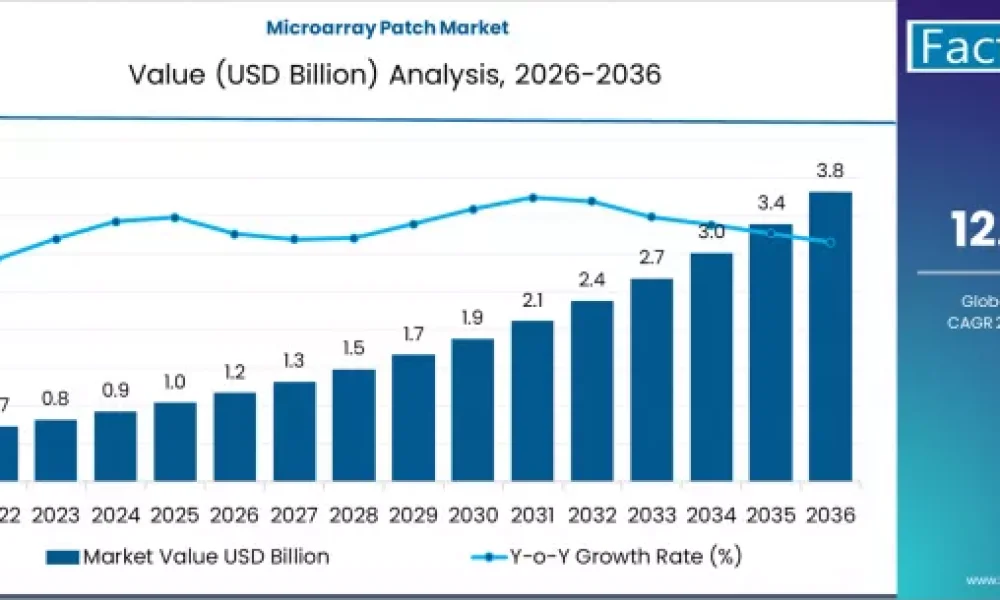
The global Microarray Patch Market is projected to witness significant growth through 2036 as interest in minimally invasive delivery technologies increases across pharmaceutical, biotechnology, and public health sectors. Microarray patches — also known as microneedle patches — are innovative transdermal delivery systems composed of arrays of microscopic needles that painlessly penetrate the skin’s outer layer to deliver vaccines, therapeutics, and biologics without the need for traditional injections. These patches offer advantages including simplified administration, improved patient compliance, reduced risk of needle-related injuries, and minimized cold-chain dependency.
Microarray patches are attracting attention from healthcare providers, immunization programs, and drug developers as they offer a user-friendly alternative to conventional parenteral delivery. The market is being driven by technological advancements in microneedle fabrication, expanded applications beyond vaccines to include hormone therapies and chronic disease treatments, and a growing focus on expanding access in community and home care settings. With aging populations and rising emphasis on preventative healthcare, these versatile delivery platforms are positioned to transform how therapeutics are administered globally.
Market Outlook (2026–2036)
Market Value in 2026: Estimated at USD 0.59 Billion
Market Value in 2036: Projected at USD 3.22 Billion
Forecast CAGR (2026–2036): Approximately 17.2%
Leading Product Segment: Vaccine-Loaded Microarray Patches
Dominant Application: Infectious Disease Immunization and Preventive Healthcare
Primary End Users: Hospitals, Immunization Programs, Outpatient Clinics
The projected robust growth reflects expanding research investment, increasing clinical trial activity, and rising acceptance of microneedle technologies across therapeutic areas.
To Access the Complete Data Tables & in-depth Insights, Request a Discount on this report: https://www.factmr.com/connectus/sample?flag=S&rep_id=13403
Market Overview
Microarray patches consist of micron-sized projections fabricated from polymers, sugars, or silicon-based materials that are engineered to carry active pharmaceutical ingredients (APIs) or vaccines. When applied to the skin, these microneedles bypass the stratum corneum without stimulating pain receptors, enabling efficient delivery of payloads directly into the dermal microcirculation. This approach reduces patient discomfort and enhances ease of use compared with conventional syringes and needles, making it attractive for mass immunization campaigns, self-administration, and needle-averse populations.
Delivery via microarray patches may also improve immune response characteristics, reduce dosage requirements, and lower dependency on cold-chain logistics — especially beneficial in resource-limited settings.
Key Market Drivers
1. Rising Demand for Needle-Free Vaccination Solutions
Needle aversion, risk of needlestick injuries, and challenges associated with cold-chain logistics in traditional vaccination campaigns are driving interest in microarray patches that enable safer, simpler delivery.
2. Growth in Preventive Healthcare and Immunization Coverage
Global initiatives to improve vaccine coverage for seasonal influenza, emerging infectious diseases, and routine immunizations are expanding the need for user-friendly, scalable delivery technologies.
3. Technological Advancements and Clinical Validation
Progress in microneedle design, bioactive formulation science, and manufacturing processes has accelerated clinical research and regulatory progress. Enhanced drug stability and consistent performance further strengthen market adoption.
4. Expansion of Self-Administration and Home Healthcare
Microarray patches support self-administration by patients outside of traditional clinical environments, aligning with broader trends toward decentralized and home-based care.
Market Segmentation Insights
By Product Type:
Solid Microarray Patches
Coated Microarray Patches
Dissolvable and Biodegradable Microneedle Patches
Hollow Microneedle Systems
Hybrid and Novel Design Configurations
By Application Area:
Vaccine Delivery (Infectious Diseases, Seasonal Immunizations)
Hormone and Endocrine Therapies
Pain Management and Analgesic Delivery
Chronic Disease Treatments
Dermatological and Cosmetic Applications
By End User:
Hospitals and Clinics
Immunization and Public Health Programs
Home Healthcare Providers
Research and Clinical Trial Facilities
Specialty Treatment Centers
Regional Demand Dynamics
North America is anticipated to lead the microarray patch market due to strong healthcare infrastructure, robust investment in medical technology innovation, and high adoption of advanced delivery systems. The United States, in particular, drives demand through extensive clinical research, supportive regulatory environments, and widespread implementation of immunization programs.
Europe follows closely, supported by collaborative public health initiatives, advanced biotech ecosystems, and early adoption of novel therapeutics. Countries with established immunization networks are exploring microneedle patch integration for seasonal and emerging disease vaccination efforts.
Asia Pacific is expected to register the fastest regional growth as large population bases, increasing healthcare spending, and expansion of community health services drive demand for accessible, cost-effective delivery technologies. Investments in local manufacturing and clinical research in China, Japan, India, and Southeast Asia further accelerate adoption.
Emerging markets in Latin America and Middle East & Africa are gradually adopting microarray patch technologies as immunization coverage expands and home-based healthcare services develop.
Competitive Landscape
The microarray patch market features a mix of pharmaceutical innovators, biotechnology firms, medical device developers, and research institutions focused on microneedle technology. Key strategies among market participants include advancing microneedle design, optimizing drug formulation and stability, securing regulatory approvals, and forming strategic partnerships with pharmaceutical manufacturers to co-develop patch-based therapeutics.
Competition is differentiated based on patch performance, ease of application, drug loading capacity, manufacturing scalability, and established clinical evidence. Investments in production capacity, quality control systems, and cost-efficient fabrication methods are also central to market positioning.
Future Outlook
The Microarray Patch Market is expected to sustain strong momentum through 2036 as healthcare systems seek innovative, patient-centric delivery solutions that improve compliance, safety, and access. Continued advancements in microneedle engineering, expanded clinical validation, and integration with large-scale immunization frameworks will further bolster market adoption.
As demand for needle-free, efficient, and effective delivery technologies continues to rise, microarray patches are positioned to play a critical role in the future of preventive healthcare, therapeutic delivery, and home-based medical care worldwide.
Have specific requirements or need assistance on report pricing or have a limited budget? Please contact [email protected]
About Fact.MR:
Fact.MR is a global market research and consulting firm, trusted by Fortune 500 companies and emerging businesses for reliable insights and strategic intelligence. With a presence across the U.S., UK, India, and Dubai, we deliver data-driven research and tailored consulting solutions across 30+ industries and 1,000+ markets. Backed by deep expertise and advanced analytics, Fact.MR helps organizations uncover opportunities, reduce risks, and make informed decisions for sustainable growth



