
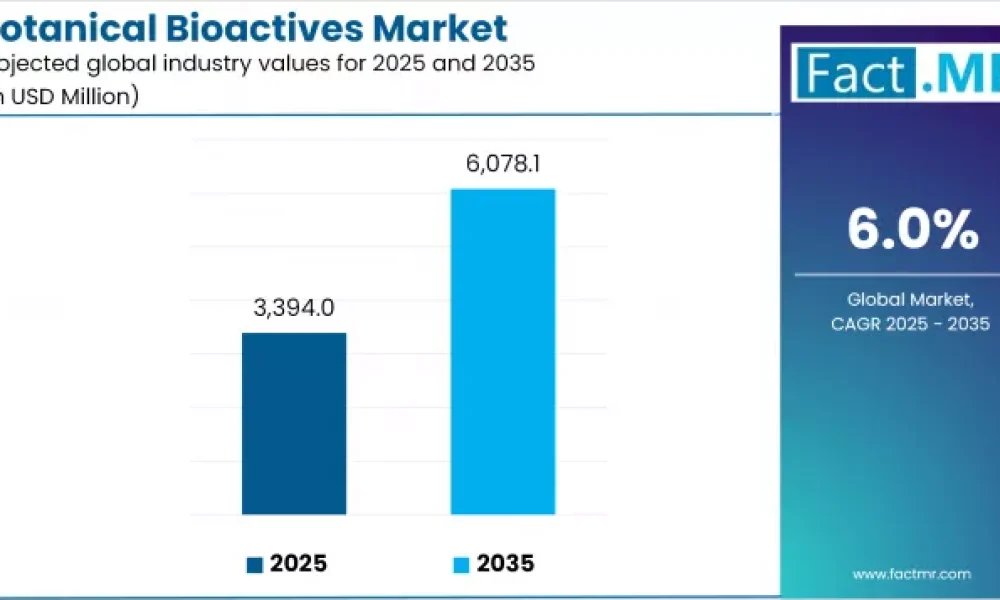
The global Botanical Bioactives Market — comprised of plant-derived compounds used for health benefits — is forecast to expand substantially over the next decade, driven by rising consumer health awareness and expanding applications across nutraceuticals, functional foods, cosmetics, and pharmaceuticals. The market is projected to grow from approximately USD 3.39 billion in 2025 to over USD 6.0–6.2 billion by 2035/36, reflecting a compound annual growth rate (CAGR) of around 6.0–6.1%. This trajectory signals a near 2× market expansion over a decade, a testament to both ongoing consumer demand for natural bioactive ingredients and broader industry adoption across diverse end uses.
To access the complete data tables and in-depth insights, request a Discount On The Report here: https://www.factmr.com/connectus/sample?flag=S&rep_id=11065
2. Drivers of Market Growth
a. Rising Health Consciousness & Preventive Wellness
Consumers globally are increasingly prioritizing preventive health and natural wellness solutions, shifting choices toward plant-based, minimally processed ingredients. Botanical bioactives such as polyphenols, flavonoids, saponins, terpenoids, and essential oils offer well-documented antioxidant, anti-inflammatory, and therapeutic benefits, making them attractive for dietary supplements, functional foods, and beverage applications.
b. Clean-Label & Sustainability Trends
The “clean-label” movement — driven by demand for transparent sourcing and eco-friendly products — has accelerated botanical adoption. Consumers now prefer products free from synthetic additives, with traceable sourcing and sustainability credentials. This trend is reshaping product portfolios toward botanicals that can be validated for safety, origin, and environmental stewardship, supporting premium positioning and higher value capture.
c. Advancements in Extraction & Bioavailability Technologies
Improved extraction technologies (e.g., supercritical CO₂, enzymatic extraction, nano-encapsulation) and enhanced bioavailability delivery systems are enabling higher purity, better stability, and targeted efficacy for botanical bioactives. These technologies support cross-category integration — from nutraceutical capsules to functional beverages and cosmeceuticals — broadening product appeal and effectiveness.
d. Regulatory Alignment & Clinical Validation
Regulatory frameworks in mature markets increasingly emphasize standardized extracts, validated health claims, and rigorous safety data. This shift encourages manufacturers to invest in clinical research and product substantiation, which in turn builds consumer trust and supports regulatory acceptance in multiple jurisdictions.
3. Adoption Trends & Segment Dynamics
a. By Bioactive Type
The market comprises several major botanical compound classes:
Polyphenols & Flavonoids: key drivers due to strong antioxidant and disease-prevention profiles.
Saponins & Terpenoids: high growth segments due to multifunctional applications in metabolic health and skin care.
Saponins are expected to grow at a robust CAGR (~7.0%), slightly higher than polyphenols (~6.9%), indicating strong commercial interest in specialized bioactives with multi-functional benefits.
b. By Form & Application
Powdered forms currently dominate (~36% share) due to stability and ease of incorporation into formulations, followed by liquids, capsules, and tablets.
In terms of application:
Dietary Supplements & Nutraceuticals continue to lead due to rising preventive health trends.
Functional Foods & Beverages are rapidly adopting botanicals to enhance health claims.
Cosmetics & Personal Care increasingly use botanical antioxidants and anti-inflammatory extracts.
Pharmaceutical applications are gaining traction as complementary health solutions.
c. Regional Adoption Trends
North America: High consumer awareness, mature regulatory systems, and established supplement markets drive consistent growth.
Europe: Strong demand for clean-label and organic products, with Germany, France, and the UK leading innovation.
Asia Pacific: Fastest-growing region, fueled by traditional medicine systems, rising incomes, and urban health trends — especially in China and India.
Latin America & Middle East/Africa: Emerging markets with rising interest in botanical health solutions but slower adoption due to infrastructure and regulatory variability.
4. Portfolio Priorities & Strategic Imperatives
a. Innovation in High-Value Bioactives
Leading companies are expanding portfolios into high-efficacy, clinically validated botanical extracts. Products targeting specific health outcomes — e.g., cognitive wellness, metabolic health, immune resilience, skin radiance — are gaining premium valuation.
b. Traceability, Sustainability & Certification
Investments in supply chain traceability, sustainable cultivation, and eco-certifications are becoming strategic differentiators. Products with certified sustainable sourcing and transparent ingredient histories command stronger market loyalty.
c. Cross-Sector Collaborations
Partnerships between botanical suppliers and food, nutrition, and pharmaceutical manufacturers are expanding application pathways. Co-development leads to integrated solutions that offer targeted health benefits — a key competitive edge as markets mature.
d. Digital & Personalized Nutrition Platforms
The rise of digital health and personalized nutrition services enables tailored botanical recommendations, increasing targeted adoption. Companies that integrate consumer data with product portfolios stand to capture share in personalized wellness segments.
5. Market Challenges & Restraints
Despite strong growth, the market faces several challenges:
a. Quality & Standardization Variability
Differences in cultivation, harvesting, and extraction methods can lead to inconsistent bioactive profiles — presenting challenges for standardization, regulatory approval, and consumer trust.
b. High R&D & Regulatory Compliance Costs
Developing clinically validated products with rigorous safety data requires significant investment, potentially limiting innovation among smaller players.
c. Raw Material Supply Chain Risks
Botanical supply chains are susceptible to climate impacts, geopolitical shifts, and agricultural variability — making consistent sourcing challenging.
6. Competitive Landscape & Future Outlook
The botanical bioactives market is moderately fragmented, with major ingredient producers leading due to global reach, broad portfolios, and R&D capabilities. Smaller innovators focus on niche, high-value compounds.
Looking ahead to 2036:
Innovation will pivot toward high-efficacy targeted botanicals, backed by clinical evidence.
Integrated supply chains with digital traceability will become industry standard.
Personalized nutrition and bioavailability technologies will significantly expand adoption.
Emerging markets (Asia, Latin America) will drive incremental growth.
Conclusion
The Botanical Bioactives Market is poised for sustained growth through 2036, underpinned by consumer preference for natural wellness solutions, technological advancements, and expanding applications across industries. Strategic focus on portfolio innovation, traceability, sustainability, and regulatory compliance will determine competitive leadership — while regional diversification and digital integration will unlock future demand.
Have a specific Requirements and Need Assistant on Report Pricing or Limited Budget please contact us – [email protected]
To View Related Report :
Bioactive Materials Market https://www.factmr.com/report/bioactive-materials-market
High-Temperature Glass & Basalt Hybrid Yarns Market https://www.factmr.com/report/high-temperature-glass-basalt-hybrid-yarns-market
High-Durability Direct Print and Coding Inks for DPP Compliant Packaging Market https://www.factmr.com/report/high-durability-direct-print-and-coding-inks-for-dpp-compliant-packaging-market
Antimicrobial Copper-Infused Filament Yarns Market https://www.factmr.com/report/antimicrobial-copper-infused-filament-yarns-market



