
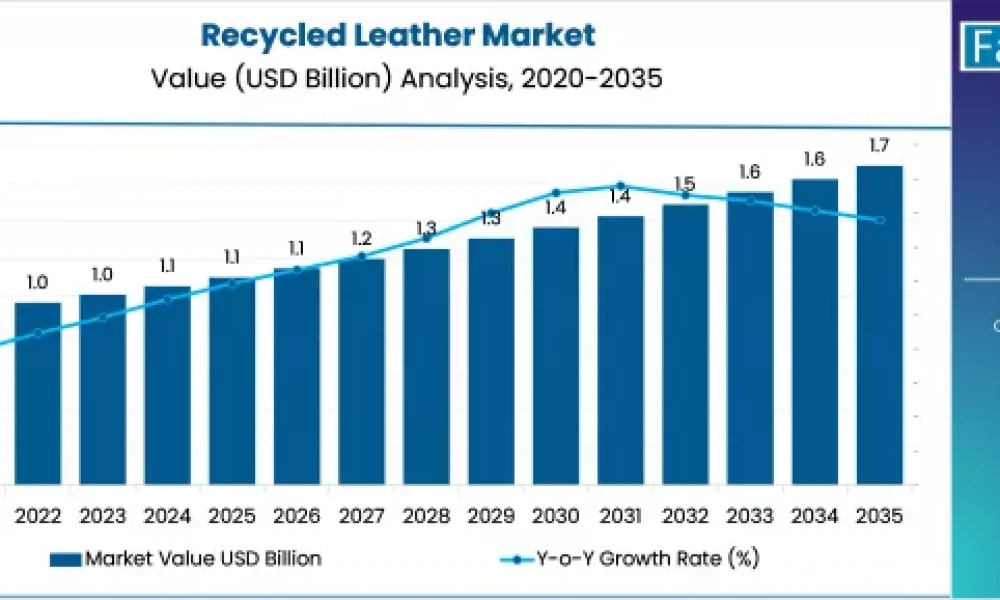
The Global Recycled Leather Market is poised for steady expansion from 2026 through 2036, driven by rising consumer and industrial focus on sustainability, circular economy mandates, and eco-friendly materials adoption across major end-use industries. The global market value is projected to grow from approximately USD 1.2 billion in 2026 to USD 1.7 billion by 2035, registering a compound annual growth rate (CAGR) of ~4.4% over the forecast period.
Across application segments, furniture remains a leading driver due to its broad utilization of recycled leather for sofas, chairs, and office seating solutions. Bonded leather is the dominant grade, valued for its versatility, cost-effectiveness, and eco-friendly credentials.
To access the complete data tables and in-depth insights, request a Discount On The Report here: https://www.factmr.com/connectus/sample?flag=S&rep_id=5444
Market Value Snapshot
| Year (Estimated) | Market Value (USD Billion) | Key Drivers |
|---|---|---|
| 2025 | 1.1 | Sustainability trends, nascent adoption |
| 2026 | ~1.2 | Rising eco-conscious consumers |
| 2030 | ~1.4 | New material innovations |
| 2035 | ~1.7 | Broad industrial adoption |
2. Key Market Dynamics
2.1. Growth Drivers
Sustainability & Environmental Awareness
Heightened environmental awareness among end consumers and regulatory bodies is a central growth catalyst. Recycled leather, derived from scraps and offcuts of traditional leather manufacturing, significantly reduces landfill waste and lowers the carbon footprint relative to conventional leather. Adoption by fashion, footwear, automotive, and furniture industries is accelerating as brands integrate sustainable materials to align with corporate ESG goals.
Expansion Across End-Use Sectors
Fashion & Footwear: Sustainable fashion brands are increasingly incorporating recycled leather in accessories and footwear lines to satisfy eco-conscious consumers.
Automotive Interiors: Recycled leather is gaining traction for seat coverings and interior trims, especially in electric and hybrid vehicles where sustainable materials strengthen brand positioning.
Furniture: The furniture industry benefits from recycled leather’s aesthetic appeal and improved durability, driving significant volume growth.
Regulatory & Policy Support
Government initiatives promoting recycling, waste reduction, and circular material use bolster market growth. Policy frameworks incentivizing sustainability — including subsidies, environmental certifications, and waste management regulations — create a supportive macro environment for recycled leather adoption.
2.2. Market Restraints and Risks
Higher Production Costs
One of the critical challenges is the relatively higher production cost of recycled leather compared to traditional leather. Recycling processes necessitate advanced machinery, adhesives, and additional production stages (e.g., shredding, bonding, finishing), which increase operational expenditure and, consequently, product prices. This can inhibit adoption in price-sensitive segments and limit broader market penetration.
Supply Chain Fragmentation
The recycled leather sector depends on widely scattered leather scrap sources from tanneries and manufacturing facilities worldwide. This geographic dispersion contributes to inconsistent raw material quality, complicates centralized procurement, and raises logistics costs. Fragmented scrap collection networks can increase transportation and procurement costs by 15–20% compared to more centralized synthetic material supply chains.
Quality & Performance Concerns
Despite technological advancements, variations in recycled leather texture, grain, and durability remain concerns, especially for high-end applications. Inconsistent performance relative to virgin leather — particularly in tensile strength and wear resistance — poses risk to premium segment adoption and can affect long-term product reliability.
2.3. Technological Drivers & Supply Chain Innovations
Advances in Processing Technology
Progress in bonding techniques, surface finishing, and material engineering is improving the durability and aesthetic consistency of recycled leather, enabling it to compete more effectively with conventional leather. Such technological innovations also expand potential applications and drive product performance improvements.
Circular Supply Chains & Reverse Logistics
Emerging circular economy models are reshaping supply chain structures. Collaborative networks among tanneries, factories, and waste collection firms are enhancing scrap recovery rates. Modern reverse logistics practices and improved sorting systems increase raw material availability and reduce wastage.
Sustainable Material Development
Eco-friendly bio-based binding agents and solvent-free adhesive technologies are reducing volatile organic compound (VOC) emissions and environmental impact during production. These sustainability-focused innovations strengthen the recycled leather value proposition for industrial partners and end consumers alike.
3. Regional Dynamics & Trajectory
North America & Europe
North America, backed by strong consumer sustainability awareness and progressive environmental policies, represents a key market with high demand for recycled leather materials. Europe, with stringent waste management regulations and strong corporate sustainability agendas, is a major growth contributor, particularly in fashion and automotive end markets.
Asia-Pacific Growth Potential
The Asia-Pacific region is rapidly expanding due to rising disposable incomes, growing environmental consciousness, and significant adoption in emerging markets such as India and South Korea. India’s leather craftsmanship heritage, coupled with sustainability initiatives and government support, positions it as a strategic growth hub. South Korea’s government investments into green technologies further accelerate market expansion.
4. Competitive Landscape
The global recycled leather market features a mix of established and emerging players focused on sustainability, quality improvement, and market penetration. Key companies include:
Elvis & Kresse
CTL Leather
Looptworks
Wolf and Lamb
Recyc Leather
Teo Geo
EcoLeather
Firms are investing in R&D to enhance recycled leather properties, expand application portfolios, and align offerings with rising eco-friendly standards. Strategic collaborations and technology partnerships further help consolidate market positioning.
5. Future Outlook & Market Trajectory (2026–2036)
Looking forward, the recycled leather market is expected to maintain steady growth throughout 2026–2036, supported by:
Increasing global sustainability mandates
Retail brand commitments to eco-friendly materials
Technological advancements elevating product quality
Emerging applications in automotive interiors and lifestyle products
Despite existing challenges — such as supply chain fragmentation and higher production costs — continuous innovation, enhanced scrap logistics, and rising consumer preference for ethical materials are strong enablers of long-term growth. The market’s trajectory should see broader penetration into premium textile and fashion segments as recycled leather performance approaches parity with conventional leather.
Have a specific Requirements and Need Assistant on Report Pricing or Limited Budget please contact us – [email protected]
To View Related Report :
Recycled Polyester Market https://www.factmr.com/report/recycled-polyester-market
Recycled Polyolefin Market https://www.factmr.com/report/recycled-polyolefin-market
Recycled Asphalt Market https://www.factmr.com/report/recycled-asphalt-market
Recycled Polyolefin Composites Market https://www.factmr.com/report/recycled-polyolefin-composites-market



