
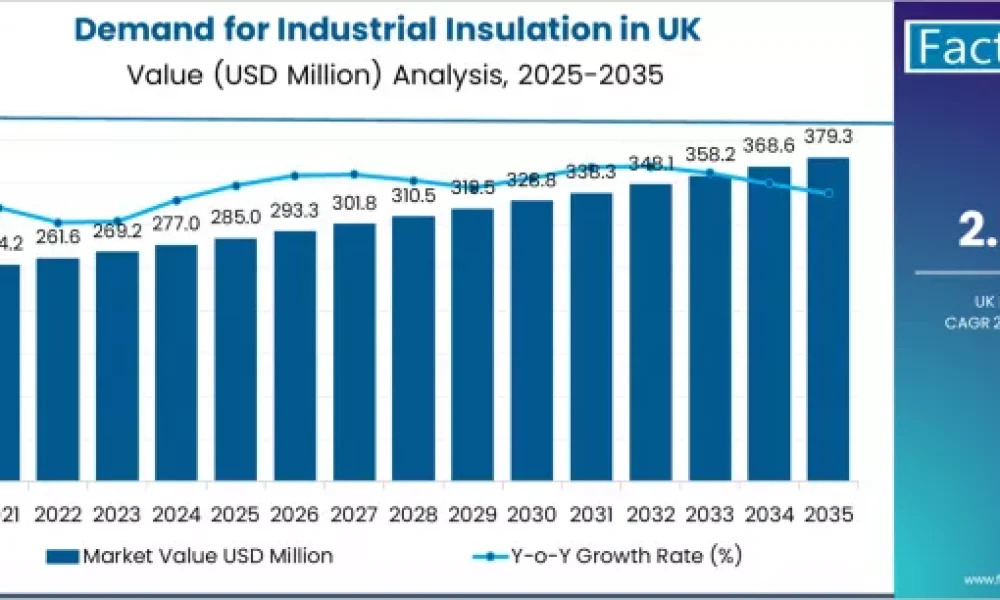
The U.S. industrial insulation market is poised for steady growth between 2025 and 2035, driven by rising energy efficiency mandates, stringent environmental regulations, and the need for cost-effective industrial operations. Industrial insulation, which includes materials such as mineral wool, fiberglass, polyurethane, and aerogel, plays a critical role in thermal management, energy conservation, and process efficiency across multiple sectors. Its adoption is closely linked to sustainability goals, operational safety, and regulatory compliance in industries such as oil & gas, power generation, chemical processing, and manufacturing.
With industries increasingly focusing on reducing energy losses and operational costs, industrial insulation has become a vital investment for facility managers and engineers. The market growth is further supported by the adoption of advanced insulation materials that offer improved performance, durability, and environmental benefits. The next decade is expected to witness technological innovations, enhanced material formulations, and growing emphasis on sustainable industrial practices.
Introduction
Industrial insulation involves the use of specialized materials to reduce heat transfer, control temperature, and improve energy efficiency in industrial processes. These materials provide critical benefits such as reducing energy consumption, minimizing carbon emissions, enhancing worker safety, and protecting equipment from thermal stress. Industrial insulation is widely applied in pipelines, boilers, storage tanks, reactors, and other high-temperature industrial equipment.
In recent years, the adoption of energy efficiency standards and environmental compliance requirements has driven the U.S. industrial insulation market. Industrial operators are increasingly aware of the operational and environmental advantages of insulating equipment, resulting in higher demand for high-performance insulation solutions that meet modern industrial needs.
To access the complete data tables and in-depth insights, request a Discount On The Report here: https://www.factmr.com/connectus/sample?flag=S&rep_id=12329
Market Overview
The U.S. industrial insulation market is influenced by multiple factors:
- Energy Efficiency: Industrial insulation reduces heat loss in high-temperature systems, contributing to lower energy consumption and operational costs.
- Environmental Compliance: Regulations governing emissions and sustainability encourage the adoption of effective insulation solutions.
- Safety and Durability: Insulation materials protect equipment from thermal stress, prevent accidents, and ensure safe working conditions.
- Cost-Effectiveness: Insulating industrial equipment lowers energy bills and reduces maintenance costs, making it a financially sound investment.
Manufacturers are developing insulation materials with improved thermal resistance, mechanical strength, fire retardancy, and eco-friendly formulations. High-performance solutions such as mineral wool blankets, cellular glass, and aerogel-based insulation are gaining prominence in critical industrial applications.
Regional Insights
Industrial insulation adoption varies across different regions in the United States:
- West Coast: Stringent environmental regulations, high industrial activity, and a focus on sustainable operations drive demand for advanced insulation materials.
- Northeast: Dense industrial clusters, power plants, and chemical processing facilities prioritize energy efficiency and thermal management, promoting insulation usage.
- Midwest & South: Manufacturing hubs, refineries, and heavy industries utilize insulation solutions to optimize processes, reduce energy losses, and comply with safety standards.
Regional growth is influenced by industrial infrastructure, energy efficiency initiatives, environmental compliance requirements, and awareness regarding operational cost savings.
Key Trends and Forecast (2025–2035)
- Rising Focus on Energy Efficiency
Industrial operators are increasingly investing in insulation solutions to enhance thermal efficiency, reduce energy consumption, and minimize operational costs. Energy-intensive industries such as power generation, oil & gas, and chemicals are driving demand for high-performance insulation materials.
- Adoption of Advanced Insulation Materials
Innovation in materials such as aerogel, polyurethane foams, and vacuum-insulated panels is improving thermal performance, durability, and space efficiency. These advanced materials are gaining attention for applications in high-temperature environments and critical industrial processes.
- Regulatory Compliance and Sustainability Initiatives
Environmental regulations and sustainability mandates are shaping the market, requiring industries to reduce carbon emissions and energy losses. Industrial insulation solutions play a key role in meeting these requirements and supporting green manufacturing practices.
- Expansion in Industrial End-Use Sectors
The oil & gas, power generation, chemical, and manufacturing sectors are expanding their use of insulation materials to improve efficiency, safety, and operational longevity. Industrial expansion and modernization projects are expected to drive further adoption.
- Integration with Digital Monitoring and Smart Systems
Smart insulation monitoring systems, IoT-enabled sensors, and digital control mechanisms are being integrated to monitor performance, detect failures, and optimize maintenance schedules. These technological advancements enhance efficiency, reduce downtime, and improve asset management.
- Focus on Fire-Resistant and Safety-Compliant Insulation
Industrial operators are increasingly opting for fire-resistant and non-combustible insulation materials to comply with safety standards and mitigate risks in high-temperature processes.
Applications & End-Use Outlook
Oil & Gas
Industrial insulation is extensively used in pipelines, refineries, and processing plants to manage heat, prevent energy loss, and maintain operational safety. Fire-resistant and high-temperature materials are critical in this sector.
Power Generation
Power plants utilize insulation for boilers, turbines, and piping systems to enhance energy efficiency and reduce thermal loss. High-performance insulation ensures continuous operation under high-temperature conditions.
Chemical and Petrochemical Industries
Insulation protects chemical reactors, storage tanks, and pipelines from thermal stress, prevents chemical reactions caused by temperature variations, and ensures operational safety.
Manufacturing and Heavy Industries
Factories and manufacturing facilities leverage insulation materials to maintain optimal process temperatures, reduce energy costs, and safeguard equipment and personnel.
Construction and Infrastructure
Industrial insulation is increasingly incorporated into large-scale construction projects, commercial facilities, and critical infrastructure to ensure energy efficiency, thermal comfort, and safety compliance.
Conclusion
The U.S. industrial insulation market is entering a period of sustained growth and innovation from 2025 to 2035. Driven by energy efficiency mandates, environmental regulations, and the need for operational safety, industrial insulation is becoming a critical component in multiple industrial and commercial sectors. Technological advancements, smart monitoring systems, and high-performance insulation materials are expected to define the market over the next decade.
Companies that focus on sustainable, durable, and advanced insulation solutions will be well-positioned to capture emerging opportunities. As industries continue to prioritize energy conservation, operational efficiency, and regulatory compliance, industrial insulation will remain a vital investment, supporting both economic and environmental objectives in the United States.
Have a specific Requirements and Need Assistant on Report Pricing or Limited Budget please contact us – [email protected]
About Fact.MR
Fact.MR is a global market research and consulting firm, trusted by Fortune 500 companies and emerging businesses for reliable insights and strategic intelligence. With a presence across the U.S., UK, India, and Dubai, we deliver data-driven research and tailored consulting solutions across 30+ industries and 1,000+ markets. Backed by deep expertise and advanced analytics, Fact.MR helps organizations uncover opportunities, reduce risks, and make informed decisions for sustainable growth.



