
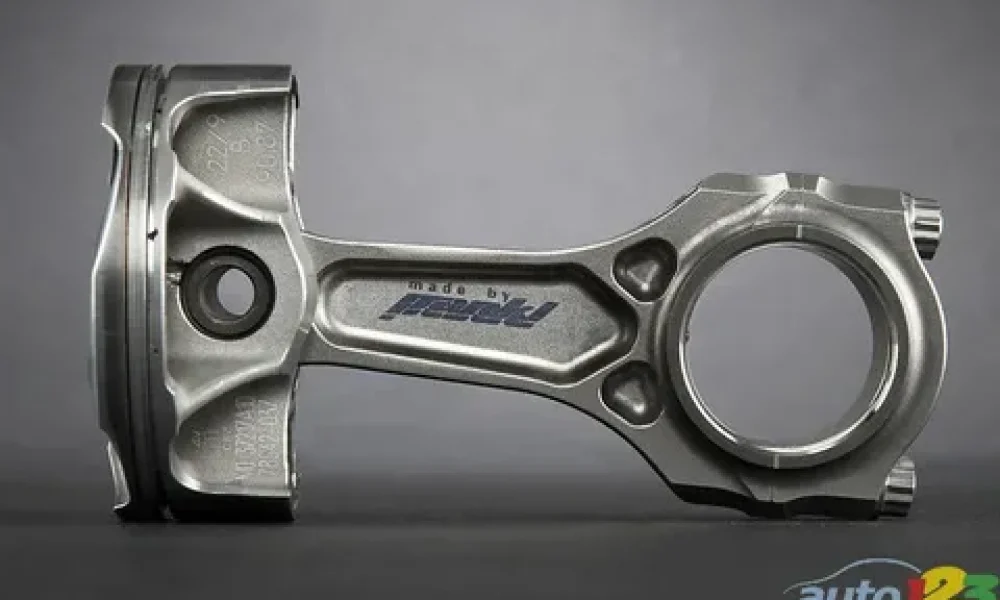
The global automotive connecting rods market is entering a new phase of technological evolution and capacity expansion, driven by the dual forces of engine efficiency requirements and the continued integration of internal combustion engines (ICEs) within hybrid propulsion systems. The market is projected to grow from USD 14.7 billion in 2025 to USD 22.5 billion by 2035, registering a steady CAGR of 4.4% over the forecast period. Revenues in 2024 were reported at USD 14.1 billion, highlighting consistent demand across passenger vehicles, commercial fleets, motorsport applications, and aftermarket performance upgrades.
Despite industry-wide electrification trends, connecting rods remain indispensable across ICE and hybrid vehicles due to their critical role in engine durability, fuel optimization, and high-load performance. Advances in materials science, automated manufacturing, and simulation-driven engineering continue to reinforce the component’s relevance through 2035.
Innovation Momentum Accelerates with New Product Releases
In 2024, the market witnessed significant advancements in lightweight connecting rod technologies. CP-Carrillo introduced a new portfolio of titanium and aluminum alloy connecting rods at the PRI Show, targeting high-performance and racing applications. Independent testing reported by EngineLabs highlighted titanium’s improved fatigue resistance and aluminum’s value in short-distance motorsport due to superior inertia reduction. These developments have already gained traction in drag racing and endurance engines where thermal stability and dynamic stress resistance are essential.
Parallel innovations are unfolding in Europe, where AC Floby has continued supplying forged steel connecting rods optimized with simulation-driven designs and fracture-split manufacturing. These rods are now standard in Euro 7–compliant engines that demand high strength under downsized, turbocharged configurations.
Additionally, experimental carbon fiber connecting rods progressed through prototype testing in 2024. Early trials—conducted in collaboration with motorsport manufacturers—showcase compelling strength-to-weight ratios, with commercialization anticipated later in the next decade.
Subscribe for Year-Round Insights → Stay ahead with quarterly and annual data updates
https://www.futuremarketinsights.com/reports/sample/rep-gb-14755
Market Performance Strengthens Across Semi-Annual Cycles
A detailed semi-annual market assessment highlights improved momentum. From 2024–2034, the market grew at 3.9% CAGR in H1 and 4.5% in H2, while projections for 2025–2035 show slight increases to 4.1% in H1 and 4.7% in H2. Both periods recorded a 20 BPS improvement, illustrating consistent revenue realization patterns and rising OEM order volumes in the latter half of each fiscal cycle.
Forged Designs and Steel Materials Remain Key Investment Segments
Forged connecting rods accounted for 52% of the global market in 2025, supported by a projected 4.7% CAGR through 2035. Their structural reliability under cyclic loads, high temperatures, and high rpm makes them the preferred choice across passenger cars, diesel powertrains, and high-performance vehicles.
Steel—both forged and cast—maintained its position as the dominant material category with 63% market share in 2025, expanding at a 4.5% CAGR through 2035. Widespread global availability, cost-effectiveness, and robust mechanical properties continue to drive its use, particularly in mainstream ICE and hybrid vehicles in China, India, and Brazil. High-strength alloy steel grades are increasingly used to reduce mass while ensuring endurance against thermal and mechanical stress.
Capacity Expansion Accelerates Across APAC and Europe
Manufacturers are scaling operations to meet rising global automotive output, with Asia Pacific emerging as the fastest-growing production hub.
- Bharat Forge expanded its Indian manufacturing footprint to address strong demand from commercial and passenger vehicle OEMs.
- Mahle GmbH increased production capacity in Europe and North America, supported by new investments in lightweight aluminum connecting rod production.
- Capacity expansion is also driven by hybrid powertrains, which require smaller, high-strength, thermally optimized rods to support compact engine architectures.
This trend is expected to strengthen further as emerging markets urbanize and vehicle ownership expands across South Asia, Southeast Asia, and Latin America.
Sustainability, Lightweighting, and Automation Reshape Industry Priorities
Regulatory pressure to lower emissions and enhance fuel efficiency is accelerating the shift toward lightweight materials such as titanium, aluminum alloys, and advanced steels. Manufacturers increasingly integrate recyclable materials and energy-efficient processes in line with global sustainability objectives.
Automation is also transforming production, with advanced forging lines, high-precision machining, robotic assembly, and digital quality monitoring systems reducing defects and cycle times. Integration with LIMS platforms provides real-time data tracking, enhancing compliance and product quality.
Competitive Landscape: Tier 1 Suppliers Strengthen Global Footprint
Tier 1 companies currently capture 25–30% of the global market, supported by diversified product portfolios, strong OEM partnerships, and advanced R&D ecosystems. Key players include:
- Linamar Corporation
- Mahle GmbH
- Bharat Forge Limited
- Yasunaga Corporation
- Metalart Corporation
- Sanjo Machine Works Ltd.
- Albon Engineering & Manufacturing Plc
- CP Carrillo Inc.
Recent updates underscore ongoing innovation. In March and April 2024, Linamar expanded its high-performance component line and integrated advanced forging techniques to support hybrid and electric powertrains. Mahle introduced a new range of high-performance alloy rods for hybrid vehicles, focusing on weight reduction and thermal efficiency.
Personalize Your Experience: Ask for Customization to Meet Your Requirements
https://www.futuremarketinsights.com/customization-available/rep-gb-14755
Country-Level Insights Highlight Asia’s Market Dominance
Demand remains strongest in East and South Asia:
- China is projected to hold 72.7% of the East Asia market by 2035, driven by domestic vehicle production exceeding 30 million units in 2023 and export volumes surpassing 4 million units.
- India is forecast to grow at 4.4% CAGR, anchored by strong OEM investment and expanding middle-class mobility.
- Japan leads in innovation, recording 5.2% CAGR, supported by advanced hybrid engine development.
In the West, the USA and Germany continue to drive demand for high-performance and premium engine components.
Why Choose FMI: Empowering Decisions that Drive Real-World Outcomes:
https://www.futuremarketinsights.com/why-fmi
About Future Market Insights (FMI)
Future Market Insights, Inc. (FMI) is an ESOMAR-certified, ISO 9001:2015 market research and consulting organization, trusted by Fortune 500 clients and global enterprises. With operations in the U.S., UK, India, and Dubai, FMI provides data-backed insights and strategic intelligence across 30+ industries and 1200 markets worldwide.



