
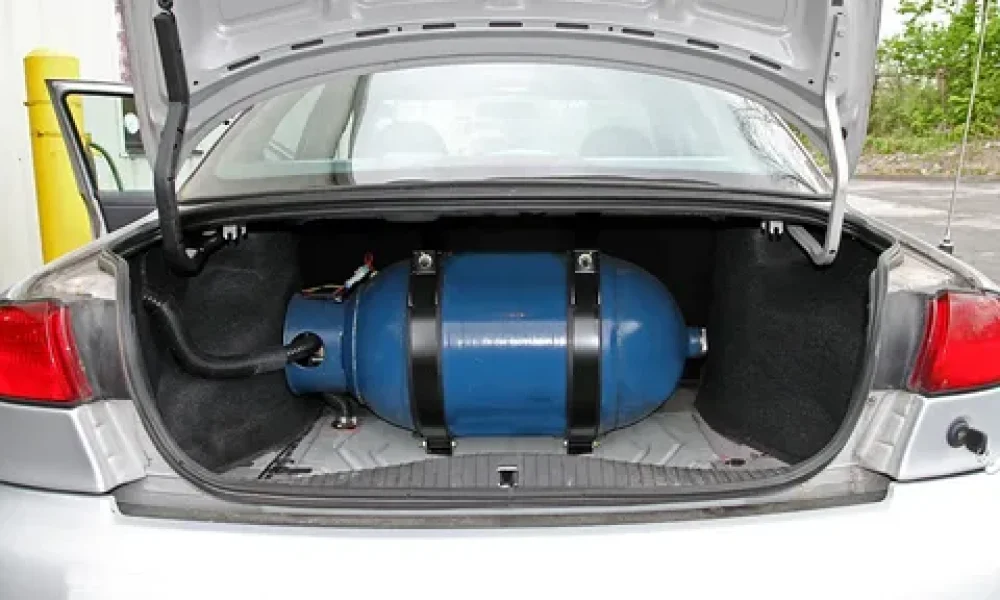
The global automotive natural gas vehicle (NGV) market is entering a period of accelerated expansion as governments, fleet operators, and OEMs intensify efforts to reduce emissions and stabilize long-term fuel costs. The market is projected to grow from USD 15.64 billion in 2025 to USD 31.06 billion by 2035, reflecting a robust 7.1% CAGR driven by rising fuel price volatility, stringent carbon-reduction policies, and increasing adoption of compressed natural gas (CNG), liquefied natural gas (LNG), and renewable natural gas (RNG) platforms across commercial applications.
NGVs have emerged as a strategic alternative to diesel in markets seeking cleaner combustion, lower total operating costs, and improved urban air quality. With advancements in engine technology, expanded refueling infrastructure, and favorable policy incentives, NGVs are becoming a foundational component of the global sustainable mobility ecosystem.
Manufacturers Strengthen Product Portfolios as Near-Zero Emission Engines Gain Traction
Engine manufacturers are advancing NGV capabilities through efficiency improvements, dual-fuel architectures, and compatibility with renewable substitutes. Cummins Inc. continues to lead the segment with its B6.7N and L9N engines, both certified to meet near-zero emission standards. These powertrains operate on CNG and RNG, delivering up to 90% lower greenhouse gas emissions than diesel engines while maintaining performance standards required for refuse trucks, transit buses, and regional haul operations.
OEM strategic flexibility is also rising. In February 2025, Slashdot Tech reported that Honda’s new U.S. manufacturing complex—designed primarily for electric vehicle production—was built with cross-platform compatibility to support NGV production for Latin America and Asia. This reinforces the company’s long-term commitment to alternative fuel diversification, despite strong global EV momentum.
In emerging markets, innovation continues to expand renewable fuel potential. In 2024, Barbados deployed its first bio-CNG vehicle, powered by gas derived from Sargassum seaweed, under a CARICOM-supported initiative. The project demonstrated a scalable model for transforming ocean waste into RNG for transportation.
Subscribe for Year-Round Insights → Stay ahead with quarterly and annual data updates
https://www.futuremarketinsights.com/reports/sample/rep-gb-530
Fleet Conversion Programs and Infrastructure Expansion Fuel Commercial Adoption
Commercial fleets remain the backbone of NGV demand. The segment accounted for 46% of the global gaseous-fuel vehicle market in 2025 and is forecast to grow at 7.4% CAGR through 2035. Logistics operators, taxi service providers, and municipal agencies are increasingly transitioning away from diesel, unlocking significant fuel cost savings and emissions reductions.
Countries including India, Brazil, and those in Eastern Europe continue to integrate NGVs into public service fleets, supported by subsidies, reduced road taxes, and dedicated procurement mandates for CNG buses, waste collection vehicles, and shared-mobility fleets. In the United States, utilities such as Nicor Gas play a central role by providing fueling stations, technical support, and conversion incentives, accelerating NGV integration into school districts, delivery fleets, and municipal transport operations.
Medium-range vehicles—those offering 300 to 600 km driving capability—dominated fleet conversions in 2025, representing 39% of market share. Their strong growth outlook (7.5% CAGR) is attributed to their suitability for intercity distribution, regional logistics, and fixed-route transit operations. China, Italy, and Argentina continue to lead medium-range NGV adoption supported by large-scale refueling networks and strong policy frameworks.
Rising Emission Concerns and R&D Investment Strengthen Market Outlook
Governments worldwide are advancing decarbonization initiatives, prompting long-term investment into cleaner combustion technologies. In the U.S., the Department of Energy committed USD 23 million in 2023 to reduce transportation-related carbon emissions, reinforcing natural gas as a climate-neutral solution for heavy-duty and urban fleets. Manufacturers including Honda, Suzuki, and others are expanding R&D investment in advanced natural gas engines, fuel-cell-compatible systems, and hybridized NGV architectures.
Emerging projects such as Suzuki’s biogas plant initiative in Haryana, India, highlight growing interest in closed-loop, renewable fuel ecosystems capable of supporting rural and urban mobility demands.
Public awareness campaigns and educational programs from U.S. federal agencies continue to improve consumer understanding of NGV benefits. Rising income levels in developing economies further support retail adoption, especially for CNG passenger vehicles and three-wheelers.
Technology Advancements and Infrastructure Growth Transform Accessibility
Industry innovation is progressing across multiple fronts. Dual-fuel engines have reduced range anxiety, enabling smooth transitions between natural gas and gasoline. Lighter and stronger composite tanks have increased storage capacity while reducing vehicle weight. Virtual pipeline systems—using mobile containerized gas storage—are emerging as a high-potential solution for extending gas accessibility to remote regions lacking pipeline infrastructure.
Global expansion of CNG and LNG stations reinforces market confidence. India alone plans to build thousands of additional refueling locations, further supporting its national clean mobility mission.
Industry Challenges: Price Volatility and Resource Constraints
Despite strong growth, the market faces notable headwinds. Natural gas pricing remains influenced by geopolitical tensions, extreme weather conditions, production cycles, and shifting energy policies. Limited natural gas reserves in some regions and insufficient refueling infrastructure continue to restrict NGV uptake, particularly in developing markets.
Personalize Your Experience: Ask for Customization to Meet Your Requirements
https://www.futuremarketinsights.com/customization-available/rep-gb-530
Regional Outlook
Asia Pacific
Asia Pacific leads global adoption, driven by China and India. China’s aggressive transition away from diesel, supported by 5,000+ LNG stations and financial assistance covering 20–50% of LNG truck costs, has propelled LNG trucks to 42% of heavy-duty sales in early 2024. India continues to encourage NGV deployment through CNG retrofitting subsidies, reduced road taxes, and mandatory adoption of CNG buses in urban areas.
North America
The U.S. held 16.7% market share in 2024, supported by LCFS credits, state incentives, and federal programs supporting freight and transit fleet transitions.
Europe
Germany, France, and the UK remain core European markets, backed by tax exemptions, excise duty reductions, grants for LNG/CNG stations, and incentives targeting commercial fleet operators.
Competitive Landscape
Major participants include Hyundai, Honda, Suzuki, General Motors, Ford, Volkswagen, FCA, Mitsubishi, Mercedes-Benz, and Nissan, alongside strong aftermarket and conversion specialists. Competition is intensifying as technology companies and new entrants introduce innovative storage, distribution, and engine solutions.
The automotive natural gas vehicle market is positioned for strong, long-term expansion as global fleets prioritize sustainable, cost-efficient, and scalable transport solutions. The next decade will define new opportunities for manufacturers, infrastructure providers, and energy companies shaping the future of low-carbon mobility.
Why Choose FMI: Empowering Decisions that Drive Real-World Outcomes:
https://www.futuremarketinsights.com/why-fmi
About Future Market Insights (FMI)
Future Market Insights, Inc. (FMI) is an ESOMAR-certified, ISO 9001:2015 market research and consulting organization, trusted by Fortune 500 clients and global enterprises. With operations in the U.S., UK, India, and Dubai, FMI provides data-backed insights and strategic intelligence across 30+ industries and 1200 markets worldwide.



