
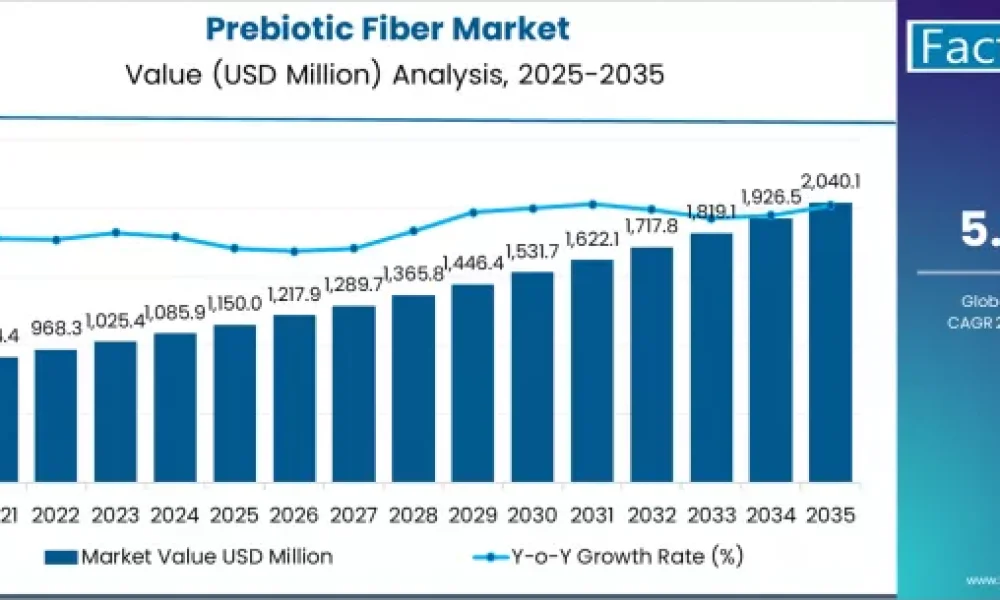
The global prebiotic fiber market is positioned for strong expansion from 2025 to 2035, fueled by rising consumer focus on digestive wellness, the rapid growth of functional foods, and widening applications across nutraceuticals, beverages, infant nutrition, and dietary supplements. Prebiotic fibers—including inulin, fructooligosaccharides (FOS), galactooligosaccharides (GOS), and resistant starch—play a key role in supporting microbiome balance, improving digestive function, and enhancing metabolic health. This report highlights market size, growth drivers, regional trends, technology advancements, and strategic priorities for stakeholders.
Market Size and Growth
The global prebiotic fiber market is valued at USD 1,150 million in 2025 and is projected to reach USD 2,030 million by 2035, marking an absolute growth of USD 880 million over the decade. This reflects 76.5% total growth, with the market forecast to expand at a 5.9% CAGR from 2025 to 2035. Demand is propelled by the rise of gut-health ingredients, clean-label product innovation, and evolving consumer nutrition preferences.
To access the complete data tables and in-depth insights, request a Discount On The Report here: https://www.factmr.com/connectus/sample?flag=S&rep_id=3165
Key Growth Drivers
- Gut-health awareness and lifestyle diseases
A surge in digestive disorders, obesity, and metabolic issues is driving consumers toward prebiotic-enriched diets. Prebiotic fibers support microbiome health, immunity, and nutrient absorption, making them central to preventive nutrition. - Functional and fortified food innovation
Manufacturers are integrating prebiotic fibers into bakery items, snacks, beverages, dairy products, and plant-based alternatives. This trend aligns with clean-label expectations and rising demand for natural, fiber-rich ingredients. - Expanding applications in supplements and infant nutrition
Prebiotic fibers are increasingly used in nutraceuticals, synbiotic formulations, and early-life nutrition to boost digestive resilience and immunity. - Scientific research and R&D investments
Growing clinical evidence supporting the benefits of prebiotics is accelerating adoption among formulators and healthcare professionals.
Regional Insights
Europe and the United States remain significant markets with strong penetration of functional foods and strict regulatory alignment favoring scientifically validated ingredients. Asia-Pacific is emerging as the fastest-growing region, supported by rising urban health awareness, expanding middle-income populations, and increasing demand for fortified foods.
In Europe, inulin and FOS dominate due to widespread incorporation in dairy and bakery. North America exhibits strong demand for supplements and health beverages, while APAC’s growth is anchored in expanding probiotic–prebiotic (synbiotic) offerings.
Technology Trends and Competitive Landscape
Key innovation areas include:
- Microbiome-targeted formulations designed for personalized nutrition
• Next-generation fibers derived from plant byproducts and fermentation
• Synbiotic blends combining probiotics with complementary prebiotics
• Enhanced solubility and stability technologies for beverages and sports nutrition
Competition is intensifying as ingredient innovators, food manufacturers, and nutraceutical brands introduce new prebiotic formats and blends to meet consumer demand.
Challenges
Despite robust growth, the market faces obstacles:
- Variability in global regulatory frameworks for health claims
• Cost pressures for high-quality soluble fibers
• Limited consumer understanding of the difference between probiotics and prebiotics
• Formulation challenges in beverages and high-moisture foods
Educating consumers and improving formulation efficiency remain critical priorities.
Strategic Implications
For manufacturers:
Invest in R&D to develop versatile, label-friendly fibers compatible with multiple food and supplement formats. Prioritize APAC expansion and capitalize on synbiotic innovations.
For food and beverage brands:
Integrate prebiotic fibers into mainstream categories—snacks, beverages, dairy alternatives—to meet fiber-deficiency concerns and clean-label expectations.
For investors:
The market offers strong long-term value, supported by consumer wellness trends, microbiome research, and expanding functional nutrition ecosystems.
Outlook Summary
Between 2025 and 2035, the global prebiotic fiber market will see sustained, high-value growth driven by rising awareness of gut health, scientific validation, and expanding applications in food, supplements, and early-life nutrition. While regulatory differences and formulation challenges persist, the sector offers compelling opportunities for ingredient producers, food manufacturers, and investors committed to delivering science-backed, clean-label nutritional solutions.
Have a specific Requirements and Need Assistant on Report Pricing or Limited Budget please contact us – [email protected]
About Fact.MR
Fact.MR is a global market research and consulting firm, trusted by Fortune 500 companies and emerging businesses for reliable insights and strategic intelligence. With a presence across the U.S., UK, India, and Dubai, we deliver data-driven research and tailored consulting solutions across 30+ industries and 1,000+ markets. Backed by deep expertise and advanced analytics, Fact.MR helps organizations uncover opportunities, reduce risks, and make informed decisions for sustainable growth.



