
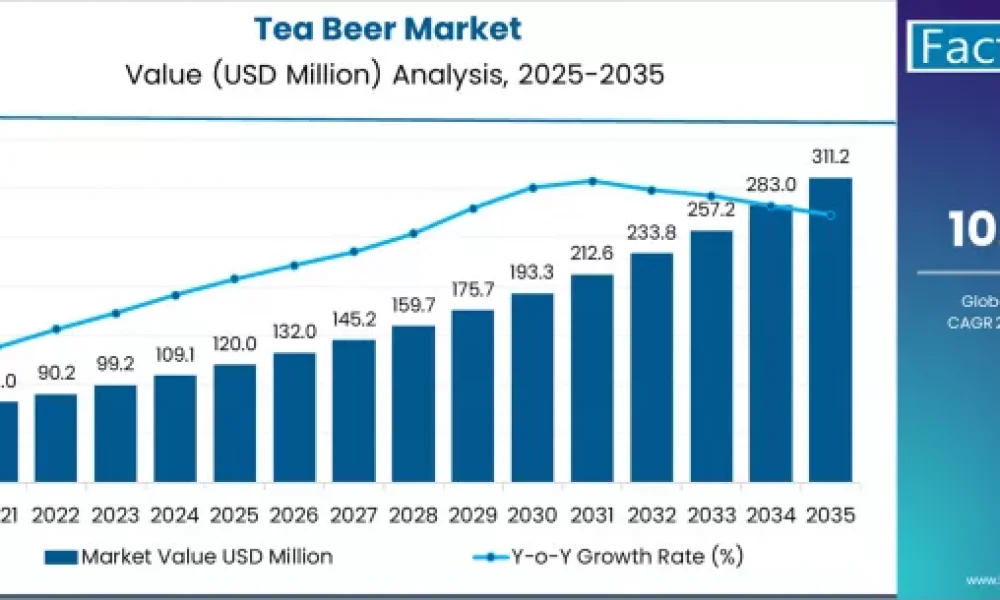
The global tea beer market is set for rapid expansion from 2025 to 2035 as consumers shift toward premium craft beverages, botanical infusions, and hybrid alcoholic formats.
Tea beer—a fusion of fermented tea extracts and traditional brewing techniques—is gaining traction among millennials, wellness-focused consumers, and craft enthusiasts seeking refreshing, low-bitterness, flavor-forward alternatives to conventional beer. This report highlights market size, growth drivers, regional dynamics, product trends, and strategic implications for industry stakeholders.
Market Size and Growth
The global tea beer market is valued at USD 120 million in 2025 and is projected to reach USD 290 million by 2035, marking an absolute increase of USD 170 million. This reflects a substantial 141.7% total growth, with the market forecast to advance at an impressive CAGR of 10% during the period.
This strong growth signals rising consumer appetite for botanical-flavored alcoholic beverages and the emergence of tea beer as a premium specialty category within the craft beer segment.
To access the complete data tables and in-depth insights, request a Discount On The Report here: https://www.factmr.com/connectus/sample?flag=S&rep_id=3340
Key Growth Drivers
Premiumization and flavor exploration
Demand for differentiated, premium craft beverages is rising globally. Tea beer’s unique flavor profiles—from black and green tea to matcha, oolong, chai, and herbal blends—offer brewers a versatile platform to innovate.
Health-leaning alcohol consumption
Moderation-focused consumers are gravitating toward beverages with perceived functional or botanical benefits. Tea-based infusions resonate with buyers seeking lighter, lower-calorie, and refreshing alcohol alternatives.
Rise of craft brewing
Expansion of microbreweries, taprooms, and artisanal beverage brands is accelerating experimentation with novel ingredients, including tea extracts, fermented tea bases, and botanical blends.
Hybrid category innovation
Tea beer sits at the intersection of hard tea, flavored malt beverages, and craft beer—segments experiencing above-average growth. Beverage hybridization continues fueling crossover demand.
Regional Market Insights
North America and Europe lead adoption due to mature craft beer cultures and strong consumer openness to new flavor experiences. The United States, Germany, the UK, and Scandinavian countries are among the fastest-growing markets.
Asia-Pacific—home to deep-rooted tea traditions—offers high potential for premium tea-infused beverage innovation. China, Japan, and South Korea are emerging as strategic hotspots for product experimentation with green tea, oolong, jasmine, and specialty teas.
Challenges persist in markets with limited awareness of tea beer as a category, requiring strong consumer education and experiential marketing.
Product Trends and Competitive Landscape
Flavor innovation dominates, with brands experimenting across black tea, Earl Grey, floral teas, matcha, and fruit–tea blends.
Low-alcohol and sessionable variants are gaining traction, aligning with global moderation trends.
Craft and artisanal brewers hold a competitive edge through small-batch production and localized flavor storytelling.
Packaging trends favor cans, sleek bottles, and premium craft-focused labels designed to communicate authenticity and natural ingredients.
Challenges
Despite rapid growth, the market faces barriers that may moderate adoption levels:
- Limited mainstream awareness compared to traditional beer
- Regulatory variations concerning botanical and additive labeling
- Higher production costs tied to specialty tea sourcing
- Need for consumer education around flavor expectations
Strategic Implications
For manufacturers and brewers:
Prioritize flavor-led innovation, partnerships with premium tea suppliers, and brand positioning around craft quality and natural ingredients. Develop both premium and accessible SKUs to broaden market reach.
For distributors and retailers:
Capitalize on rising demand in the craft and hybrid beverage segments. Highlight tea beer in specialty aisles, craft beer sections, and seasonal beverage events to accelerate discovery.
For investors:
The category’s double-digit growth outlook, strong association with premium craft trends, and rising interest in botanical alcoholic beverages signal substantial long-term opportunity with relatively low saturation.
Outlook Summary
From 2025 to 2035, the global tea beer market is on track for robust growth, propelled by consumer appetite for botanical, refreshing, and innovative craft beverages. With its fusion of tea culture and artisanal brewing, the segment presents high-value opportunities for producers, retailers, and investors. While education and category awareness remain challenges, the strong CAGR and escalating flavor innovation position tea beer as a standout growth segment in the global alcoholic beverages landscape.
Have a specific Requirements and Need Assistant on Report Pricing or Limited Budget please contact us – [email protected]
About Fact.MR
Fact.MR is a global market research and consulting firm, trusted by Fortune 500 companies and emerging businesses for reliable insights and strategic intelligence. With a presence across the U.S., UK, India, and Dubai, we deliver data-driven research and tailored consulting solutions across 30+ industries and 1,000+ markets. Backed by deep expertise and advanced analytics, Fact.MR helps organizations uncover opportunities, reduce risks, and make informed decisions for sustainable growth.



