
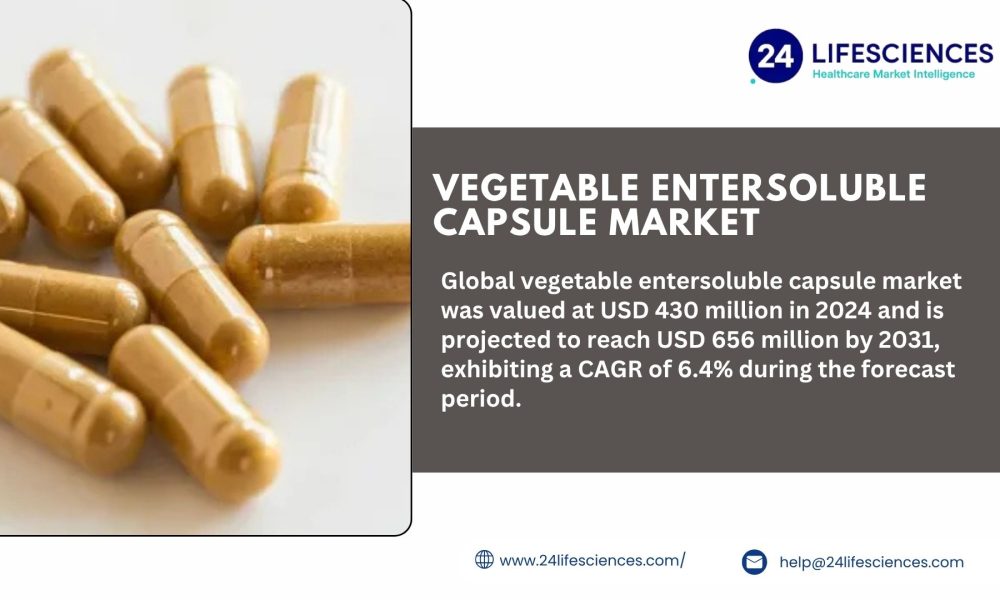
Global vegetable entersoluble capsule market was valued at USD 430 million in 2024 and is projected to reach USD 656 million by 2031, exhibiting a CAGR of 6.4% during the forecast period. While gelatin capsules currently dominate the pharmaceutical capsule market due to lower production costs, the vegetarian alternatives are gaining traction as health-conscious consumers demand plant-based solutions.
Vegetable entersoluble capsules are pharmaceutical-grade shells made from hydroxypropyl methyl cellulose (HPMC), a plant-derived polymer that serves as an alternative to traditional gelatin capsules. These capsules are specifically designed for enteric drug delivery, meaning they resist dissolution in the stomach’s acidic environment and instead release their contents in the intestinal tract. The key advantage of HPMC capsules includes their suitability for vegetarian and vegan formulations, religious acceptability, and reduced risk of cross-linking that can occur with gelatin capsules.
The market growth is being driven by several factors, including increasing pharmaceutical R&D expenditure (global drug spending reached USD 1.48 trillion in 2022) and growing consumer preference for plant-based products. However, challenges remain as manufacturers work to improve production efficiency to compete with gelatin capsules on cost. Major players like Capsugel Healthcare (Lonza) and ACG Worldwide are investing in advanced manufacturing technologies to address these challenges while meeting the rising demand from both pharmaceutical and nutraceutical applications.
Get free sample of this report at : https://www.24lifesciences.com/download-sample/2902/vegetable-entersoluble-capsule-market-market
Recent Development
- Major players like Capsugel Healthcare (Lonza) and ACG Worldwide are investing in advanced manufacturing technologies to improve production efficiency and meet rising demand.
- Development of precision-engineered rotary capsules to optimize large-scale pharmaceutical production.
- Rising emphasis on hypoallergenic and vegan-friendly formulations to comply with global regulatory preferences and consumer expectations.
Market Dynamics
Drivers
- Growing health-conscious consumer base demanding plant-based and sustainable pharmaceutical products.
- Expansion of pharmaceutical R&D expenditure, with global drug spending reaching USD 1.48 trillion in 2022.
- Increasing use of enteric delivery systems for probiotics, gastrointestinal medications, and targeted therapies.
Challenges
- Higher production costs compared to traditional gelatin capsules.
- Need for ongoing technological innovations to ensure stability and precise enteric release.
Opportunities
- Rising adoption of vegetarian and vegan drug formulations worldwide.
- Expansion into emerging markets with increasing pharmaceutical and nutraceutical demand.
- Development of automation and precision-engineered capsule production technologies.
Regional Analysis
- North America: Established market driven by high healthcare expenditure and regulatory acceptance of HPMC capsules.
- Europe: Moderate growth fueled by consumer preference for sustainable and vegan drug products.
- Asia-Pacific: Fastest-growing region, supported by rising pharmaceutical production, aging population, and increasing consumer health awareness.
- Rest of the World: Gradual adoption, mainly in emerging economies focusing on nutraceutical applications.
Competitor Analysis
The market is competitive, with major players focusing on technological innovation, global distribution, and regulatory compliance. Investment in advanced production capabilities helps maintain market leadership and meet rising demand from both pharmaceutical and health product sectors.
Key Players:
- Capsugel Healthcare (Lonza)
- ACG Worldwide
- Medi-Caps
- Sunil Healthcare
- Roxlor
- CapsCanada
- Suheung
- Huang Shan Capsule
- DFC
- Fuji Capsule
Market Segmentation (by Type)
- Rotary Type Capsule: Dominates due to high-volume pharmaceutical production efficiency; subtypes include standard rotary and precision-engineered variants.
- Seamless Type Capsule: Offers enhanced mechanical stability and reduced leakage.
- Twistable Type Capsule: Features flexible twist and lock mechanisms for ease of use in customized formulations.
Market Segmentation (by Application)
- Drug: Leads due to precise enteric release, enhanced bioavailability, and patient compliance.
- Health Products: Includes nutraceuticals and dietary supplements requiring enteric delivery.
- Others: Specialty applications such as veterinary formulations and research use.
Key Company Strategies
- Focus on advanced HPMC formulations for improved stability and enteric performance.
- Expansion of production capacity to meet growing global demand.
- Integration of sustainable plant-based materials and automation technologies to reduce costs and enhance efficiency.
Geographic Segmentation
- North America: Dominates in healthcare adoption and regulatory alignment.
- Asia-Pacific: Fastest-growing due to manufacturing expansion and increasing health awareness.
- Europe & RoW: Moderate growth, with emphasis on sustainable and ethical drug formulations.
Future Outlook
The Vegetable Entersoluble Capsule Market is expected to maintain robust growth, driven by:
- Rising plant-based pharmaceutical adoption.
- Expansion of precision medicine and enteric delivery applications.
- Technological innovations in automated and precision capsule manufacturing.
- Increasing global awareness of vegan, hypoallergenic, and sustainable drug delivery solutions.
VEGETABLE ENTEROSOLUBLE CAPSULE MARKET TRENDS
Rising Demand for Plant-Based Encapsulation Solutions to Drive Market Growth
The global vegetable entersoluble capsule market is experiencing robust growth, fueled by the increasing preference for plant-based and vegan-friendly alternatives in the pharmaceutical and nutraceutical industries. Valued at 430 million USD in 2024, the market is projected to reach 656 million USD by 2031, reflecting a compound annual growth rate (CAGR) of 6.4%. These capsules, primarily composed of hydroxypropyl methylcellulose (HPMC) derived from cellulose, offer a sustainable and ethical option compared to traditional gelatin capsules, which dominate due to lower production costs but face scrutiny over animal-sourced materials. As consumer awareness rises regarding health, environmental impact, and dietary restrictions, manufacturers are pivoting towards vegetable-based solutions that dissolve effectively in the intestines, ensuring targeted drug release and improved bioavailability. This shift not only caters to vegetarian and vegan populations but also addresses regulatory pressures for cleaner labeling in global markets.
Other Trends
Sustainable Sourcing and Eco-Friendly Production
Sustainability has emerged as a key driver, with companies focusing on renewable plant sources for HPMC to reduce carbon footprints and comply with green standards. While gelatin capsules hold a larger market share currently, the vegetable segment is gaining traction through innovations in biodegradable materials, appealing to eco-conscious brands in health products and pharmaceuticals.
Key Innovations
- Precision-engineered rotary capsules for high-volume pharmaceutical production.
- Advanced HPMC formulations ensuring targeted intestinal release.
- Automation and sustainable manufacturing practices to reduce costs and environmental impact.
- Expansion of vegan and kosher-certified capsules for global markets.
Get free sample of this report at : https://www.24lifesciences.com/download-sample/2902/vegetable-entersoluble-capsule-market-market
About 24lifesciences
Founded in 2017, 24LifeScience has emerged as a trusted research and analytics partner for organizations operating within the global life sciences and chemical industries. Our core mission is to provide intelligent, future-ready insights that help clients stay ahead in an increasingly complex and innovation-driven market
International: +1(332) 2424 294 | Asia: +91 9425150513 (Asia)
Website: http://www.24lifesciences.com
Follow us on LinkedIn: http://www.linkedin.com/company/lifesciences24
Comments




