
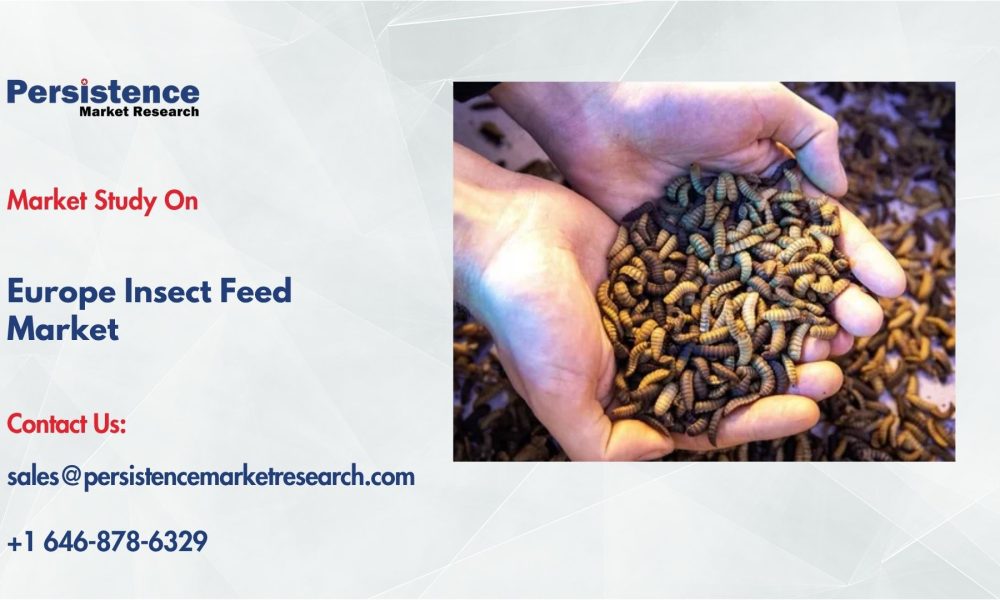
The European insect feed market is projected to experience remarkable growth over the next decade, reflecting the region’s accelerating shift toward sustainable animal nutrition and circular economy models. According to the latest industry assessment, the market is estimated to be valued at US$536.9 million in 2025 and is expected to reach US$1,201.9 million by 2032, expanding at an impressive CAGR of 12.2% during the forecast period from 2025 to 2032. This growth is primarily driven by rising demand for high-protein feed alternatives, growing awareness about environmental sustainability, and regulatory support for insect-derived feed materials.
The surge in consumer awareness regarding the environmental impact of traditional feed ingredients such as fishmeal and soybean meal is fostering a strong preference for alternative protein sources. Insects, being rich in amino acids, fats, and micronutrients, are emerging as a reliable and eco-friendly solution for animal and aquaculture feed. The European Union’s approval of insect-based feed in poultry and aquaculture industries has further fueled adoption, encouraging investments from both established feed producers and emerging biotech firms.
Moreover, the region’s robust innovation ecosystem and technological advancements in insect rearing and feed formulation are enhancing production scalability and cost-efficiency. The integration of automation, artificial intelligence, and biotechnology is enabling mass production while ensuring traceability and quality control across supply chains.
What is driving the rapid adoption of insect-based feed in Europe?
The growing urgency to find sustainable protein alternatives amid the rising global population and declining fishmeal resources is significantly boosting the demand for insect feed. Additionally, Europe’s strong sustainability agenda, reinforced by policies such as the European Green Deal and Farm to Fork Strategy, has created favorable conditions for the insect feed industry to thrive.
The European market is increasingly embracing insect-based feed due to its sustainability benefits and nutritional advantages. Insects require significantly less land, water, and feed compared to conventional protein sources, while their byproducts can be repurposed as organic fertilizers, contributing to circular economy models. This makes insect feed an ideal choice for livestock, aquaculture, and pet food manufacturers striving to lower their environmental footprint and improve feed efficiency.
Receive Sample of Research Report @ https://www.persistencemarketresearch.com/samples/35668
Segmentation Analysis
By Type
The European insect feed market is segmented based on insect type into black soldier fly (BSF), mealworms, crickets, and others. Among these, the black soldier fly segment dominates the market and is anticipated to maintain its leadership position through 2032. BSF larvae are increasingly preferred due to their high protein content, favorable amino acid profile, and efficient feed conversion ratio. Their ability to grow on organic waste substrates further supports sustainability goals, aligning with the European Union’s circular economy initiatives. Mealworms, on the other hand, are witnessing rapid growth due to their use in aquafeed and pet food applications. Their mild flavor and digestibility make them suitable for a range of animal diets, including poultry and swine.
By Application
Based on application, the market is segmented into poultry feed, aquafeed, pig feed, and pet food. The aquafeed segment currently holds the largest share of the European insect feed market. Europe’s aquaculture industry, particularly in countries like Norway, the Netherlands, and Denmark, is increasingly adopting insect protein as a sustainable alternative to fishmeal. The growing focus on reducing dependency on marine resources and improving feed efficiency is propelling demand for insect-based aquafeed. The pet food segment is also witnessing significant growth, driven by rising consumer preference for natural and protein-rich pet diets. Premium pet food brands are introducing formulations enriched with insect protein, positioning them as hypoallergenic, sustainable, and nutrient-dense options.
By Distribution Channel
The market is further segmented by distribution channel into direct sales and indirect sales. Direct sales dominate the market, primarily through partnerships between insect feed producers and animal feed manufacturers. However, indirect sales channels are gaining traction with the growing presence of insect-based feed products in online and retail platforms, catering to small-scale farmers and pet owners seeking sustainable feed solutions.
Regional Insights
Europe remains a global leader in the insect feed market, accounting for a significant share of global revenues. Western European countries such as France, the Netherlands, Belgium, and Germany are at the forefront of commercial insect feed production, owing to supportive government regulations, strong research infrastructure, and proactive investments in biotechnology. France, in particular, is emerging as a key hub due to government-backed initiatives supporting insect farming startups and sustainable agriculture projects.
The fastest-growing region within Europe is expected to be Eastern Europe, with countries such as Poland, Czech Republic, and Hungary witnessing increasing adoption of insect feed technologies. The relatively low cost of production, expanding livestock sector, and growing environmental awareness are driving market expansion in this region. Moreover, collaborations between Western European innovators and Eastern European agricultural cooperatives are fostering technology transfer and scaling up of insect feed production capacities.
Unique Features and Innovations in the Market
The European insect feed industry is characterized by rapid innovation, with companies leveraging automation, AI, and biotechnology to improve efficiency and product quality. Smart insect farming systems equipped with IoT sensors and automated climate control mechanisms are optimizing rearing conditions, ensuring consistent yields and reducing operational costs. Artificial intelligence is being deployed to monitor insect health, predict feed conversion efficiency, and streamline waste-to-feed processes.
Technological advancements are also improving the nutritional profiling of insect-based products. Companies are investing in bio-refining techniques to extract high-value compounds such as chitin, peptides, and oils from insects, thereby expanding their applications beyond feed into nutraceuticals and agriculture. Additionally, the development of modular and scalable insect farming systems is making it easier for small and medium enterprises to enter the market.
Market Highlights
The adoption of insect feed in Europe is primarily driven by sustainability imperatives and regulatory support. The European Commission’s authorization for the use of processed insect protein in poultry and aquaculture feed has been a major milestone, enabling the sector to move from pilot projects to commercial-scale operations. Cost reduction is another significant factor, as insect feed production utilizes organic waste streams, minimizing input costs and contributing to waste valorization.
Sustainability remains the core value proposition, with insect farming producing substantially lower greenhouse gas emissions compared to conventional livestock feed sources. Furthermore, the nutrient-rich insect frass (a byproduct of insect farming) serves as an excellent organic fertilizer, enhancing soil health and closing nutrient loops in agriculture. These factors collectively make insect feed a key enabler of Europe’s transition toward sustainable and resilient food systems.
Do You Have Any Query or Specific Requirement? Request Customization of Report: https://www.persistencemarketresearch.com/request-customization/35668
Key Players and Competitive Landscape
The European insect feed market is moderately consolidated, with a few leading players holding significant market shares. Key companies include Innovafeed, Ynsect, Protix, Entomo Farms, and AgriProtein.
Innovafeed, based in France, has established itself as one of the largest insect protein producers globally. The company focuses on industrial-scale production of black soldier fly larvae for aquafeed and livestock feed applications. Its vertically integrated production model and partnership with major food and agricultural firms highlight its commitment to circular economy principles.
Ynsect, another French pioneer, is a global leader in mealworm protein production. The company has achieved significant breakthroughs in automated vertical farming technology, enabling large-scale, efficient production. Ynsect’s products are used in aquaculture, pet food, and plant nutrition, with operations expanding into North America and Asia.
Protix, headquartered in the Netherlands, is a major player specializing in black soldier fly-based protein and lipids. The company focuses on high-quality feed ingredients and sustainability-driven operations, using AI and data analytics to optimize production processes.
AgriProtein, a UK-based company, has been instrumental in advancing insect meal production for aquaculture and livestock. Its emphasis on waste-to-value conversion and sustainable farming models aligns with Europe’s green growth objectives.
Emerging companies such as Hexafly (Ireland) and Entomo Farms (UK) are also contributing to the competitive landscape through niche innovations and strategic collaborations with agricultural cooperatives. Strategic partnerships, mergers, and R&D investments continue to shape the competitive dynamics, with companies emphasizing scalability, regulatory compliance, and product diversification.
Outlook
The future of the European insect feed market appears highly promising, underpinned by evolving sustainability standards, regulatory approvals, and technological innovation. As the pressure to reduce the carbon footprint of food production intensifies, insect feed is expected to become a mainstream component of Europe’s feed industry. The growing interest from major agribusinesses, aquaculture firms, and pet food manufacturers will continue to fuel market expansion.
Technological advancements such as precision insect farming, smart data analytics, and genetic optimization are expected to enhance efficiency, reduce costs, and improve product consistency. Moreover, policy frameworks promoting sustainable agriculture and circular economy practices will continue to support the integration of insect feed into mainstream livestock production systems.
By 2032, Europe is likely to witness a fully established insect feed value chain, encompassing large-scale farming, waste valorization, and multi-application utilization. The alignment of economic, environmental, and social sustainability goals positions insect feed as a cornerstone of Europe’s green transition.
Explore the Latest Trending Research Reports:




