
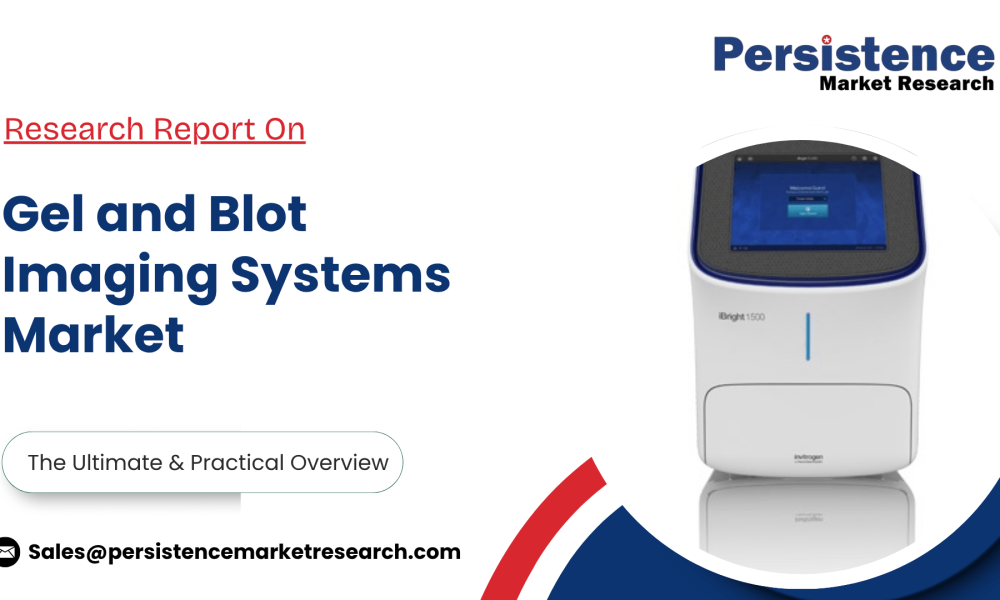
The global gel and blot imaging systems market is poised for substantial growth, with its valuation projected to rise from US$1.3 billion in 2025 to approximately US$2.4 billion by 2032. This reflects a robust compound annual growth rate (CAGR) of 9.2% over the forecast period. This expansion is attributed to a rising need for high-throughput and accurate imaging tools in genomics, proteomics, and molecular diagnostics. With life sciences research becoming increasingly data-driven and precision-focused, the demand for automated, sensitive, and user-friendly imaging systems continues to climb.
These systems are being integrated across diverse settings including academic laboratories, clinical research institutions, and pharmaceutical companies. The market’s historical growth, marked by a CAGR of 8.4% from 2019 to 2024, underscores its sustained upward trajectory, bolstered by technological advancements and widespread adoption of digital imaging platforms.
Key Industry Highlights
- North America will remain the dominant regional market, expected to hold 37% of global revenue in 2025, largely due to a well-established research ecosystem and extensive funding in the United States.
- Conversely, the Asia Pacific region is witnessing the fastest growth, fueled by expanding biotechnological capabilities in China and India.
- Among product categories, instruments will maintain their lead with a 52% market share, driven by their indispensable role in research workflows.
- From an application standpoint, research remains the primary driver, projected to account for 44% of market share, highlighting the systems’ importance in genomic and proteomic investigations.
Get a Sample Copy of Research Report (Use Corporate Mail id for Quick Response): https://www.persistencemarketresearch.com/samples/31466
Market Dynamics
Driver – Growing Demand for High-Throughput Research Tools
The increasing need for high-throughput solutions in molecular biology research has significantly propelled the adoption of gel and blot imaging systems. These systems allow researchers to visualize and quantify biomolecules such as DNA, RNA, and proteins with high precision. Modern instruments like Bio-Rad’s ChemiDoc Go and Thermo Fisher’s iBright CL1000 offer advanced imaging capabilities and automation, streamlining research workflows and improving output reproducibility. With automation, these systems reduce manual error, accelerate data acquisition, and enhance scalability in high-volume laboratory environments, making them a mainstay in cutting-edge life sciences research.
Restraint – High Initial Costs and Maintenance Expenses
Despite technological advancements, the high capital cost of advanced imaging systems continues to present a significant barrier to market expansion, especially among smaller academic labs and institutions in developing regions. Ongoing maintenance and operational costs add to the financial burden, often deterring smaller labs from transitioning away from traditional gel documentation techniques. Budget constraints remain particularly relevant in public sector research organizations and institutions in low- and middle-income countries, limiting the broader accessibility and implementation of high-end imaging systems.
Opportunity – Advancements in AI-Integrated Imaging Technologies
The integration of artificial intelligence (AI) in imaging systems is opening new avenues for innovation. AI-driven platforms, such as Thermo Fisher’s iBright Analysis Software, are capable of automatically detecting and quantifying bands, significantly reducing human error and time spent on image analysis. These systems offer enhanced consistency, adapt to multiple imaging formats, and provide real-time interpretation. As researchers increasingly demand greater data accuracy, reproducibility, and operational efficiency, AI integration is emerging as a key differentiator in the competitive landscape. This technological leap is also expected to fuel the next phase of market evolution, supporting applications ranging from basic research to personalized medicine.
Category-wise Analysis
Product Type Insights
Instruments are projected to retain a leading position, comprising 52% of the market by 2025. These systems form the backbone of molecular imaging workflows, with platforms such as GE Healthcare’s Amersham Imager and Bio-Rad’s ChemiDoc offering advanced imaging capabilities across multiple detection formats. Instrument demand is supported by their versatility, scalability, and compatibility with emerging imaging technologies.
On the other hand, software is the fastest-growing product category. Advanced imaging software integrated with AI and cloud capabilities is reshaping how researchers process and interpret molecular data. Providers like LI-COR Biosciences and Azure Biosystems are increasingly focused on delivering robust, automated analysis platforms to cater to high-throughput requirements.
Application Insights
Research remains the dominant application, forecasted to hold 44% of total market value in 2025. This segment benefits from growing investments in fundamental and applied life sciences, including genomics, proteomics, and biomarker research. Imaging systems play a vital role in these studies, offering reliable, high-resolution visualization tools.
Meanwhile, the pharmaceutical segment is poised for the fastest growth, driven by the rise in R&D expenditures, increased focus on biologics, and precision medicine initiatives. As drug discovery processes become more reliant on high-throughput and quantitative tools, gel and blot imaging systems are finding increasing utility in pharmaceutical pipelines.
End-use Insights
Academic and research institutions are projected to dominate with a 43% share in 2025, benefitting from strong research grants, scientific collaborations, and institutional demand for advanced imaging infrastructure. Solutions tailored for academic use by companies like Thermo Fisher and Bio-Rad enhance system affordability and usability.
Pharmaceutical and biotech firms represent the most dynamic end-use segment, registering rapid growth owing to the application of imaging systems in biologics development, quality control, and regulatory compliance. As pharmaceutical innovation shifts toward complex biological therapeutics, the need for precise, scalable imaging systems is set to rise further.
Regional Insights
North America
North America’s leadership, with a 37% market share in 2025, is underpinned by strong academic research institutions, well-funded clinical trials, and a mature healthcare infrastructure. Continuous product innovation, driven by local giants like Thermo Fisher and Bio-Rad, enhances the region’s competitive edge. U.S.-based regulatory and funding initiatives, such as NIH and NSF grants, further support the adoption of imaging systems across universities and biotech companies.
Europe
Europe remains a significant market, bolstered by institutional collaborations, strong regulatory frameworks, and ongoing investments through programs like Horizon Europe. Key countries such as Germany and the UK are spearheading genomics research, with a focus on sustainable and automated imaging technologies. Manufacturers such as Scientific Digital Imaging and GE Healthcare are actively contributing to the region’s growth through diversified product portfolios and academic partnerships.
Asia Pacific
Asia Pacific is experiencing rapid expansion, with China and India investing heavily in biopharmaceutical infrastructure, academic R&D, and translational medicine. A booming biotech startup ecosystem, supported by favorable government policies and rising public health initiatives, is catalyzing demand for imaging technologies. Furthermore, cost-effective manufacturing and rising scientific expertise are turning the region into a global hub for life sciences innovation.
Request for Customization of the Research Report: https://www.persistencemarketresearch.com/request-customization/31466
Competitive Landscape
The global gel and blot imaging systems market is moderately consolidated, with top players holding significant market share. Bio-Rad Laboratories, Thermo Fisher Scientific, and GE Healthcare are leading the charge with comprehensive portfolios and global reach. Companies are increasingly investing in AI-based imaging solutions, scalable platforms, and cloud-based data management tools. Azure Biosystems, Scientific Digital Imaging, and LI-COR Biosciences are notable mid-tier players offering innovative and cost-effective imaging solutions for both academic and industrial customers.
Market strategies are increasingly focused on strategic acquisitions, partnerships with research institutions, and the expansion of product capabilities through digital transformation. With heightened competition, differentiation through sustainability, automation, and AI integration will be key to maintaining and expanding market share.
Key Players
Bio-Rad Laboratories
Thermo Fisher Scientific
GE Healthcare
Scientific Digital Imaging
Azure Biosystems
LI-COR Biosciences
Cleaver Scientific
Bio-Techne
TBG Biotechnology
Others
Market Segmentation
The market is segmented based on product type (instruments, software), application (research, pharmaceutical, clinical diagnostics), end-use (academic institutions, pharmaceutical and biotech companies, clinical laboratories), and geography (North America, Europe, Asia Pacific, Latin America, Middle East & Africa).
Recent Developments
- In July 2024, Bio-Rad Laboratories introduced the ChemiDoc Go imaging system, a benchtop solution offering CMOS-based high-sensitivity imaging for Western blots and nucleic acid gels, optimized for compact lab spaces.
- In May 2025, GE Healthcare unveiled initiatives to enhance imaging workflows across laboratory and clinical settings, focusing on digital integration and workflow efficiency. These advancements aim to expand the use of imaging systems beyond traditional applications, supporting faster decision-making and streamlined data analysis.
Future Outlook
Looking ahead, the gel and blot imaging systems market is set to expand at a healthy pace through 2032. Key drivers will include the continued adoption of high-throughput research tools, advances in AI-integrated imaging technologies, and the globalization of molecular biology research. While cost barriers persist in emerging markets, innovations in affordability, modular design, and cloud-enabled platforms are expected to mitigate these constraints over time.
The integration of automation, sustainability, and precision diagnostics will shape the next generation of imaging systems. As research becomes increasingly data-intensive, the demand for systems offering speed, accuracy, and interoperability will rise. With North America and Europe maintaining leadership and Asia Pacific emerging as a dynamic growth region, the global gel and blot imaging systems market presents strong long-term growth opportunities for innovators, investors, and technology providers alike.




