
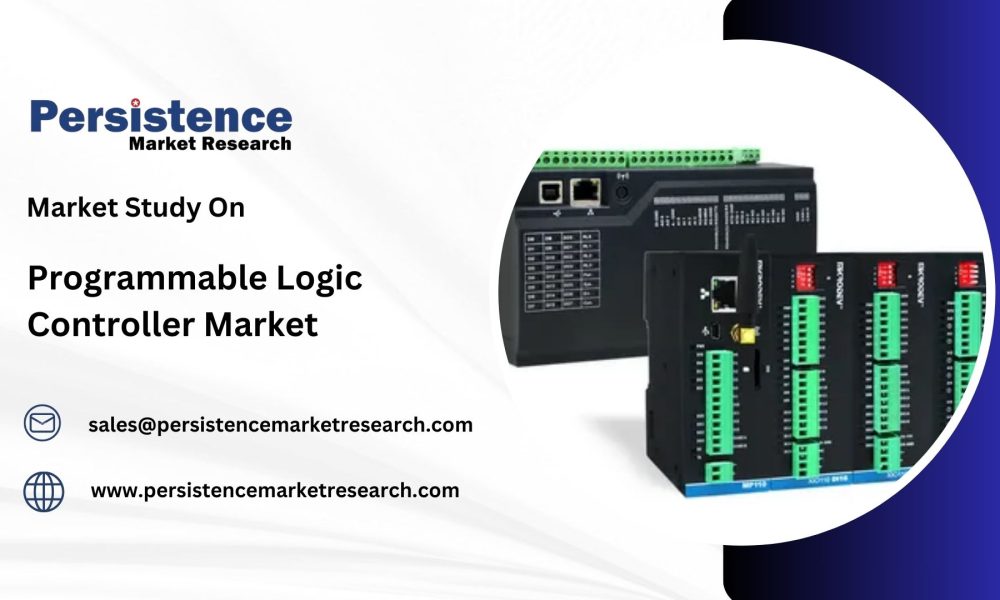
The programmable logic controller (PLC) market is experiencing remarkable growth, driven by the increasing adoption of automation across industries and the rapid evolution of smart manufacturing technologies. Estimated at US$ 11.12 billion in 2024, the global PLC market is projected to reach US$ 17.23 billion by 2031, registering a robust CAGR of 6.4% during the forecast period from 2024 to 2031. This growth underscores the pivotal role PLCs play in modern industrial operations, offering businesses enhanced productivity, reliability, and cost efficiency.
Understanding Programmable Logic Controllers
At its core, a programmable logic controller is a digital computer used to automate industrial processes such as machinery control on factory assembly lines, amusement rides, or light fixtures. Unlike traditional relay-based control systems, PLCs provide a flexible and scalable solution that can adapt to evolving production needs. They are engineered to withstand harsh industrial environments, offering high reliability, precision, and real-time control.
PLCs have evolved significantly since their inception in the 1960s. Modern PLCs integrate advanced technologies such as the Internet of Things (IoT) and Artificial Intelligence (AI), enabling smarter operations and predictive maintenance capabilities. By connecting devices and machinery to centralized control systems, businesses can monitor performance, optimize energy usage, and reduce downtime, ultimately boosting overall operational efficiency.
Elevate your business strategy with comprehensive market data. Request a sample report now: https://www.persistencemarketresearch.com/samples/34922
Market Growth Drivers
- Industrial Automation and Industry 4.0:
The adoption of automation in manufacturing is a key driver for the PLC market. Industry 4.0, also referred to as the fourth industrial revolution, emphasizes smart factories, interconnected machinery, and data-driven production processes. PLCs serve as the backbone of these smart factories, facilitating seamless integration between machines, sensors, and control systems. This transformation enables manufacturers to improve operational efficiency, reduce production costs, and accelerate product delivery. - Integration of IoT and AI:
IoT-enabled PLCs allow machines to communicate with each other and with central control systems. This connectivity provides real-time insights into equipment performance, operational anomalies, and predictive maintenance requirements. Meanwhile, AI algorithms enhance decision-making by analyzing vast amounts of data to identify patterns and optimize production processes. Together, IoT and AI empower manufacturers to adopt a proactive maintenance strategy, minimizing unplanned downtime and maximizing asset utilization. - Rising Demand for Smart Factories:
As industries transition from conventional manufacturing to smart factory setups, the demand for PLCs is soaring. Smart factories rely on PLCs to automate complex processes, reduce human intervention, and ensure consistent product quality. In addition, PLCs facilitate energy management and environmental monitoring, aligning with the growing emphasis on sustainability and energy-efficient operations. - Enhanced Productivity and Revenue Generation:
PLCs not only streamline operations but also contribute directly to revenue growth. By automating repetitive tasks, optimizing production lines, and reducing operational bottlenecks, manufacturers can increase output and profitability. Additionally, the real-time analytics offered by modern PLCs support data-driven business strategies, enabling companies to identify new revenue opportunities and enhance customer satisfaction.
Key Industry Applications
The programmable logic controller market finds applications across a wide range of industries.
- Manufacturing:
In manufacturing, PLCs control assembly lines, robotic arms, and automated machinery. They ensure precise operation sequences, reduce human errors, and enhance production consistency. Automotive, electronics, and consumer goods sectors are particularly reliant on PLCs to maintain high throughput and quality standards. - Energy and Utilities:
PLCs are integral in power generation, distribution, and renewable energy management. They monitor and control turbines, generators, and substations, ensuring reliable energy supply and efficient load management. The integration of PLCs with IoT devices allows real-time monitoring of grid performance and predictive maintenance of critical equipment. - Water and Wastewater Treatment:
Automation in water treatment facilities has become increasingly important to maintain water quality and regulatory compliance. PLCs control pumps, valves, and filtration systems, ensuring optimal treatment processes and resource management. Smart PLC systems help detect leaks, monitor water quality, and reduce operational costs. - Oil and Gas:
The oil and gas industry leverages PLCs for pipeline monitoring, drilling operations, and refinery automation. PLCs enhance safety, reduce downtime, and optimize extraction and processing activities. Advanced PLCs integrated with AI can predict equipment failures, prevent accidents, and minimize environmental impact. - Food and Beverage:
PLCs in the food and beverage industry automate processes such as mixing, bottling, packaging, and quality control. Automation ensures hygiene, consistent product quality, and adherence to stringent safety standards. Real-time monitoring capabilities of PLCs also help track inventory and optimize supply chains.
Regional Insights
The PLC market exhibits significant regional growth opportunities, driven by industrial expansion and technological adoption.
North America remains a mature market with strong adoption of automation technologies in manufacturing and energy sectors. The presence of key PLC manufacturers and early adoption of Industry 4.0 initiatives contribute to steady growth.
Europe is witnessing robust demand due to the focus on industrial automation, smart factory setups, and energy efficiency mandates. Countries like Germany, France, and Italy are leading in advanced manufacturing and industrial IoT adoption.
Asia-Pacific is emerging as the fastest-growing region, driven by rapid industrialization, infrastructure development, and investments in manufacturing automation. China, Japan, and India are major contributors, with growing adoption of smart manufacturing solutions in automotive, electronics, and consumer goods sectors.
Middle East and Africa and Latin America are also witnessing gradual PLC adoption, particularly in energy, water, and oil & gas applications. Investment in infrastructure and industrial projects is expected to drive market growth in these regions.
Challenges and Restraints
Despite significant growth potential, the PLC market faces certain challenges. The high initial investment cost associated with advanced PLC systems can be a barrier for small and medium-sized enterprises (SMEs). Additionally, the complexity of integrating PLCs with existing infrastructure and ensuring cybersecurity for connected devices presents hurdles for widespread adoption.
However, ongoing technological advancements are addressing these challenges. Modular and cost-effective PLC solutions, coupled with user-friendly programming interfaces, are making automation more accessible to a broader range of industries. Enhanced cybersecurity protocols and AI-powered monitoring systems further mitigate risks associated with connected PLC networks.
Future Outlook
The future of the programmable logic controller market is closely tied to advancements in industrial automation and digital transformation. Emerging trends indicate a shift towards fully integrated, smart manufacturing ecosystems where PLCs serve as the central nervous system of operations. Key developments shaping the market include:
- AI-Driven Automation: Predictive maintenance, anomaly detection, and process optimization powered by AI algorithms will become standard features in PLC systems.
- Edge Computing Integration: Edge computing will enable PLCs to process data locally, reducing latency and enabling faster decision-making in critical industrial operations.
- Cloud-Based PLC Solutions: Cloud integration will facilitate remote monitoring, analytics, and control, offering greater flexibility for global operations.
- Sustainability Initiatives: PLCs will play a crucial role in energy management, waste reduction, and environmental compliance, aligning with the growing emphasis on sustainable industrial practices.
Conclusion
The programmable logic controller market is on a steady growth trajectory, driven by the increasing adoption of automation, Industry 4.0 initiatives, and integration of IoT and AI technologies. With an estimated market value of US$ 11.12 billion in 2024 and projected growth to US$ 17.23 billion by 2031 at a CAGR of 6.4%, PLCs are becoming indispensable for modern industries seeking efficiency, productivity, and profitability.
As industries continue to embrace digital transformation, PLCs will not only automate operations but also provide actionable insights, predictive maintenance capabilities, and energy-efficient solutions. From manufacturing and energy to oil & gas, water treatment, and food & beverage industries, PLCs are driving the evolution of smart factories and connected industrial ecosystems worldwide.
Investing in advanced PLC technologies presents a strategic opportunity for businesses to enhance operational efficiency, optimize costs, and stay competitive in an increasingly automated world. The integration of AI, IoT, and cloud computing with PLCs marks a new era of industrial automation, where smart, connected, and resilient systems define the future of manufacturing and process industries.
Related Reports: