
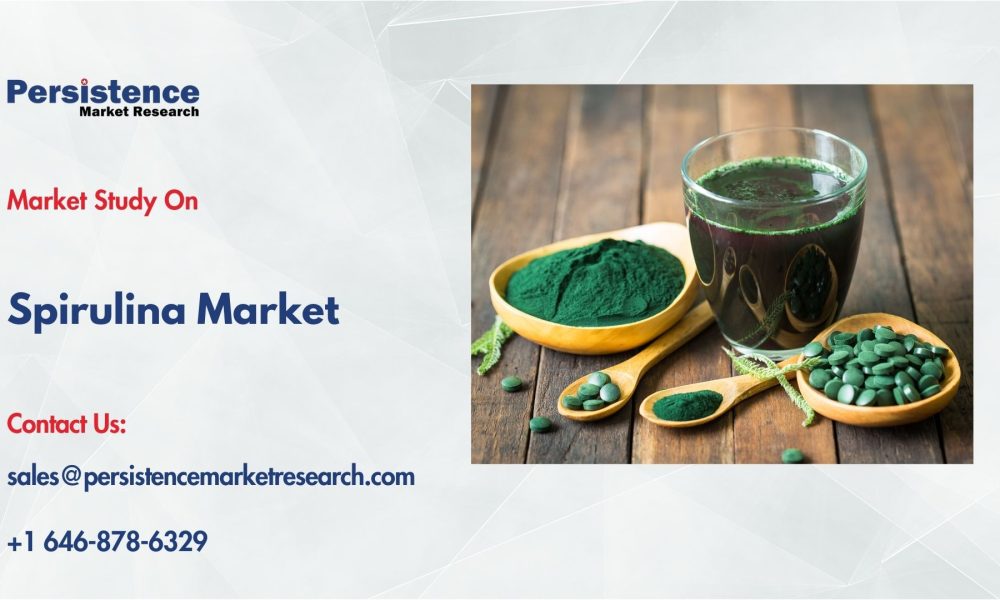
The global spirulina market is poised for steady expansion, projected to increase from US$667.1 Mn in 2025 to US$1,043.5 Mn by 2032, registering a CAGR of 6.6% during the forecast period. This growth reflects rising consumer awareness about the nutritional benefits of spirulina, its increasing use in dietary supplements, and the mounting demand for plant-based and sustainable protein sources. As spirulina is rich in protein, vitamins, minerals, and antioxidants, it has gained a reputation as a “superfood” with extensive applications across the food, nutraceutical, pharmaceutical, and cosmetics sectors.
The market’s expansion is largely attributed to rising health consciousness, growing prevalence of lifestyle-related disorders, and the surging popularity of natural dietary supplements over synthetic alternatives. In addition, global efforts to address malnutrition, coupled with government initiatives promoting algae cultivation, are accelerating market adoption. The sustainability aspect of spirulina farming—which requires significantly less water and land compared to traditional protein crops—further strengthens its position as a preferred ingredient in the global health and wellness industry.
What is Spirulina Used For and Why is It Gaining Popularity?
Spirulina is used as a dietary supplement, food additive, and functional ingredient due to its dense nutritional profile. It is gaining popularity because it provides a complete source of protein, supports immune health, helps combat oxidative stress, and aligns with the growing consumer shift toward plant-based diets. Increasing scientific studies highlighting its role in reducing cholesterol, managing weight, and improving gut health have also fueled demand.
Segmentation Analysis
By Type
The spirulina market is segmented into powder, tablet/capsule, and liquid forms. Among these, spirulina powder dominates the global market share due to its versatility and wide application in food and beverage products such as smoothies, energy bars, and bakery goods. Powder form is favored by both consumers and manufacturers as it is easy to incorporate into daily diets and processing lines. Meanwhile, the tablet/capsule segment is witnessing notable growth as consumers increasingly prefer convenient, ready-to-consume dietary supplements. The liquid segment, though smaller in share, is projected to grow steadily owing to its use in functional beverages and cosmetics.
By Product/Application Type
The major application areas of spirulina include nutraceuticals, food and beverages, cosmetics, and animal feed. Nutraceuticals account for the largest share of the market, driven by rising consumption of dietary supplements in North America, Europe, and Asia-Pacific. Spirulina’s role as a natural coloring agent is fueling demand in the food and beverages segment, especially as consumers demand clean-label and chemical-free products. The cosmetics industry is also embracing spirulina extracts for their antioxidant and anti-aging properties, enhancing product portfolios in skincare and personal care. Additionally, spirulina-enriched animal feed is gaining adoption in aquaculture and poultry, where it is valued for improving immunity and enhancing pigmentation.
Request Sample Copy of Report: https://www.persistencemarketresearch.com/samples/14431
By Technology/Production Method
In terms of production, open pond cultivation dominates the market due to its cost-effectiveness and scalability. However, closed photobioreactor systems are gaining attention as they provide higher yields, better quality control, and minimize contamination risks. As technological innovations advance, photobioreactor-based cultivation is expected to gain traction in regions with high food safety standards.
Regional Insights
North America leads the spirulina market, supported by strong consumer awareness, established nutraceutical industries, and widespread acceptance of plant-based supplements. The United States remains a hub for dietary supplement consumption, driving consistent demand.
Europe represents another significant market, particularly in countries like Germany, France, and the UK, where clean-label, natural, and sustainable food ingredients are highly sought after. Strict regulatory frameworks encouraging the use of natural additives have further strengthened spirulina’s presence in the region.
Asia-Pacific is projected to be the fastest-growing regional market, led by India, China, and Japan. This growth is underpinned by government programs promoting algae cultivation, rising health-conscious consumer bases, and increasing adoption of spirulina in functional foods. In addition, spirulina farming initiatives in developing economies are fostering export opportunities.
Latin America and the Middle East & Africa markets are at a nascent stage but show promising growth potential due to increasing awareness of spirulina’s nutritional benefits and the gradual expansion of health and wellness sectors.
Unique Features and Innovations in the Market
Modern spirulina solutions are increasingly distinguished by enhanced purity, bioavailability, and sustainability. Technological advancements in algae cultivation, such as AI-driven monitoring systems, IoT-enabled farming solutions, and advanced bioreactors, are transforming production efficiency and reducing costs. Companies are also innovating by blending spirulina with other plant-based proteins to create multifunctional health products, expanding its appeal to vegan and vegetarian consumers.
The incorporation of spirulina extracts in fortified foods, natural colorants, and functional cosmetics reflects ongoing innovation. Spirulina-derived phycocyanin, a natural blue pigment, is particularly gaining commercial value as a safe alternative to synthetic food dyes. These innovations underscore spirulina’s role as not only a nutritional powerhouse but also a sustainable and versatile ingredient for diverse industries.
Market Highlights
Businesses and industries are increasingly adopting spirulina due to its health benefits, eco-friendly production, and alignment with global sustainability goals. Spirulina farming requires fewer natural resources compared to traditional protein sources, making it an attractive solution for reducing environmental footprints. Regulatory support for natural dietary supplements and restrictions on synthetic additives in food products are further driving its market penetration.
Sustainability remains a key driver, with spirulina recognized by organizations like the United Nations as a potential solution to global malnutrition. As food companies face mounting pressure to adopt cleaner, greener, and more ethical practices, spirulina provides both nutritional and environmental advantages.
Key Players and Competitive Landscape
The spirulina market features a competitive landscape with both established players and emerging companies focusing on capacity expansion, product diversification, and regional penetration.
Cyanotech Corporation continues to be a global leader, leveraging its advanced cultivation facilities in Hawaii to produce high-quality spirulina for dietary supplements and functional foods. The company emphasizes innovation and sustainability in its product offerings.
DIC Corporation, through its Earthrise Nutritionals subsidiary, has strengthened its presence in the North American market, focusing on large-scale production and extensive distribution networks.
ALGAMIC, Parry Nutraceuticals, and Now Foods are other significant players driving the market by offering a wide range of spirulina-based products, targeting diverse consumer groups across dietary supplements, animal feed, and cosmetics.
Algenol Biotech and EID Parry are focusing on expanding their production capabilities with technologically advanced cultivation systems. These companies are also investing in partnerships and collaborations to strengthen market reach.
Smaller players and startups are gaining momentum by promoting organic-certified spirulina, targeting niche segments such as vegan consumers and premium dietary supplement users. This is creating a dynamic competitive environment with opportunities for innovation and differentiation.
Conclusion / Outlook
The spirulina market is set to continue its upward trajectory, driven by rising consumer health awareness, technological advancements, and the global shift toward sustainable and plant-based solutions. Future opportunities are expected in the development of functional foods, natural colorants, and high-value cosmetics, supported by favorable regulatory policies and growing demand across emerging economies.
Evolving technologies in algae cultivation, particularly AI and IoT-driven systems, will enhance efficiency and quality, ensuring scalability for mass adoption. As industries increasingly prioritize eco-friendly practices and consumers seek natural, nutrient-dense solutions, spirulina is well-positioned to play a vital role in shaping the future of global nutrition and wellness.
Explore the Latest Trending Research Reports:




