
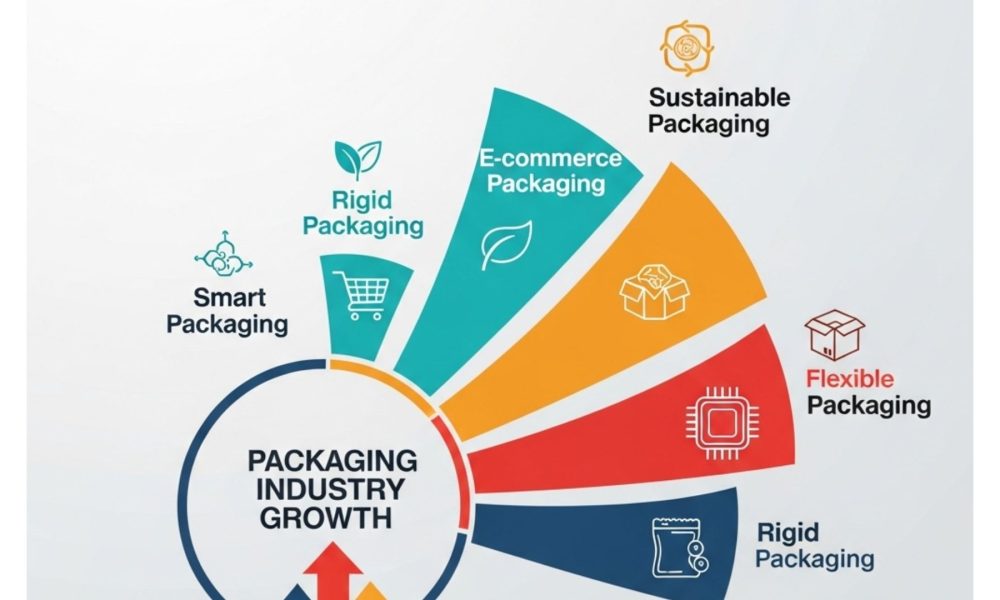
The global packaging laminate market is positioned for strong and sustained expansion. Estimated at USD 6.7 billion in 2025, it is projected to reach USD 10.1 billion by 2035, growing at a CAGR of 4.3%. This represents an incremental opportunity of USD 3,758.8 million and an overall expansion to 1.6 times its 2025 value. Revenue stood at USD 6.4 billion in 2024, highlighting consistent year-on-year gains.
Food and beverage applications dominate the sector with a 55% market share, driven by the need for convenience, freshness, and critical barrier protection. Laminates are indispensable for preserving snacks, dairy products, beverages, and ready-to-eat meals, ensuring both extended shelf life and contamination resistance.
Rising Role of Thickness and Functionality
The 30–45 microns thickness range has emerged as the most conventional choice, offering manufacturers an optimal balance between strength, flexibility, and cost-efficiency. At this level, laminates safeguard against moisture, oxygen, and UV exposure while maintaining lightweight characteristics suitable for food packaging, pharmaceutical blister packs, and personal care items.
Innovations in multi-layer barrier films further allow manufacturers to extend shelf life without sacrificing recyclability, ensuring a seamless transition toward more sustainable and efficient packaging solutions.
Click Here for More Information:- https://www.futuremarketinsights.com/reports/packaging-laminates-market
Key Innovations Shaping the Future
The year 2025 marked a turning point in the development of high-performance and sustainable laminates. Regulatory clearance of water-based acrylic laminating adhesives enabled polyethylene (PE) and polypropylene (PP) films to enter recycling streams without disruption. Global recyclability guidelines were harmonized, reducing confusion and giving manufacturers clear design frameworks.
Breakthrough coatings also redefined industry standards. PFAS-free graphene-oxide solutions provided grease and water resistance for paper-based packaging while remaining recyclable. Cellulose nanocrystal barriers introduced energy-efficient protection against oxygen and moisture. These innovations not only raised the bar for performance but also aligned laminates with compostability and biodegradability goals.
Mono-material PE pouches and films containing post-consumer recycled content demonstrated that circular-ready laminates are no longer aspirational prototypes but market-ready solutions. Even the healthcare sector embraced refreshed design guidelines, ensuring medical packaging aligns with global recyclability objectives.
Category-Wise Market Insights
Plastics remain the dominant material, expected to account for 48% of the market in 2025. Their versatility, durability, and affordability make them the material of choice for food, beverages, pharmaceuticals, and personal care. With rising consumer demand for eco-friendly alternatives, manufacturers are increasingly adopting bio-based polyethylene and PET for recyclable and biodegradable solutions.
Films, accounting for over 42% of packaging formats, continue to lead due to their adaptability and protective strength. Their extensive use in stand-up pouches, sachets, and wrapping films reflects the growing importance of lightweight, customizable, and eco-friendly solutions.
Meeting Manufacturer Challenges Head-On
Manufacturers face mounting challenges, particularly in recycling multi-layer laminates, which combine plastic, paper, and aluminum layers. Most recycling centers lack the capacity to process these complex structures, creating both environmental and compliance risks. With government regulations tightening, producers must innovate green substitutes while maintaining performance.
The industry is responding with significant investments between 2025 and 2035 in five key areas: sustainable and compostable materials, advanced barrier protection, lightweight yet affordable designs, customized multi-layer solutions, and smart packaging technologies such as tamper-evident seals, QR codes, and RFID-enabled traceability.
Industry Highlights and End-Use Growth
Food packaging remains the single largest driver, with demand fueled by frozen, ready-to-eat, and resealable formats. Laminates are increasingly relied upon to maintain freshness and convenience, key selling points for modern consumers.
Pharmaceutical and healthcare applications are growing at a rapid pace. Laminated films offer unmatched resistance to moisture and tampering while ensuring long-term stability for medicines, medical devices, and diagnostics. With the rise of over-the-counter drugs and global vaccination campaigns, manufacturers are under pressure to adopt more advanced laminated packaging solutions.
Regional and Country-Specific Trends
The USA market is forecast to expand at a CAGR of 6.27% through 2035, propelled by consumer and regulatory pressures for recyclable laminates. Mono-material solutions such as all-PE or all-PP structures are gaining traction, alongside bio-based alternatives like PLA and cellulose coatings.
Germany continues to lead sustainable innovation in Europe, with Verpack G regulations driving circular economy initiatives. Companies are increasingly turning to bio-based and fiber-based laminates that reduce environmental impact without compromising barrier performance.
Asia Pacific remains the fastest-growing production hub, supplying multi-layer, high-performance laminates across diverse industries, while Europe prioritizes bio-based solutions and North America emphasizes recyclability compliance.
Get Sample Report: – https://www.futuremarketinsights.com/reports/sample/rep-gb-12540
Competitive Landscape and Future Outlook
The market is shaped by Tier 1 leaders such as Amcor Plc, Mondi Plc, Berry Global Inc., Pro Ampac LLC, and Constantia Flexibles Group. These companies leverage global reach and technological expertise to pioneer recyclable and biodegradable laminates. Tier 2 and Tier 3 players, including Coveris Packaging, Montebello Packaging Inc., and UNIFLEX, serve regional markets with cost-effective and innovative solutions.
Recent industry moves highlight the sector’s consolidation and innovation drive. Amcor’s acquisition of Berry Global in November 2024 created a USD 24 billion packaging giant, while Mondi’s strategic purchase of Schumacher Packaging’s assets expanded its footprint across Western Europe.
Looking ahead, the packaging laminate industry will thrive by aligning performance with sustainability. As manufacturers adapt to evolving regulations, rising consumer expectations, and competitive pressures, investment in recyclable, compostable, and smart laminates will define the next decade of growth.
About Future Market Insights (FMI)
Future Market Insights, Inc. (ESOMAR certified, recipient of the Stevie Award, and a member of the Greater New York Chamber of Commerce) offers profound insights into the driving factors that are boosting demand in the market. FMI stands as the leading global provider of market intelligence, advisory services, consulting, and events for the Packaging, Food and Beverage, Consumer Technology, Healthcare, Industrial, and Chemicals markets. With a vast team of over 400 analysts worldwide, FMI provides global, regional, and local expertise on diverse domains and industry trends across more than 110 countries.
Contact Us:
Future Market Insights Inc.
Christiana Corporate, 200 Continental Drive,
Suite 401, Newark, Delaware – 19713, USA
T: +1-347-918-3531
For Sales Enquiries: [email protected]
Website: https://www.futuremarketinsights.com
LinkedIn| Twitter| Blogs | YouTube



