
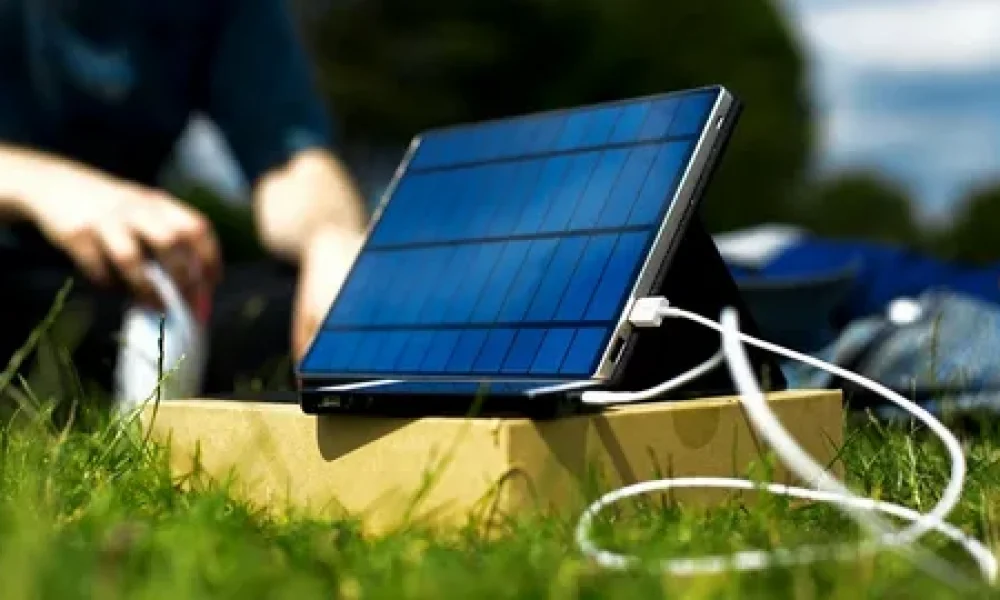
The global solar-powered active packaging market is entering a dynamic growth phase, marking a shift in how products are stored, transported, and consumed. Valued at USD 0.9 billion in 2025, the market is forecast to surge to USD 3.5 billion by 2035, representing a 288.9% expansion at a powerful 14.6% CAGR. Over the next decade, the sector is expected to grow nearly four times its current size, reshaping the future of packaging.
Growth Outlook: A Decade of Momentum
The first five years from 2025 to 2030 will see the market nearly double, rising from USD 0.9 billion to USD 2.1 billion. This early growth—accounting for 46.2% of total decade gains—is propelled by rapid adoption of smart labels and freshness indicators in food and beverage packaging. Consumers are demanding packaging that tells them more than just a shelf life date; they want to know if their food is safe, fresh, and sustainable. Governments, too, are encouraging this trend with stronger regulations to reduce food waste and improve transparency in supply chains.
In the second half of the forecast, from 2030 to 2035, the market accelerates further, expanding to USD 3.5 billion. This phase is driven by breakthroughs in thin-film and organic photovoltaic technologies, which lower production costs while improving efficiency. Wider adoption in pharmaceutical cold-chain monitoring and interactive packaging—where packages communicate freshness and authenticity directly to consumers—will dominate this growth stage.
The journey began earlier, from 2020 to 2024, when the market leapt from USD 0.2 billion to USD 0.8 billion. Early adopters included food processors and pharmaceutical companies, keen to leverage solar-powered sensors and smart labels to guarantee freshness and safety. Nearly 65% of revenue during this time was concentrated among major packaging leaders such as Stora Enso, Amcor, and Sealed Air, who pioneered thin-film integration and sensor-enabled packaging.
Full Market Report available for delivery. For purchase or customization, please request here:
https://www.futuremarketinsights.com/reports/sample/rep-gb-25219
Why Solar-Powered Active Packaging Is Growing
At its core, this market is solving global challenges. Food waste, pharmaceutical spoilage, and sustainability pressures are driving adoption. Solar-powered active packaging eliminates the need for disposable batteries by harvesting light, allowing continuous monitoring of temperature, humidity, freshness, and handling conditions throughout the supply chain.
For consumers, this translates into greater trust—knowing their groceries are fresh or their medication has stayed within safe conditions. For manufacturers and retailers, it means lower losses, improved compliance, and enhanced branding. With regulators increasingly mandating transparency and waste reduction, solar-powered active packaging is moving from innovation to necessity.
Technology & Applications
Thin-Film Solar Integrated Packaging leads the market, expected to hold 49.0% share in 2025. Its seamless integration into packaging materials makes it both efficient and cost-effective. Advances in deposition techniques are helping manufacturers scale production without driving up costs.
Smart Labels and Freshness Indicators are forecast to represent 44.0% of applications in 2025, offering consumers real-time visibility into product quality. These solutions are particularly valuable in perishable foods, where spoilage costs billions annually.
Food and Beverages dominate end-use with 46.0% share in 2025, as companies look to reduce waste, optimize inventory, and meet rising consumer expectations for freshness.
Regional Insights
The Asia-Pacific region is set to be the fastest-growing hub, led by India (15.9% CAGR) and China (15.4% CAGR). Both countries are investing heavily in smart packaging technologies to support expanding food processing sectors and e-commerce-driven distribution.
Developed markets like the United States (14.7% CAGR), Germany (14.2% CAGR), and Japan (13.1% CAGR) are focusing on pharmaceutical applications, advanced cold-chain monitoring, and premium consumer packaging. In the U.S., supermarket chains are already piloting solar-powered freshness indicators to reduce waste. Germany, guided by the EU Green Deal, is pushing for scalable solutions in food and industrial packaging. Japan, with its strong research base in organic photovoltaics, is a frontrunner in transparent and flexible solar-powered packaging.
Emerging economies like Brazil (12.6% CAGR) are embracing solar-powered monitoring for fresh produce exports, ensuring agricultural goods maintain quality during long-distance transport.
Key Players: Leaders and Innovators
The competitive landscape blends established giants and emerging disruptors:
Established Leaders:
Stora Enso, Amcor Plc, and Sealed Air Corporation dominate with their scale, integration capabilities, and global customer networks. They are investing in IoT-enabled packaging, hybrid solar systems, and regulatory compliance solutions.
Toppan Printing Co. and BASF SE are focusing on materials innovation and thin-film solar efficiency, helping reduce costs and improve performance.
UPM-Kymmene is leveraging its expertise in sustainable paper and packaging solutions to introduce solar-powered formats.
Emerging Innovators:
PragmatIC Semiconductor specializes in flexible printed electronics, creating cost-effective, scalable solar packaging solutions.
Ynvisible Interactive is making waves with low-power interactive displays embedded directly into packaging.
Saule Technologies is pioneering perovskite-based solar cells, enabling transparent and flexible packaging applications.
ClearVue Technologies is exploring transparent solar solutions for premium and retail packaging formats.
These newcomers are reshaping competition, offering nimble, cost-efficient technologies that appeal to high-growth sectors like interactive consumer goods and low-cost food monitoring.
Request Customization for Your Unique Needs:
https://www.futuremarketinsights.com/customization-available/rep-gb-25219
Challenges and Opportunities
Despite its promise, the market faces challenges. High development costs, integration complexities, and standardization issues remain barriers, particularly for smaller companies. Achieving reliable power generation from limited packaging surface areas under varying lighting conditions also requires innovation.
Yet, opportunities are vast. Emerging trends such as IoT integration, blockchain-enabled traceability, and multi-sensor platforms are opening new revenue streams. By 2035, IoT-enabled packaging with advanced organic photovoltaics will represent nearly half of market value, enabling features such as AI-powered freshness prediction and consumer engagement tools.
Outlook to 2035
By 2035, solar-powered active packaging will not just be a novelty but an industry standard, reaching USD 3.5 billion in value. Food retailers, pharmaceutical companies, and logistics providers will increasingly rely on solar-powered smart packaging to ensure sustainability, compliance, and consumer trust.
The sector is becoming a stage where established leaders scale innovation globally, while emerging players disrupt with flexible, affordable, and interactive solutions. Together, they are driving a packaging revolution—one where products tell their own stories, waste is minimized, and consumers gain unprecedented confidence in what they buy.



