
Introduction
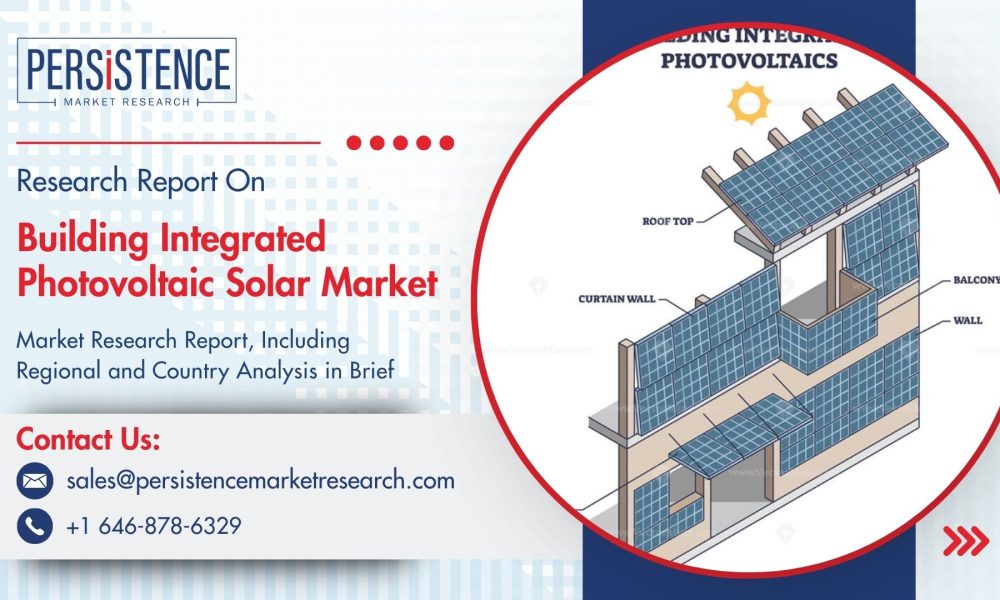
The building integrated photovoltaic (BIPV) solar market is witnessing rapid expansion as global industries and governments prioritize renewable energy, sustainable construction, and carbon reduction initiatives. Unlike traditional rooftop panels, BIPV systems are seamlessly integrated into building envelopes—facades, windows, and roofs—offering both aesthetic and functional benefits. They not only generate clean electricity but also contribute to building insulation, energy efficiency, and modern architectural appeal.
This report provides an in-depth analysis of the global BIPV market, highlighting its key growth drivers, market projections, technological innovations, regional dynamics, and competitive landscape. As sustainable infrastructure becomes a priority, BIPV solutions are poised to redefine how buildings generate and consume energy.
Market Projections and Forecast
According to Persistence Market Research’s projections, the global building integrated photovoltaic solar market is expected to grow significantly over the next decade. The market is anticipated to be valued at US$ 23.9 billion in 2025 and is projected to reach US$ 77.5 billion by 2032, reflecting a robust compound annual growth rate (CAGR) of 18.3% during the forecast period from 2025 to 2032.
The rapid shift toward energy-efficient buildings, coupled with government incentives for green construction, is driving the widespread adoption of BIPV systems. Europe and Asia-Pacific are expected to lead in installations due to stringent sustainability mandates, urbanization, and advancements in solar cell efficiency.
Get a Sample PDF Brochure of the Report (Use Corporate Email ID for a Quick Response): https://www.persistencemarketresearch.com/samples/15367
Market Dynamics
Drivers of Market Growth
- Rising Focus on Green Buildings:
Governments worldwide are introducing policies and regulations aimed at reducing greenhouse gas emissions and promoting zero-energy buildings. BIPV systems align with these objectives by combining power generation with architectural design, making them a preferred choice for sustainable construction projects. - Technological Advancements in Solar Materials:
Innovations such as thin-film solar cells, transparent PV glass, and flexible solar modules are expanding the design possibilities for BIPV. These technologies enable architects to integrate solar elements into walls, skylights, and facades without compromising aesthetics, driving adoption in both new and retrofitted structures. - Cost Efficiency Over Time:
While BIPV systems may involve higher upfront costs compared to conventional materials, they offer long-term savings by reducing electricity bills, improving thermal performance, and lowering carbon footprint. The dual functionality of acting as both a building material and an energy generator enhances their economic appeal. - Urbanization and Smart City Initiatives:
Rapid urban growth and the development of smart cities worldwide are increasing demand for self-sufficient energy solutions. BIPV systems are ideal for densely populated urban areas where roof space is limited, as they can be installed on vertical facades and windows to maximize solar potential.
Challenges in the Market
Despite the promising outlook, the BIPV market faces several challenges:
- High Initial Investment:
The installation of BIPV systems often requires customized designs, advanced materials, and specialized labor, leading to higher upfront costs compared to traditional construction methods. This can deter adoption, especially in developing markets. - Efficiency Concerns in Certain Applications:
Integration into vertical surfaces or shaded areas may reduce energy output compared to optimized rooftop installations, affecting return on investment. Continuous R&D is required to enhance cell efficiency in diverse building conditions. - Regulatory and Standardization Barriers:
Variations in building codes, lack of standardized guidelines, and lengthy permitting processes in some regions can slow the deployment of BIPV systems, particularly for large-scale commercial projects.
Market Trends and Technological Innovations
- Emergence of Transparent and Semi-Transparent PV Modules:
Transparent PV technology allows windows and skylights to double as power generators, offering a seamless blend of design and functionality. This trend is gaining traction in commercial buildings and high-rise offices. - Integration with Energy Storage Systems:
Coupling BIPV systems with battery storage solutions is enabling buildings to achieve greater energy self-sufficiency, ensuring reliable power supply even during grid outages or peak demand periods. - Adoption of Digital Monitoring and Smart Controls:
IoT-enabled energy management platforms are enhancing the efficiency of BIPV systems by providing real-time performance data, predictive maintenance, and automated load balancing. - Focus on Aesthetic Customization:
Architectural trends increasingly demand solar solutions that enhance a building’s appearance. Colored solar glass, flexible panels, and pattern-integrated modules are being developed to meet aesthetic preferences without sacrificing performance.
Building Integrated Photovoltaic (PV) Solar Industry Segmentation
By Technology:
- Crystalline Silicon
- Thin Film
- Others (Organic PV, DSSC)
By Application:
- Roofs
- Facades
- Windows
- Skylights
By End-Use Sector:
- Residential
- Commercial
- Industrial
By Component:
- Modules
- Inverters
- Controllers
- Others
Regional Analysis
Europe
Europe remains a frontrunner in the BIPV market, supported by stringent energy-efficiency regulations, subsidies for renewable energy projects, and a strong focus on sustainable architecture. Countries such as Germany, France, and the Netherlands have pioneered BIPV adoption in both residential and commercial spaces. The European Union’s commitment to achieving carbon neutrality by 2050 further fuels investments in building-integrated solar solutions.
Asia-Pacific
Asia-Pacific is poised for rapid growth due to the surge in urbanization, massive construction projects, and government initiatives encouraging renewable energy integration. China and Japan dominate the regional market, with extensive solar manufacturing capacity and aggressive net-zero targets. India is also emerging as a key player, driven by its expanding real estate sector and supportive government policies for green infrastructure.
North America
North America’s BIPV market is growing steadily, propelled by federal and state-level incentives, increasing awareness of energy savings, and the adoption of green building certifications such as LEED. The U.S. and Canada are seeing rising demand for residential and commercial BIPV installations, particularly in urban centers prioritizing carbon reduction.
Key Companies Profiled in the Report
- Onyx Solar Group
- AGC Inc.
- Tesla, Inc.
- Ertex Solartechnik GmbH
- Heliatek GmbH
- Hanergy Thin Film Power Group
- Solaria Corporation
- Polysolar Ltd.
- Suntech Power Holdings Co., Ltd.
- ClearVue Technologies Limited
Future Outlook
The building integrated photovoltaic solar market is poised for transformative growth, driven by the convergence of sustainability mandates, technological innovation, and architectural trends favoring energy-positive buildings. Advancements in solar efficiency, combined with the integration of storage solutions and smart grid connectivity, will make BIPV a mainstream component of modern construction.
As green building certifications and net-zero targets gain prominence, BIPV will be increasingly adopted across residential, commercial, and industrial sectors. Enhanced customization options, lower production costs, and improved energy yields are expected to make BIPV more accessible globally.
Conclusion
The building integrated photovoltaic solar market is undergoing significant expansion, with its value projected to surge from US$ 23.9 billion in 2025 to US$ 77.5 billion by 2032, registering a strong CAGR of 18.3%. The market’s momentum is propelled by the urgent need for renewable energy, urbanization, and architectural innovations that prioritize sustainability.
While high upfront costs and regulatory complexities pose challenges, technological advancements and supportive policies are paving the way for large-scale adoption. BIPV systems stand at the intersection of design and functionality, transforming buildings into self-sufficient energy generators and contributing meaningfully to global decarbonization efforts.
The coming decade will witness BIPV’s transition from a niche technology to a cornerstone of sustainable construction worldwide, redefining the future of energy-positive buildings.
Explore the Latest Trending Research Reports:




