
[OpenAI releases a “king bomb”! ChatGPT Agent is on the stage! ]
On July 18, the US technology company OpenAI held a temporary live broadcast event to release the general artificial intelligence agent ChatGPT agent.
ChatGPT Agent has the ability to think and act autonomously, and can actively select the appropriate tools from its skill library, including Operator, Deep Research and ChatGPT to complete various super-complex tasks.
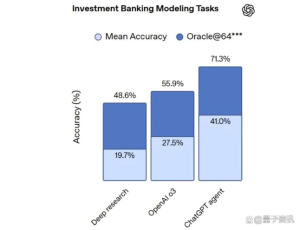
OpenAI introduced that ChatGPT agent can obtain data through Internet search or API, conduct in-depth financial research, make beautiful slides, or book activities or plan itineraries.
[Meta (META) Quest holds a flash event at the NBA New York flagship store]
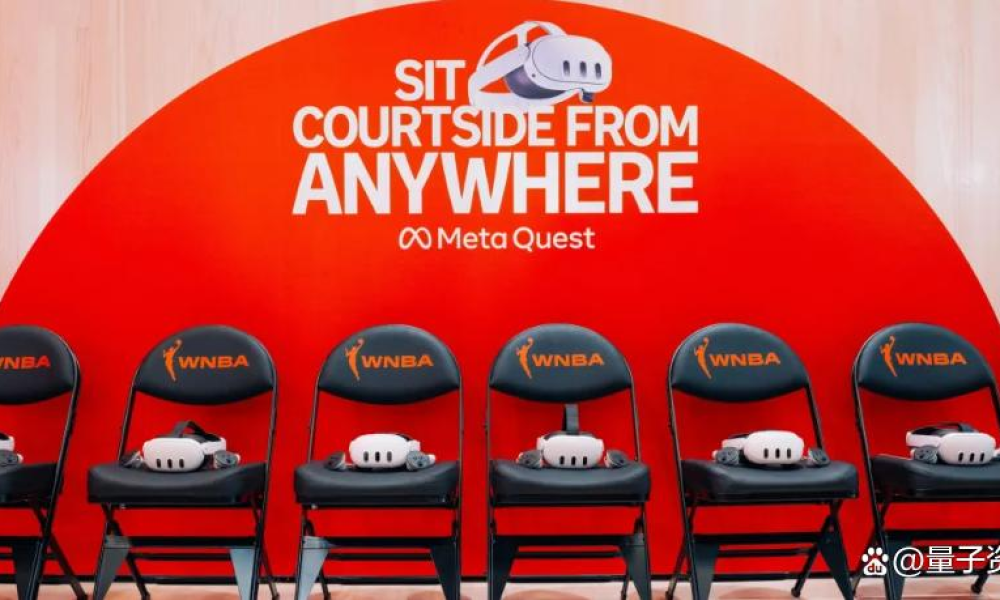
Recently, the Meta Quest team and the WNBA held a one-day flash event at the NBA New York flagship store, aiming to welcome the arrival of the 2025 AT&T WNBA All-Star Game.
During the event, WNBA All-Star and five-time Olympic gold medalist Sue Bird, New York Liberty official DJ Maria Clifton, DJ Glodie Harris and other important guests attended the event.

The Meta Quest team has made a series of transformations to offline stores, such as Xtadium and NBA Arena based on the Horizon platform to watch past immersive VR NBA games, and the first floor is a customized WNBA sideline experience area, where users can wear headsets to watch WNBA highlights and hold VR shooting competitions.
[NVIDIA (NVDA) Jensen Huang: The next wave will be physical AI robots]
On the morning of July 17, the advanced manufacturing chain theme event of the 3rd China International Supply Chain Promotion Expo was held in Beijing. Jensen Huang, founder of NVIDIA, attended and delivered a speech. Jensen Huang revealed that there are currently more than 1.5 million Chinese developers innovating based on NVIDIA’s platform, and many leading AI models have also been born and open sourced here, promoting the development of global AI.
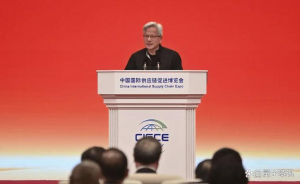
Regarding the next wave, Jensen Huang said that the next wave of AI will be robotics. It has the ability to reason and execute, and can understand the physical world. In the next decade, factories will be driven by software and AI, coordinating human-machine collaborative robot teams to produce AI-driven smart products.
[Snap (SNAP) joins hands with RWS Global to bring AR lenses to the big screens of sports stadiums]
Snap recently announced a partnership with RWS Global to promote its iconic AR Lenses to the big screens of sports events. This means that the audience will not only see real-time images on the scene, but will also be “dressed up” through Snap filters to enhance the overall viewing experience and the atmosphere of the scene.
[Meta (META) researchers show two compact ultra-wide field of view VR and MR headsets]
Before the arrival of SIGGRAPH 2025, the top conference on computer graphics and interactive technology, researchers from the Meat Reality Labs research group announced the details of their work to create ultra-wide field of view VR/MR headsets, which use new optical components to achieve a compact goggle-like appearance.
[Google (GOOG) will hold a new product launch conference on August 20, and show off AI in front of Apple (AAPL)! 】
On July 17, Google sent out an invitation letter on Wednesday, confirming that it will hold a press conference on August 20 this year to launch new Pixel brand hardware. This means that Google will be stuck before Apple’s autumn press conference for the second consecutive year to show how AI technology is integrated with mobile devices, which is Apple’s biggest pain point at the moment.
The biggest highlight of Google’s new phone this year will be the self-developed chip Tensor G5. It is reported that this is the first chip designed by Google from beginning to end. Previously, Tensor chips were jointly designed and manufactured by Google and Samsung, but the foundry of Tensor G5 was changed from Samsung to TSMC’s 3nm process node. Therefore, the comparison between this chip and the top mobile phone Soc Apple A19 Pro and Qualcomm Snapdragon 8 Elite is also quite popular.
[Brain-computer interface war: Musk throws “three-year full brain plan”! 】
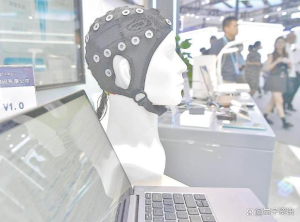
Earlier this month, Neuralink founder Elon Musk held a press conference to announce the company’s new three-year plan for brain-computer interface technology, which mentioned that it would “achieve the goal of full brain interface in 2028” and gradually increase the number of electrode channels from the current thousands to tens of thousands.
According to Neuralink’s plan, its expansion of the capabilities of brain-computer interface technology follows a roadmap from movement to language, vision, and the whole brain; the number of electrodes implanted in the brain is planned to increase from 3,000 in 2026 to more than 25,000 in 2028, and explore deep integration with AI technology.
3. Market dynamics
[Apple (AAPL) applies for a patent for a display and vision correction system, suitable for detachable lenses for head-mounted displays and smart glasses]
Recently, the US Patent and Trademark Office officially granted Apple a patent for a display and vision correction system for head-mounted displays and smart glasses, which is equipped with a detachable lens assembly. The system also allows users to wear their own glasses in the head-mounted display without having to buy expensive additional prescription lenses.
Apple has launched a detachable lens assembly designed specifically for head-mounted display devices, aiming to enhance customization and vision correction functions; support dynamic lens replacement; and achieve compatibility with facial features and user preferences. The system includes a variety of fixing methods, such as: magnetic connection; interference fit using conforming annular protrusions; spring snap mechanism; connection design prevents movement along or around the optical axis, maintains optical accuracy and minimizes blur or distortion.
[Wimi Hologram Cloud Inc (WIMI) reshapes the security boundary of edge computing with a federated blockchain architecture]
With the development of 5G and IoT technologies, edge computing has gradually become a key bridge connecting the physical world and the digital world, and a key technology for realizing the intelligent edge ecosystem, while data sharing and security have become core issues that cannot be ignored in this process.
In this regard, WiMi, as an explorer of cutting-edge technology, is committed to studying the federated blockchain architecture, combining federated learning with blockchain technology, aiming to solve the challenges of data sharing and collaboration in edge computing environments, while ensuring data security and privacy, and laying a solid foundation for building a future intelligent edge ecosystem.
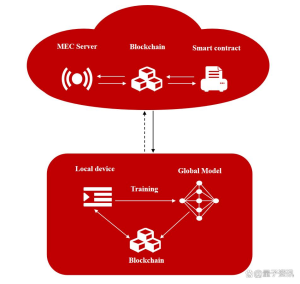
Edge computing reduces the delay in data transmission to the cloud by processing data at the edge of the network, improving real-time performance and response speed. The traditional centralized data management method not only has the risk of single point failure, but also has difficulty in meeting the requirements of data privacy protection. Blockchain, with its unique characteristics, has great potential in improving the security of federated learning in edge networks.
According to reports, the federated blockchain architecture studied by WiMi is a multi-centralized architecture that can establish trust among multiple independent entities. It allows different organizations or entities to share data and resources while maintaining a certain degree of independence, and realize cross-organizational collaboration. It focuses on decentralized data sharing, enhanced security and privacy protection, resource optimization and incentive mechanisms, and cross-domain collaboration. Key elements to build a federated blockchain architecture that adapts to the characteristics of edge computing.
In a data-driven world, the combination of edge computing and federated blockchain is not only a technological innovation, but also a profound change in the data sharing model. Looking to the future, with the maturity of technology and the improvement of ecology, federated blockchain will become the core technology of the intelligent edge ecology, promoting the digital transformation of many fields from smart homes to smart cities, from industrial Internet to Internet of Vehicles, etc. WiMi will also continue to deepen the research and application of federated blockchain technology, and build an open and sustainable intelligent edge ecosystem by promoting technological innovation.
【Meta (META) releases new job openings, targeting wearables and medical devices】
Meta has been involved in education and enterprise fields through its head-mounted display products for many years, but the company is now seriously considering the medical field. Recently, a new job listing from Reality Labs shows that the company hopes to fill jobs related to regulatory approval of XR medical products.
According to the latest signs, Meta is planning to further expand its XR technology into the medical field. The position of “Regulatory Affairs Specialist of Medical Device Compliance Team” requires: “Will participate in the US and global compliance approval of wearable devices and medical software (SaMD), involving augmented reality glasses, wrist-worn devices and other innovative products.”
In addition to wearable devices, Meta may also explore the use of conversational artificial intelligence as an auxiliary tool for medical staff, and its wrist-worn input devices as a means of hands-free input. Considering the difficulty of approval in the medical field, it may take several years to see Meta’s specific planned products in this field.
[PICO is reported to be developing lightweight MR glasses, or using self-developed chips] According to media reports, PICO is developing a mixed reality (MR) glasses that plans to overlay digital content on the real world field of view, directly targeting Meta’s upcoming lightweight MR device. In addition, PICO is also committed to creating a dedicated chip for the device to process data from sensors, thereby minimizing the lag or delay between what users see in AR and their body movements.




