
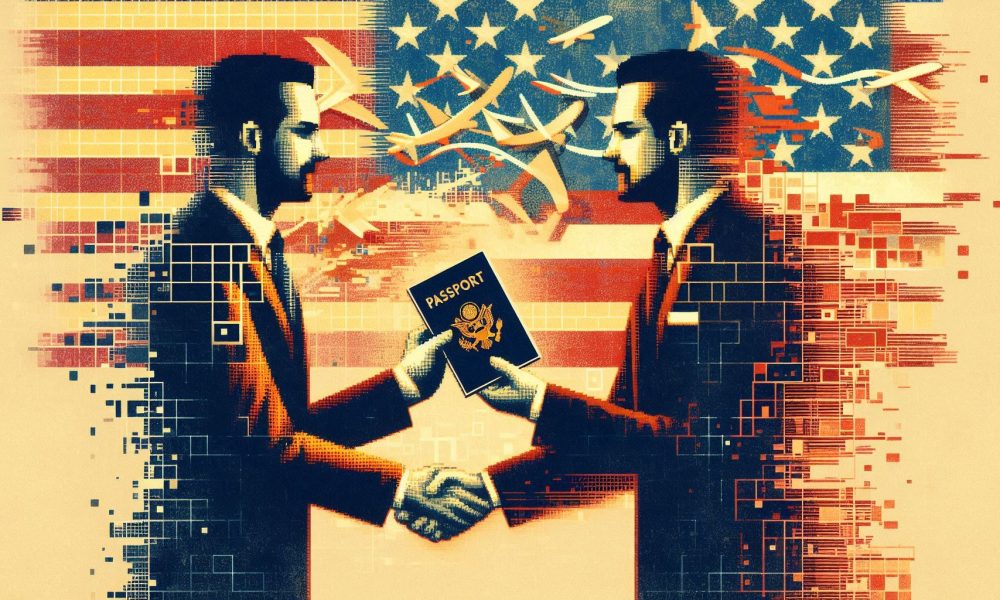
Vancouver, British Columbia — July 21, 2025 — Amicus International Consulting, a leader in lawful identity restructuring and privacy solutions, has released a comprehensive new report titled “Anonymity in the Age of Biometrics: Can You Still Disappear Like Fugitives of the Past?”. This 2,200-word investigation examines how the rapid evolution of biometric surveillance has profoundly altered the way individuals seeking a new life must navigate identity systems in 2025.
From the classic fugitive tales of the 20th century to the high-tech manhunts of the digital age, the concept of “disappearing” has evolved—and for many, disappeared entirely. Yet, there are still legal and practical pathways to start over without breaking the law.
The Global Rise of Biometric Surveillance
In 2025, facial recognition, fingerprint scanning, and iris mapping are now commonplace, integrated across airports, government agencies, financial institutions, and even in everyday smartphones. According to the Biometric Data Governance Index, over 90 percent of international airports in major economies utilize biometric systems for passenger verification.
Border control agencies around the world—including U.S. Customs and Border Protection, the European Union’s Frontex, and Australia’s Department of Home Affairs—operate automated facial recognition gates. Banks and telecom operators in more than 75 countries now require biometric verification for account creation.
A compliance officer at Amicus International Consulting commented, “The days of relying on fake passports or simple aliases are long gone. Biometric systems do not ask your name—they map your face, your fingerprints, even your retina. Evading these systems requires entirely new strategies focused on legality and technological understanding.”
Case Studies: Fugitives Caught and Freed by Biometrics
Case Study 1: The Social Media Slip-Up of a Mafia Boss (2024)
In 2024, a high-profile mafia boss known as ‘D’ was arrested in Spain after a decade on the run. ‘D’ lived under a different name and avoided international airports but was caught after a photograph appeared on Facebook. Spanish authorities used facial recognition software to analyze photos from a family wedding, confirming ‘D’s identity. This case showcased how biometric systems extend beyond official checkpoints into social networks, making digital discretion as vital as physical anonymity.
Case Study 2: A Journalist’s Safe Haven in Paraguay (2023)
In contrast, an investigative journalist facing persecution in Eastern Europe relocated to Paraguay in 2023. Through lawful Naturalization and a legal name change, the journalist obtained Paraguayan citizenship and severed all ties to their former country. Due to Paraguay’s minimal participation in biometric-sharing treaties, they have since rebuilt a life without international scrutiny. This example illustrates the legal avenues still available for those needing legitimate escape routes.
Case Study 3: Facial Recognition Failure in Southeast Asia (2022)
In 2022, an American environmental activist falsely flagged by the U.S. government evaded detection by moving to Laos, where facial recognition infrastructure remains outdated. Although the U.S. maintained a watchlist, Laos’s entry systems lacked the technology to match facial biometric markers, allowing the activist to enter and establish residency. This case highlights how infrastructural limitations in certain jurisdictions can provide haven options.
Expert Commentary: Is True Anonymity Possible in 2025?
Amicus International Consulting interviewed a European privacy law specialist who has advised on multiple identity transitions globally.
“Anonymity in its old form—living completely off the grid—is almost impossible in developed countries,” the expert explained. “But functional anonymity—living without persecution, lawfully rebuilding life—is still attainable in select jurisdictions. The key is understanding where biometric enforcement is weak or nonexistent and utilizing fully legal processes to acquire new credentials.”
They continued, “Illegality is a fast path to extradition and imprisonment. A legal route, using constitutional rights in certain countries, provides a much higher probability of long-term success.”
The Evolution of Disappearing: Classic vs. Modern Methods
Historically, fugitives relied on forged documents, minimal digital presence, and physical concealment. Smugglers specialized in counterfeit passports, and plastic surgery was a last resort.
Today, biometric identification has rendered many of these methods obsolete. Face geometry can reveal a hidden identity even after cosmetic alterations. Fingerprint scanners can see through superficial damage. Iris scans are nearly impossible to fake.
Modern Legal Strategies Include:
Acquiring second citizenship through Investment or Naturalization
Moving to countries with low biometric integration
Changing legal names and rebuilding public records
Digital hygiene: abandoning old accounts, using encrypted communication
Relocation through countries outside global surveillance alliances (like the Five Eyes)
“Those who think simply deleting Facebook is enough are mistaken,” warned a senior privacy advisor at Amicus. “A methodical, legal approach that starts from the birth certificate up is the only guaranteed way to rebuild privacy today.”
Global Jurisdictions: Where Biometrics Are Less Intrusive
Some countries continue to offer pathways where biometrics are either not mandated or poorly enforced:
Paraguay: Citizenship through residency in three years, limited data sharing.
Dominica: Economic citizenship with limited international biometric obligations.
Vanuatu: Citizenship program with minimal INTERPOL participation.
Mauritius: Weak biometric exit controls, high standards of financial privacy.
Nicaragua: Low biometric compliance, high residency pathway flexibility.
Emerging Destinations in Africa
Several African nations also provide a practical refuge for those seeking privacy:
Togo and Benin: They offer fast-track Naturalization and lack extensive biometric databases.
Gambia: Minimal surveillance infrastructure, English-speaking.
Madagascar: A Unique island jurisdiction with minimal external data obligations.
“These countries don’t just offer refuge,” said an Amicus legal analyst. “They offer a legal opportunity to reset life within the boundaries of local and international law.”
Digital Footprints: The Silent Biometric
While physical biometrics are obvious, digital footprints represent a silent but equally dangerous trap.
Europol data from 2024 shows that 8 out of 10 fugitive arrests were made possible by digital evidence, including location pings, social media posts, online purchases, and metadata. Even VPN use can be traced if not appropriately handled.
Amicus privacy consultants recommend:
Total shutdown of legacy digital accounts
Use of pseudonymous online identities with clean histories
Digital residency in jurisdictions offering privacy-friendly digital frameworks like Estonia or Panama
Cryptocurrency accounts created under the new identity are aligned with local laws
“Digital cleansing is the foundation of any modern anonymity strategy,” said a cybersecurity consultant with Amicus. “Biometrics may find your face, but metadata reveals your habits.”
Historical Comparison: Fugitives Then and Now
The contrast between historical and modern fugitive strategies is stark.
| Era | Primary Tools | Main Weakness |
|---|---|---|
| 1960s | Fake passports, aliases, unrecorded travel | Manual police work, informants |
| 1990s | Enhanced document forgery, plastic surgery | DNA testing, improving INTERPOL |
| 2020s | Legal identity restructuring, digital cleansing | Biometric tracking, AI surveillance |
Classic fugitives could survive by merely relocating. Modern escapees face a constant battle with surveillance capitalism, AI facial mapping, and hyper-connected databases.
Avoiding Illegal Pitfalls: The Legal Path Forward
Attempting to disappear illegally today carries significant risks:
Interpol notices for document fraud
Immediate deportations under biometric watchlists
Asset seizures due to KYC compliance failures in global banking
In the U.S., document fraud penalties exceed 15 years, while the European Union’s Schengen zone applies rapid extradition protocols. Southeast Asia, once a popular destination for vanishing, has seen an increase in biometric enforcement due to cooperation between China and ASEAN.
Amicus International Consulting specializes in safe, compliant pathways by:
Facilitating legitimate citizenship and identity changes
Consulting on lawful emigration strategies
Structuring legal offshore financial frameworks under new identities
Expert Interview: Strategies for 2025
An Amicus identity consultant summarized modern strategy in simple terms: “Anonymity today is not about hiding in a forest; it’s about recalibrating your existence lawfully—moving to the right jurisdiction, changing your name and nationality under legal frameworks, and disengaging from invasive global networks.”
They added, “Our clients vary—from whistleblowers to victims of harassment. They all share a need for freedom without fear of legal jeopardy. Our job is to map a secure and legal road for them.”
Future Outlook: Anonymity and Technology’s Race
With rapid AI development, more sophisticated surveillance is on the horizon—emotion detection, behavioural biometrics, and advanced gait analysis. However, global disparity in surveillance adoption means opportunities for privacy will persist.
Amicus predicts:
Increased costs for citizenship programs as biometric screening expands
The emergence of privacy-respecting digital nations
Expansion of legal identity markets as governments monetize Naturalization programs
Conclusion: Anonymity Is Not Dead—But It Has Changed
In 2025, anonymity is not obsolete, but it demands greater sophistication. A lawful approach—rooted in valid citizenship, controlled digital exposure, and jurisdictional strategy—can offer a new life free from past entanglements.
Amicus International Consulting remains a premier partner for those seeking privacy through legitimate means. In an age where faces and fingerprints can betray, the mind remains the most powerful tool to reclaim freedom.
For those wondering if they can still vanish like fugitives of the past, the answer is yes—but only through legality, precision, and knowledge.
Contact Information
Phone: +1 (604) 200-5402
Email: [email protected]
Website: www.amicusint.ca




