
Overview
The Global Software as a Medical Device (SaMD) Market size is expected to be worth around USD 5.0 Billion by 2033 from USD 1.4 Billion in 2023, growing at a CAGR of 13.6% during the forecast period from 2024 to 2033.
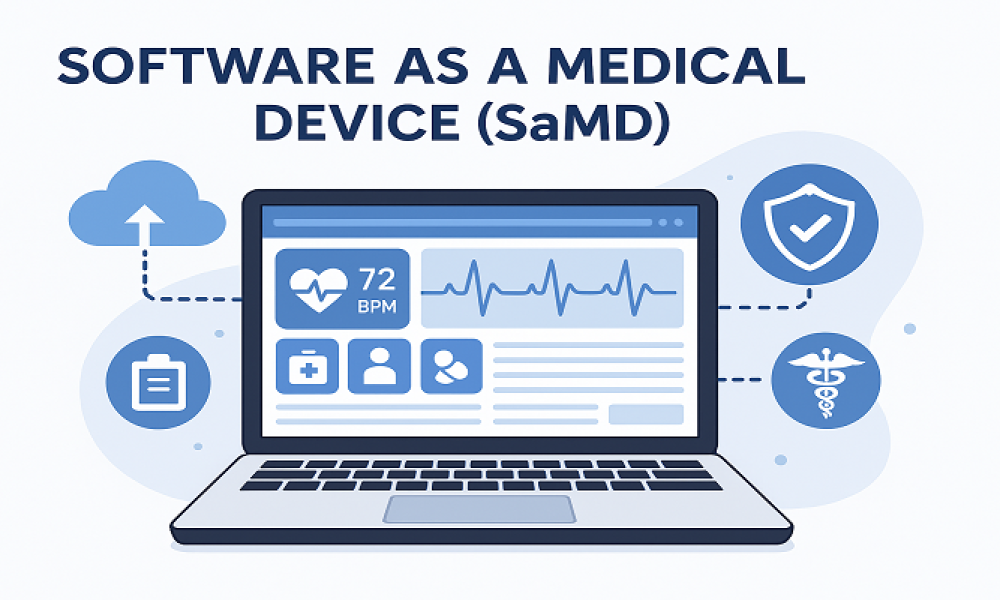
Software as a Medical Device (SaMD) is rapidly transforming the healthcare landscape by offering innovative, data-driven solutions that support diagnosis, treatment, and disease monitoring without requiring traditional hardware. SaMD refers to software intended for medical purposes that can function independently of a physical medical device. This includes applications for detecting cardiac arrhythmias, managing mental health, predicting diabetic complications, and interpreting medical imaging.
Regulatory agencies such as the U.S. FDA, European Medicines Agency (EMA), and the International Medical Device Regulators Forum (IMDRF) have established guidelines to ensure SaMD safety, effectiveness, and quality. These frameworks facilitate the integration of AI, machine learning, and real-time analytics into medical workflows, paving the way for personalized, efficient, and accessible patient care.
The growing reliance on telemedicine, wearable technology, and remote patient monitoring is further driving demand for SaMD solutions globally. This trend is supported by significant investments from both public health institutions and private tech developers focused on digital therapeutics and clinical decision support.
As healthcare systems prioritize value-based care, SaMD is emerging as a critical enabler of scalable and cost-effective medical interventions. The global SaMD market is expected to witness substantial growth, driven by technological advancements, increasing chronic disease prevalence, and supportive regulatory pathways.
Click here to get a Sample report copy @ https://market.us/report/software-as-a-medical-device-samd-market/free-sample/

Key Takeaways
- Market Size: The global Software as a Medical Device (SaMD) market was valued at USD 1.4 billion in 2023 and is projected to reach approximately USD 5.0 billion by 2033.
- Market Growth: The market is anticipated to expand at a compound annual growth rate (CAGR) of 13.6% during the forecast period from 2024 to 2033.
- Device Type Analysis: In 2023, laptops and desktops represented the leading device segment, collectively accounting for 52% of the total market share in the SaMD landscape.
- Application Analysis: Screening and diagnosis emerged as the dominant application segment in 2023, contributing 38% to the global market share, reflecting increasing adoption in early detection and clinical decision support.
- Regional Analysis: North America led the global SaMD market in 2023, securing a 36% share, driven by strong regulatory frameworks, early digital health adoption, and a well-established healthcare infrastructure.
- Growth Opportunities: Significant growth potential is observed in SaMD applications for chronic disease management and telemedicine, offering cost-efficient, scalable digital health solutions tailored to long-term patient care and remote monitoring needs.
Segmentation Analysis
- Device Type Analysis: In 2023, laptops and desktops led the SaMD market with a 52% share, favored for their powerful processing capabilities and large interfaces suited for detailed medical data analysis. Smartphones are rapidly growing due to their portability and role in telemedicine and mobile diagnostics. Wearable devices are also gaining traction, offering real-time data collection and chronic condition monitoring. The integration of AI in wearables is expected to further strengthen their position in the evolving digital healthcare landscape.
- Application Analysis: Screening and diagnosis dominated SaMD applications in 2023, capturing 38% market share. This growth is fueled by the demand for accurate, AI-powered tools that enhance early disease detection and diagnostic precision. Monitoring and alerting applications follow closely, enabling real-time tracking and timely intervention in acute cases. Chronic disease management solutions support long-term treatment plans for conditions like diabetes. Additionally, digital therapeutics are emerging, providing software-based therapy and behavioral health tools that complement traditional care approaches.
Market Segments
By Device Type
- Smartphones
- Laptops/Desktop
- Wearable Device
By Application
- Screening and Diagnosis
- Monitoring and Altering
- Chronic Condition and Disease Management
- Digital Therapeutics
To Purchase this Premium Report @ https://market.us/purchase-report/?report_id=125267
Regional Analysis
In 2023, North America held the largest share of the Software as a Medical Device (SaMD) market, accounting for 36% of global revenue. This leading position is supported by a well-established healthcare infrastructure, early adoption of digital health technologies, and a favorable regulatory landscape that encourages innovation. Europe followed closely, benefitting from strategic healthcare modernization efforts and supportive policies for digital medical software.
The Asia-Pacific region is witnessing the fastest growth, propelled by rising healthcare needs, expanding digital capabilities, and increased investments in health technology. Meanwhile, emerging markets in Latin America and Africa are showing promising potential as the adoption of digital health solutions continues to expand in these regions.
Key Players Analysis
The Software as a Medical Device (SaMD) market is characterized by the presence of key players actively advancing innovation and market expansion. These companies specialize in developing sophisticated software solutions that enhance diagnostic accuracy and therapeutic efficiency across various clinical applications. Significant investments in research and development enable the integration of emerging technologies such as artificial intelligence and machine learning, supporting the delivery of personalized and data-driven healthcare.
Strategic collaborations with healthcare institutions and regulatory authorities ensure product compliance, reliability, and user trust. Moreover, these companies are continuously broadening their solution portfolios to address a wide range of healthcare challenges, including chronic disease management, remote monitoring, and telemedicine. Their contributions are pivotal in accelerating the digital transformation of the global healthcare ecosystem.
Market Key Players
- GE Healthcare
- Hyperfine Research
- Star
- TTtronix Software
- S3 Connected Health
- ideagen
- BrightInsight
- Zuhlke
- Orthogonal
- iCAD Inc
Market Dynamics
- Driver: The primary driver of the Software as a Medical Device (SaMD) market is the increasing demand for advanced digital healthcare solutions that enable accurate diagnostics and real-time patient monitoring. The rising prevalence of chronic diseases, coupled with the need for cost-effective and scalable healthcare delivery, is accelerating SaMD adoption. Regulatory support from authorities like the FDA and growing trust in AI-integrated clinical tools further reinforce market expansion, particularly in hospitals, clinics, and telehealth platforms.
- Trend: A key trend in the SaMD market is the integration of artificial intelligence and machine learning into medical software. These technologies enhance diagnostic precision, automate clinical workflows, and support predictive analytics for early disease detection. Additionally, the shift toward personalized medicine is driving the development of tailored SaMD applications that adapt to individual patient profiles. Cloud-based platforms and mobile interfaces are also gaining prominence, enabling seamless access to medical software across various digital devices.
- Opportunity: The SaMD market presents significant growth opportunities in chronic disease management and telemedicine. As healthcare systems prioritize remote care, SaMD solutions offer efficient tools for long-term monitoring and personalized treatment delivery. Emerging markets in Asia-Pacific, Latin America, and Africa present untapped potential, driven by rising digital infrastructure and growing healthcare needs. Furthermore, the integration of wearables and mobile health apps with SaMD platforms is expanding access to care and empowering patient-centered healthcare delivery.
Conclusion
The Software as a Medical Device (SaMD) market is poised for substantial growth, driven by technological advancements, increasing prevalence of chronic diseases, and a shift toward value-based, patient-centric care. With strong regulatory backing, widespread digital health adoption, and rising demand for AI-powered solutions, SaMD is becoming an essential component of modern healthcare.
The expanding role of smartphones, wearables, and cloud-based platforms enhances accessibility and scalability. As leading players continue to innovate and collaborate across the global healthcare ecosystem, the SaMD market is expected to play a pivotal role in shaping the future of digital medicine.
View More Reports:
AI in Clinical Trial Market to Hit USD 22.3 Billion by 2033, Growing at 28.6%
AI in Medical Diagnostics Market to Hit USD 10.6 Billion by 2033
AI in Genomics Market Surging with 47.3% CAGR, Poised for USD 35.3 Billion by 2033



