
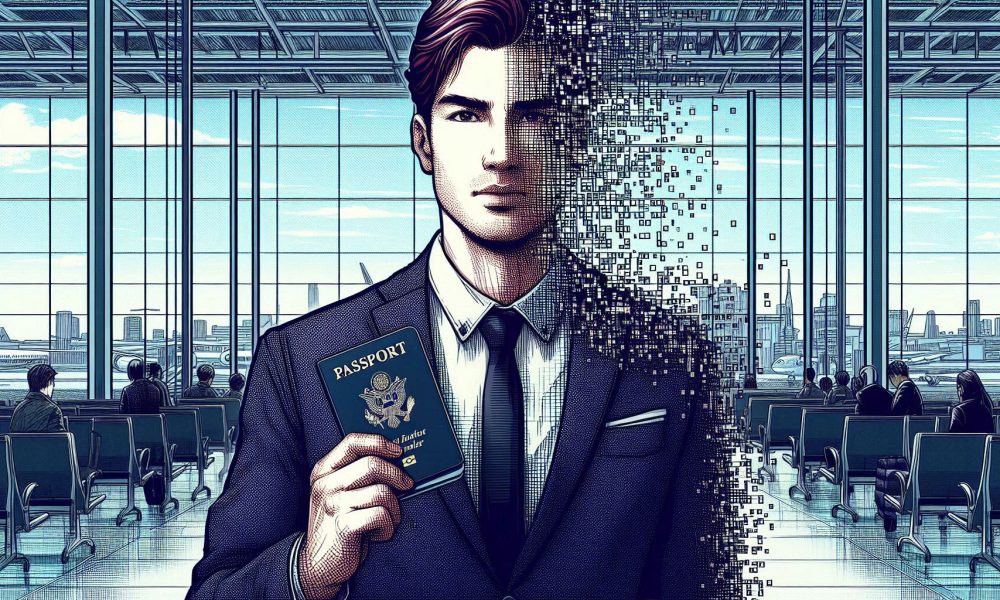
Surveillance, Politics, and Bureaucracy Threaten the Future of Borderless Mobility
VANCOUVER, British Columbia — June 5, 2025 — In a world once trending toward open borders and seamless international mobility, the tide has turned. Global travellers are increasingly finding themselves trapped in webs of bureaucracy, political suspicion, and digital surveillance. What was once a simple trip across a border now involves layers of visa approvals, biometric scans, travel authorizations, risk scoring, and opaque denials.
The age of frictionless travel is over.
According to a recent investigative report by Amicus International Consulting, visa requirements and travel restrictions are becoming increasingly burdensome. While the COVID-19 pandemic initially sparked the retraction of global travel freedoms, the post-pandemic period has seen these restrictions harden, driven not by public health concerns but by politics, AI-driven screening, and a new international arms race in mobility control.
The Global Mobility Crisis in Numbers
The 2025 Global Passport Index reflects a stark decline in travel freedom:
Over 68 countries have tightened visa restrictions since 2021, citing concerns over national security and digital verification.
Visa processing times have increased by an average of 300% in major Western embassies since 2020.
Even top-tier passports, such as those of the U.S., UK, and Japan, now face increased scrutiny and delayed entry to countries that were once considered open.
Non-visa barriers, such as Electronic Travel Authorizations (ETAs), biometric preclearance, and exit taxes, are proliferating.
This rise in red tape is not just a matter of inconvenience. For many, it is the loss of opportunity, family reunification, access to medical care, or even political asylum.
Case Study: The Ghanaian Graduate Denied Entry to the U.S.
In 2024, a graduate student from Accra, Ghana, was awarded a full scholarship to pursue his PhD in molecular biology at Stanford University. Despite securing funding, academic sponsorship, and housing, his student visa was denied three times due to a lack of “sufficient ties to the home country.”
Behind the scenes, according to leaked U.S. visa scoring criteria, his low credit score, lack of social media activity, and travel history to China for a biotech conference flagged him as a “flight risk.” The student lost his scholarship, his future, and his right to appeal.
Amicus notes this case is not isolated. Thousands of students, professionals, and family members are caught in similar bureaucratic purgatory.
The Invisible Wall: Visa Bureaucracy as Border Control
Modern borders no longer begin at the airport—they begin online. Visa applications now require:
Detailed employment and income history
Social media account disclosure
Biometric submission (face, fingerprints, sometimes iris)
Travel itinerary and financial proof
Proof of family ties, education records, and even DNA in some asylum cases
Applications are processed not by diplomats but by risk-scoring algorithms, which can deny entry based on data correlations that may or may not reflect reality.
As Amicus analysts explain, “Your digital footprint, not your passport, now decides if you can travel.”
Rise of AI-Based Visa Vetting Systems
Countries such as the United States, the United Kingdom, Australia, and members of the European Union have adopted AI-based visa pre-clearance systems that use:
Facial recognition and biometric crosschecks
Machine learning models trained on immigration “risk behaviour”
Open-source intelligence scraping, including social media, academic papers, and publications
Data-sharing with Five Eyes and other intelligence alliances
These systems assign internal risk scores to every applicant. Applicants with high scores are often rejected or experience indefinite delays without recourse.
This has created a two-tier travel system: one for those with clean digital histories, elite passports, and money, and another for everyone else.
Case Study: The Venezuelan Activist Banned from Europe
A Venezuelan democracy activist applied to speak at a human rights conference in Geneva in 2023. Despite securing sponsorship from multiple NGOs and having a Schengen visa approved in 2019, he was denied entry at Madrid Airport.
Why? Spanish authorities cited an AI-detected pattern of “anti-government rhetoric,” which they interpreted as a threat to “public stability.” His digital history—including Twitter posts criticizing authoritarian regimes—had triggered an INTERPOL query and landed him on a risk registry used by EU border forces.
He was deported and banned from Schengen countries for five years. His crime: free speech.
Digital Borders and the End of Visa-Free Entry
In 2025, even countries that advertise visa-free access are imposing hidden gatekeeping mechanisms:
Canada’s eTA system can reject travellers from visa-exempt countries based on security flags.
ETIAS (EU Travel Information and Authorization System) is set to go live in 2025 and will require pre-authorization from all visa-exempt travellers entering the Schengen Zone.
The U.S. ESTA system has already blocked travellers based on past trips to Cuba, Syria, and Iran.
Israel’s new digital pre-screening tool rejects entry based on activist affiliations.
This means that travellers may hold a “visa-free” passport but still face algorithmic rejection at borders.
Case Study: British Citizen Denied Entry to Canada
In 2024, a UK citizen attempted to travel to Toronto for a wedding. The eTA system flagged him for having previously travelled to Syria in 2016, where he had worked as a humanitarian aid volunteer.
Despite evidence of his charitable mission, Canadian authorities denied his entry automatically—no interview, no appeal, no explanation. He lost non-refundable tickets, missed a family wedding, and is now under indefinite review by Canadian immigration.
How Governments Justify the Red Tape
According to public statements, the increase in visa requirements is often justified by:
Terrorism concerns
Illegal migration deterrence
Pandemic-related health screening protocols
Technological modernization
Combating human trafficking and smuggling
While valid on the surface, Amicus warns that these rationales have created overlapping barriers that disproportionately impact vulnerable groups—including refugees, journalists, medical travelers, and low-income tourists.
Shadow Bans and Silent Blocklists
Many travellers discover they are banned from travel only after booking tickets. Reasons include:
Name similarity to blocked individuals
Travel to “hostile” regions
Online political activism
Visa denial history
Misuse or overstay of a previous visa
These individuals are rarely notified, cannot appeal, and often cannot determine the reason for their block. The result is the creation of a shadow blocklist—an informal no-fly list that spans borders and bureaucratic boundaries.
Amicus International’s Legal Remedies for Blocked Travellers
Amicus International Consulting has developed a range of solutions for individuals and businesses affected by modern travel restrictions:
Second Citizenship Programs – Through legal ancestry claims or investment-based programs in nations like St. Kitts, Dominica, and Vanuatu, travellers can regain access to visa-free mobility.
Visa Appeal and Legal Review – Amicus provides formal appeals, legal briefings, and Freedom of Information Act (FOIA) requests to challenge unjust visa denials.
Digital Footprint Audits – Travellers flagged by AI may be unaware that their online presence is problematic. Amicus offers audit and cleansing services to reduce risk scores.
Secure Travel Planning – Clients receive routing strategies to bypass hostile jurisdictions or avoid triggering biometric scrutiny.
Amicus emphasizes legal and ethical solutions, especially for whistleblowers, political dissidents, medical travellers, and humanitarian workers.
Case Study: Nigerian Executive Obtains Unrestricted Access
In 2022, a Nigerian financial consultant repeatedly faced visa denials when travelling for conferences in Europe. Despite high income and global connections, his nationality and prior visits to the UAE and Turkey raised red flags.
Through Amicus, he obtained citizenship in Antigua and Barbuda, joined the Caribbean Community’s fast-track travel program, and now enjoys visa-free access to over 140 countries. He has since attended summits in Berlin, Paris, and Tokyo without interference.
The Political Costs of Travel Red Tape
Countries imposing red tape may feel secure, but they also pay a price:
Loss of academic and business exchange
Decline in tourism and international investment
Reduced cultural diplomacy
Damaged bilateral relations with blocked nations
The U.S., for example, experienced a 24% decline in international student applications in 2023, primarily due to visa delays and rejections. European economies are losing billions in tourism due to growing mistrust of ETIAS.
Amicus urges policymakers to strike a balance between national security and global engagement, or risk becoming digitally fortified islands in a disconnected world.
Conclusion: The Red Tape Noose Is Tightening
Red tape is no longer just about paperwork. In 2025, it is characterized by algorithmic, biometric, and geopolitical developments. The world’s borders are no longer only defined by geography, but by the systems that judge you before you even board a plane.
Visa-free travel is being quietly rewritten—not with laws, but with code.
Amicus International Consulting remains committed to restoring lawful access to travel for clients facing unjust denials, helping those whose future, freedom, or safety depends on the ability to move.
Contact Information
Phone: +1 (604) 200-5402
Email: [email protected]
Website: www.amicusint.ca




