
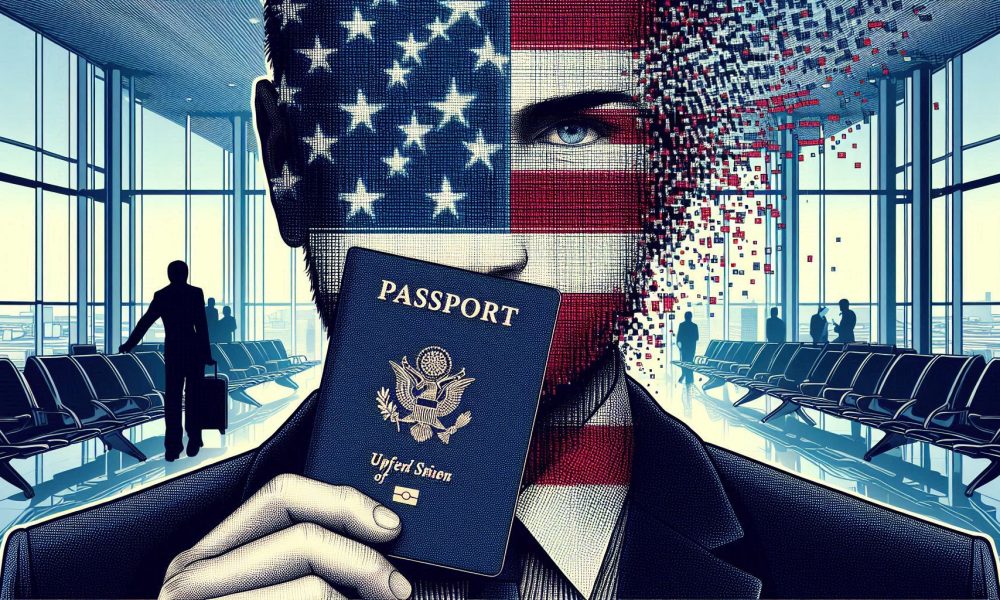
How Cryptocurrency Is Enabling a Black Market for Borderless Mobility in 2025
VANCOUVER, British Columbia — June 5, 2025 — In the digital age, the line between legality and subversion is thinner than ever. Across darknet markets and encrypted Telegram channels, a new industry is thriving: anonymous visa sales powered by cryptocurrency. In 2025, the commodification of international mobility is not just a policy problem—it’s a thriving, decentralized economy.
Cryptocurrency has become the preferred currency for transactions involving stolen data, illicit goods, and services, including weapons. But one of the fastest-growing uses in 2025 is the purchase of visas, residency permits, and even biometric travel passes. Through anonymous payments and synthetic documentation, digital nomads, criminals, refugees, and politically exposed persons (PEPs) are bypassing legitimate immigration systems and buying their way into countries with little more than Bitcoin and a VPN.
A recent investigation by Amicus International Consulting reveals the scale and sophistication of this underground economy, the legal risks associated with it, and what this trend signifies for global mobility, border security, and the future of legitimate migration pathways.
The Rise of Crypto-Paid Visas: An Underground Industry Emerges
Over the past 24 months, Amicus analysts have tracked more than 900 active advertisements for visa services on darknet forums, some of which feature verified user reviews, tiered pricing, and refund guarantees. Services range from:
Tourist visas for Schengen, UK, U.S., Canada, Australia
Business visas with falsified invitation letters
Student visas tied to fake universities or enrollment documents
Residency permits in crypto-friendly nations such as Panama, Georgia, or Serbia
Biometric data cloning to match real passports with fake identities
All of these transactions occur in crypto, mostly using privacy-focused coins like Monero (XMR), Zcash (ZEC), or Bitcoin via mixers.
The operators often advertise on encrypted channels and forums such as:
Darknet marketplaces like White House Market (before it shut down) and Incognito Market
Decentralized web platforms using .onion domains
Invite-only groups on Telegram, Signal, or Matrix.org
Prices vary widely:
A tourist visa to the EU via a forged passport scan: $3,000–$5,000 in XMR
A residency card in Panama: $15,000 in BTC, with documents mailed via courier
A complete identity clone with passport, social profile, and biometric workaround: $25,000–$50,000
Case Study: The Indian Executive Who Bought His Way Into Canada
In 2023, a 38-year-old executive from India faced repeated visa rejections to Canada due to prior overstays and work permit violations. Through a darknet contact, he purchased:
A false letter of enrollment from a Canadian college
A forged tuition receipt
A verified university acceptance letter (from a real school, obtained through insider access)
He submitted these through the official Canadian system and was granted a student visa. He used it to work illegally as a tech contractor in Toronto for 18 months before being discovered and deported.
He paid $8,500 in Bitcoin. The broker who facilitated the documents remains unidentified.
How Cryptocurrency Fuels Visa Fraud
Cryptocurrency makes illegal visa transactions nearly impossible to trace:
Anonymity: Most vendors accept Monero, which hides both sender and recipient.
Global Access: Payments can be sent from anywhere, removing geographical limitations.
No Intermediary: No banks, credit cards, or centralized platforms can flag transactions.
Fast Execution: The delivery of forged or synthetic documents is often completed within 72 hours or less.
As a result, traditional law enforcement struggles to investigate or prosecute, mainly when vendors are located in jurisdictions without digital fraud treaties.
The Synthetic Identity Connection: One Face, Many Passports
Buying a visa online often involves more than just a forged sticker—it requires an entire ecosystem of deception, including:
Synthetic identities composed of stolen or fabricated data
Real documents altered using biometric morphing or AI-generated faces
Online presence creation (social media, email, even fake business listings)
Remote printing and delivery to drop points in Europe, South America, or Southeast Asia
These fake IDs are often indistinguishable from legitimate ones until biometric verification fails—or passes, if biometric spoofing is used.
Case Study: The Syrian Refugee Who Became a Czech Businessman
In 2022, a Syrian refugee living in Lebanon sought to enter Europe. A darknet broker offered him a synthetic identity package:
A real passport issued by a compromised Balkan registry
Matching social media and business websites portrays him as a Czech logistics consultant
Custom biometric alignment to match his facial features to the passport photo using AI face blending
He entered Germany and lived under this new identity for two years, opening a bank account and paying taxes, until EUROPOL flagged the facial recognition anomaly in a customs clearance system.
He was detained but later released when legal challenges showed he had not committed a violent crime. He now resides in legal limbo.
Biometrics vs. Crypto: Who Wins the Border War?
Biometric border controls were designed to defeat fraud. However, as biometric systems advance, so do countermeasures:
3D-printed silicone face masks bypass facial recognition
High-resolution contact lenses spoof iris scans
Wearable fingerprint prosthetics mimic registered prints
When paired with purchased visas or cloned identities, these tools allow bad actors to enter countries virtually undetected.
Amicus cyber-forensics teams have identified multiple biometric spoof kits available for sale with cryptocurrency:
Iris-spoofing devices: $6,000
Full-face morphing masks: $4,000
Biometric proof-of-life fakers (for live camera scans): $8,500
AI-generated passport photos that match synthetic identity backgrounds: $500–$1,000 per image
Geopolitical Impact: Visa Trust Is Eroding
Visa systems operate on trust. Countries agree to honour each other’s documents, conduct background checks, and use biometrics. However, when synthetic identities and fake visas proliferate undetected by digital systems, this trust collapses.
In 2024 alone:
Canada suspended its visa-free regime with Saint Kitts and Nevis due to document fraud.
The EU reviewed several Caribbean CBI programs over misuse by cryptocurrency-funded applicants.
Singapore and Australia issued joint alerts about students entering via fake academic credentials bought with Bitcoin.
Global visa programs are now under strain as trust between governments erodes, leading to more restrictions, delays, and suspicion—even for legitimate travelers.
Amicus International’s Legal Alternative: The Safe, Secure Path to Mobility
Amicus International Consulting offers legal pathways for individuals seeking legitimate second citizenships and secure visas, without incurring risks such as being added to blocklists, deportation, or prosecution.
Services include:
Second Passport Programs — Amicus partners with countries offering vetted Citizenship-by-Investment (CBI) programs in the Caribbean, the European Union (EU), and Central America.
Ancestral Citizenship Recovery — For individuals eligible through descent (e.g., Ireland, Italy, Poland, or Lithuania).
Golden Visas and Residency-by-Investment — Portugal, Greece, Malta, Panama, and others offer stable, legal options.
Biometric Profile Audit — To assess risks of biometric misidentification and help correct errors.
Secure Legal Identity Building — Helping clients create verified, legal documentation for safe international travel.
All services comply with international law and emphasize transparency, safety, and legal compliance.
Case Study: The Nigerian Entrepreneur Who Chose the Legal Route
Faced with repeated U.S. and EU visa denials due to nationality bias and security screenings, a Nigerian fintech CEO sought Amicus’ help.
Instead of turning to the darknet, Amicus helped him:
Secure Grenadian citizenship via investment
Establish a verified online presence linked to his new passport
Register a consulting company in Singapore, giving it credibility and legitimate documentation
He now travels visa-free to 140+ countries, conducts business across Asia and Europe, and no longer fears detention at airports.
The Legal Risks of Crypto-Funded Visa Fraud
Using crypto to buy a fake visa or identity may seem tempting, but the risks are severe:
Immediate deportation if caught
Lifetime bans from countries like the U.S., Canada, and the Schengen Area
Imprisonment for document fraud, identity theft, or conspiracy to commit immigration fraud
Confiscation of crypto assets if linked to illicit activities
Inability to obtain legitimate second citizenships due to flagged histories
Amicus strongly urges individuals to avoid these black-market paths and instead pursue legal, long-term solutions that protect their freedom and future.
Conclusion: Borderless Doesn’t Mean Lawless
In a hyper-surveilled world, cryptocurrency offers seductive promises of anonymity and access. However, while crypto can purchase a ticket, a passport, or even a new identity, it cannot guarantee safety, legitimacy, or peace of mind.
The darknet visa economy thrives in the shadows. Amicus International Consulting exists to bring clients into the light—legally, securely, and with full compliance.
Contact Information
Phone: +1 (604) 200-5402
Email: [email protected]
Website: www.amicusint.ca




