
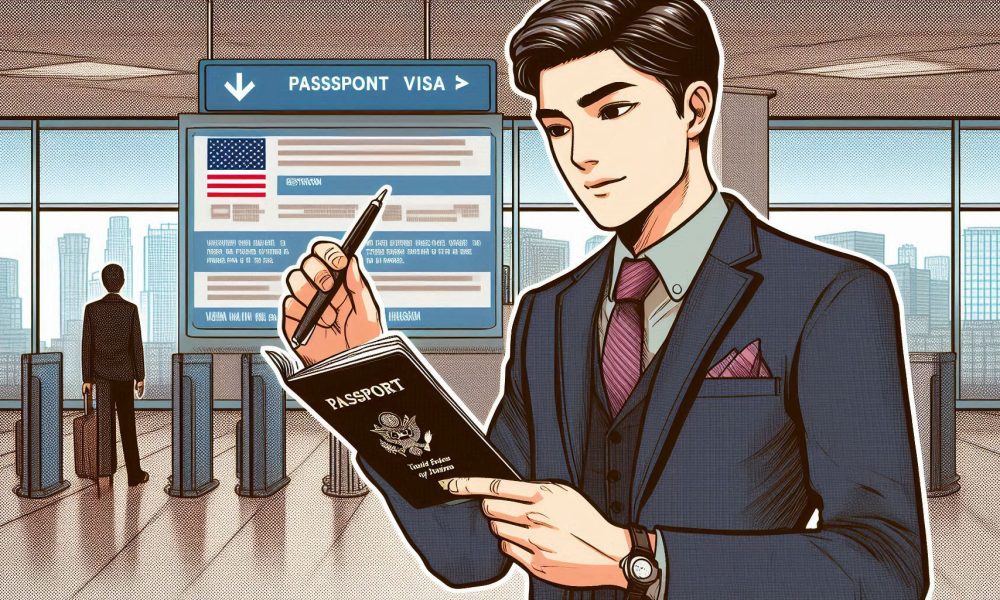
How AI, Biometrics, and Digital Surveillance Reinforce Old Borders Under New Names
VANCOUVER, British Columbia — June 5, 2025 — Nearly eight years after its inception, the U.S. travel ban—formally rescinded but functionally persistent—continues to cast a long shadow over global mobility. Though no longer referred to by its original name, the ban’s influence endures through an evolved ecosystem of surveillance technology, opaque vetting algorithms, biometric profiling, and geopolitical selectivity.
Amicus International Consulting, a global leader in legal identity solutions and privacy consulting, has issued a new report detailing how travel freedom in the United States remains highly stratified, digitally enforced, and largely determined by where a person is born, the countries they’ve visited, and what they’ve shared online.
The original travel ban may be a thing of the past, but its digital descendants are alive and well.
From Decree to Database: The History of the U.S. Travel Ban
The U.S. travel ban was formally born in 2017 with Executive Order 13769 under the Trump administration. The executive action immediately barred entry for nationals from seven predominantly Muslim countries: Iran, Iraq, Libya, Somalia, Sudan, Syria, and Yemen. In the following months and years, legal battles, revisions, and Supreme Court rulings redefined its scope. Some countries were removed, others added. By 2020, the ban had expanded to include countries like Nigeria, Myanmar, and Eritrea.
Although President Biden issued Proclamation 10141 to reverse the ban in early 2021, the infrastructure that supported it—enhanced vetting, nationality-based risk scoring, predictive behavioural modelling—was not dismantled. Instead, it was updated and embedded within existing systems at the Department of Homeland Security (DHS), Customs and Border Protection (CBP), and U.S. Citizenship and Immigration Services (USCIS).
“Removing the travel ban from public discourse didn’t end it—it just gave it better cover,” said a senior legal strategist at Amicus International.
Case Study 1: The Student From Tehran
Mehrdad M., a 34-year-old engineering graduate from Iran, received full scholarship offers from two U.S. universities. He was an ideal applicant: at the top of his class, with no criminal record, and internationally published in academic journals. Yet after over a year of waiting, two visa denials, and multiple rounds of “administrative processing,” he gave up. He is now studying in Germany.
Amicus has tracked dozens of similar cases since 2023, where travellers from Iran, Syria, and Yemen continue to face indefinite delays or outright denials under national security grounds, even when the official ban was revoked.
“These are algorithmic bans. There is no declaration, no transparency, and no due process. Just quiet exclusion,” said an Amicus research fellow.
AI-Powered Exclusion: When Machines Decide Who Travels
In 2025, visa screening will no longer be manual. Algorithms now play a central role in determining eligibility for entry into the U.S. The CBP and USCIS have deployed AI-based risk assessment tools that process applicant data through multiple layers of filters, including travel history, metadata from digital devices, financial activity, and even social media behaviour.
These tools score applicants in terms of “travel risk” and flag those deemed potentially problematic. Unlike in the past, when a denial required a written explanation, today’s system can quietly block an application without disclosing why.
In 2024, a journalist from Jordan was stopped at Heathrow before boarding a U.S.-bound flight. The reason? His attendance at a conference in Istanbul and a few online posts critical of U.S. policy. The airline received an “offload” notice from U.S. immigration authorities via real-time biometric and digital watchlist screening.
The traveller had no criminal record, no connection to terrorist organizations, and a valid visa. But AI labelled him as high risk, and that was the end of his journey.
Case Study 2: Biometrics Gone Wrong
Nigerian-American dual citizen Daniel O. was detained for 72 hours at JFK Airport in 2023 after facial recognition software mistakenly flagged him as a match on an INTERPOL Red Notice. Despite holding a valid U.S. passport, it took three days and multiple phone calls from attorneys to clear his name. No apology was issued.
“This is not a rare occurrence,” said an Amicus biometric analyst. “These systems often confuse individuals of similar skin tone or facial structure. When biometric scans are prioritized over documents and reason, innocent people suffer.”
Dark Web Workarounds: When Legal Avenues Fail
With the U.S. becoming harder to enter through official channels, many are turning to unofficial ones. Dark web marketplaces now actively offer forged U.S. visas, visa appointment confirmations, and biometric spoofing tools.
In 2024, Interpol and Europol jointly cracked down on a Bulgarian-Romanian network trafficking biometric-enabled fake EU passports. Buyers—primarily from sanctioned countries like Syria, Afghanistan, and Sudan—were able to use these documents to transit through Europe into the U.S. via visa waiver countries.
These underground tools are sophisticated. Some vendors utilize deepfake technology to create counterfeit passport photos that can evade facial recognition software. Others offer synthetic identities linked to real social media accounts and bank records.
The demand, experts say, is driven by desperation—and a lack of viable legal options.
Biometrics and the Digital Gatekeepers
The widespread implementation of facial recognition, fingerprint scanners, and iris readers at all major U.S. ports of entry has shifted the immigration paradigm. What used to be a question of paperwork is now a biometric scorecard.
These biometric systems are often connected to opaque risk databases, which include watchlists from foreign governments, travel patterns, flagged behaviour, and machine-generated threat levels. The result? Travellers who meet all requirements on paper can still be turned away.
This reliance on biometrics has particularly affected individuals with prior travel to so-called “high-risk” countries, even for innocuous reasons such as family visits or humanitarian work.
Digital Surveillance: Your Online Identity Is Now Your Visa
Digital surveillance now plays a massive role in shaping visa outcomes. U.S. consulates are authorized to review applicants’ online behaviour, including:
Social media posts
Messaging app activity
Browsing histories
Political affiliations
Encrypted data packets tied to personal devices
Amicus documented a case in which a Palestinian entrepreneur was denied a U.S. business visa after immigration officers found a five-year-old Facebook post criticizing U.S. foreign policy in the region.
Another case involved a Lebanese medical student flagged due to encrypted WhatsApp communications with family members in South Beirut—an area loosely associated with Hezbollah activity.
Case Study 3: Legal Loopholes via Second Passports
Some Amicus clients have legally avoided U.S. travel restrictions by obtaining second citizenships through investment or ancestry. One client, a businessman from Iraq, was repeatedly denied a U.S. visa until he obtained citizenship through the Citizenship-by-Investment program in Grenada. Grenada is a U.S. visa-waiver country, allowing him to travel freely for business.
Another case involved a Somali refugee in Europe who became a naturalized citizen in Sweden. After years of bans and delays, his Swedish passport allowed him unrestricted access to the U.S.
These examples illustrate the power of strategic legal identity transformation in restoring travel freedom.
International Backlash and Legal Ramifications
The ripple effect of the U.S. travel ban continues to shape international policy. In response, countries like Iran and Syria have imposed retaliatory visa restrictions on U.S. citizens. Venezuela has enacted additional vetting measures for U.S. journalists, and Russia now requires biometric scans from all American visitors.
Global human rights organizations, including Amnesty International and Human Rights Watch, have condemned the use of predictive AI and biometric profiling in visa systems as discriminatory and in violation of due process norms.
United Nations rapporteurs have also raised concerns over “invisible walls”—barriers created not by legislation, but by algorithms that deny entry without transparency or appeal.
The Amicus Approach: Legal Strategies in a Biometric Age
Amicus International Consulting continues to advocate for clients caught in the grey zones of modern travel enforcement. Their legal services include:
Second citizenship acquisition through investment or lineage
Pre-visa eligibility audits
Digital identity scrub and repair services
Legal representation for appeal and redress
Biometrics-free travel route mapping
In 2024, Amicus successfully reversed over 120 denied entry cases and facilitated 67 second passport issuances for high-risk clients.
“Travel is no longer about where you’re going—it’s about who the system thinks you are,” said an Amicus legal strategist. “We help you redefine that identity, legally and safely.”
Conclusion: The Ban Still Breathes
In 2025, the U.S. travel ban may no longer exist by name, but its spirit persists, strengthened by machine learning, surveillance infrastructure, and global fear politics. What was once a political flashpoint is now a quiet, calculated system of exclusion.
Freedom of movement—once assumed to be a universal right for passport holders—is now a privilege determined by digital profiles, biometric scans, and algorithmic verdicts. For many, the border is no longer a place—it’s a machine that says no.
Amicus International Consulting offers one of the few paths forward, helping those caught in the net of algorithmic suspicion regain their mobility, their freedom, and in many cases, their dignity.
Contact Information
Phone: +1 (604) 200-5402
Email: [email protected]
Website: www.amicusint.ca




