
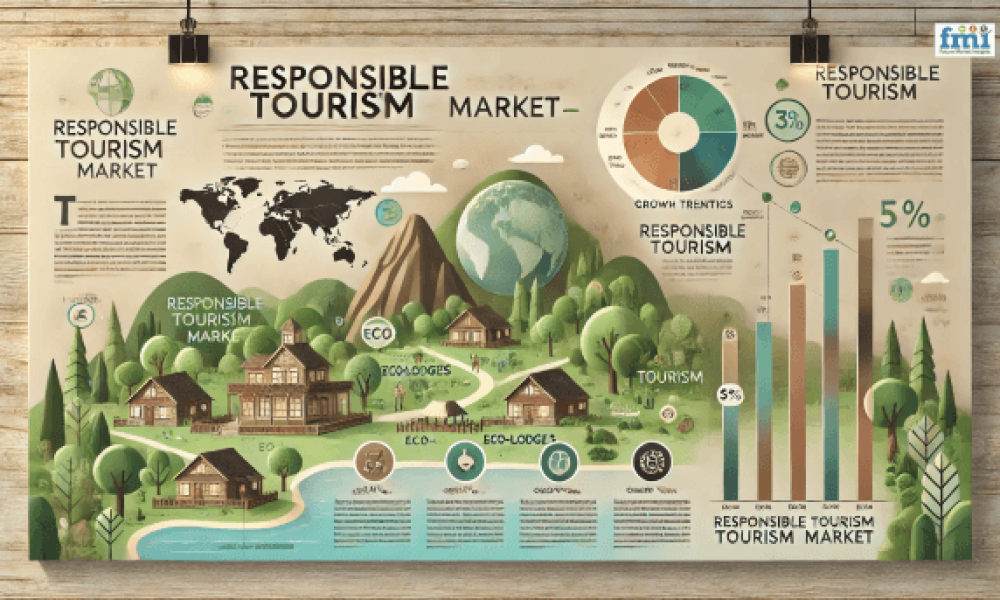
The global Responsible Tourism Market is on the verge of significant expansion, as travelers and industry stakeholders embrace a sustainable and ethical approach to tourism. Valued at USD 244.6 billion in 2023, the market is expected to witness an impressive growth trajectory, with projections to reach USD 413.3 billion by 2033. The market is anticipated to grow at a robust Compound Annual Growth Rate (CAGR) of 5.4% from 2023 to 2033. This growth is fueled by the rising awareness around environmental conservation, local community support, and the increasing demand for ethical travel experiences.
Discover key market opportunities – Request your sample report now! https://www.futuremarketinsights.com/report-sample#5245502d47422d33353736
Driving Factors of the Responsible Tourism Market Growth
Several factors are contributing to the rapid growth of the Responsible Tourism Market. Increasing global awareness regarding environmental degradation and the adverse effects of mass tourism is driving consumers toward more sustainable and responsible travel options. As travelers prioritize eco-friendly practices, they seek destinations and services that align with their values, including energy-efficient accommodations, sustainable transportation options, and support for local communities.
The surge in eco-conscious travelers, especially among millennials and Gen Z, is also influencing market dynamics. These generations are more inclined to choose travel options that minimize their carbon footprint and have a positive impact on the destinations they visit. As a result, the travel and hospitality industry is adjusting its offerings to meet the demands of these socially responsible tourists.
Impact of Technology on Responsible Tourism
The role of technology in shaping the Responsible Tourism Market cannot be overstated. Innovations such as digital platforms for eco-friendly booking, sustainable tour options, and smart travel solutions are empowering travelers to make more informed decisions. Mobile apps that help travelers find sustainable accommodations, restaurants, and experiences have become increasingly popular, fostering a seamless connection between responsible travelers and businesses that prioritize sustainability.
Technology also allows for the measurement and reduction of environmental impact, including carbon emissions from flights and energy usage at hotels. With the help of real-time data and analytics, responsible tourism players can optimize their operations to align with sustainability goals while improving customer experiences.
Uncover new possibilities—explore groundbreaking insights and opportunities with our Outdoor Tourism Industry Reports! https://www.futuremarketinsights.com/industry-analysis/outdoor-tourism
Sustainable Tourism Practices and Local Community Empowerment
The growing importance of social responsibility in tourism is driving an increased focus on local community empowerment. Responsible tourism is not just about preserving natural landscapes and reducing carbon footprints—it’s also about supporting the social and economic development of local communities. Many travel operators now prioritize working with local vendors, artisans, and service providers, ensuring that tourism benefits are shared equitably.
In addition, eco-tourism practices such as wildlife conservation, nature preservation, and promoting biodiversity are key pillars of the responsible tourism sector. Tourists are increasingly seeking experiences that contribute to the conservation of the environment and the welfare of the communities they visit. This growing demand is leading to the development of ethical tourism programs that prioritize sustainability without compromising the authenticity of the traveler experience.
Challenges Faced by the Responsible Tourism Market
- High Costs of Sustainable Practices: Implementing eco-friendly practices and sustainable infrastructure can be expensive for businesses, leading to higher costs for both providers and consumers.
- Lack of Awareness and Education: Many travelers are still unaware of the environmental and social impacts of their travel choices, making it difficult to drive demand for responsible tourism.
- Inconsistent Regulations: The absence of standardized global regulations for sustainable tourism can create confusion and inconsistency in practices across different regions.
- Balancing Tourism and Conservation: Ensuring that tourism development does not harm the environment or local communities while still meeting growing demand is a delicate balance.
- Over-Tourism in Popular Destinations: Even in responsible tourism, popular destinations can suffer from over-tourism, which can damage ecosystems and dilute the authentic experiences sought by eco-conscious travelers.
Essential Players in the Global Market
- Intrepid Travel
- Much Better Adventures
- Undiscovered Mountains
- Adventure Alternative
- Justice Travel
- Global Himalayan Expedition
- European Safari Company
Get Full Access of this Report: https://www.futuremarketinsights.com/reports/responsible-tourism-concept-overview-and-highlights
Responsible Tourism Market by Category
By Benefit Type:
- Economic
- Social
- Environmental
By Booking Channel:
- Phone Booking
- Online Booking
- In Person Booking
By Tourist Type:
- Domestic
- International
By Tour Type:
- Independent Traveler
- Package Traveler
- Tour Group
By Consumer Orientation:
- Men
- Women
By Age Group:
- 15-25 Years
- 26-35 Years
- 36-45 Years
- 46-55 Years
- 66-75 Years
By Region:
- North America
- Latin America
- Europe
- Asia Pacific
- Middle East and Africa
About Future Market Insights (FMI)
Future Market Insights, Inc. (ESOMAR certified, recipient of the Stevie Award, and a member of the Greater New York Chamber of Commerce) offers profound insights into the driving factors that are boosting demand in the market. FMI stands as the leading global provider of market intelligence, advisory services, consulting, and events for the Packaging, Food and Beverage, Consumer Technology, Healthcare, Industrial, and Chemicals markets. With a vast team of over 400 analysts worldwide, FMI provides global, regional, and local expertise on diverse domains and industry trends across more than 110 countries.




