
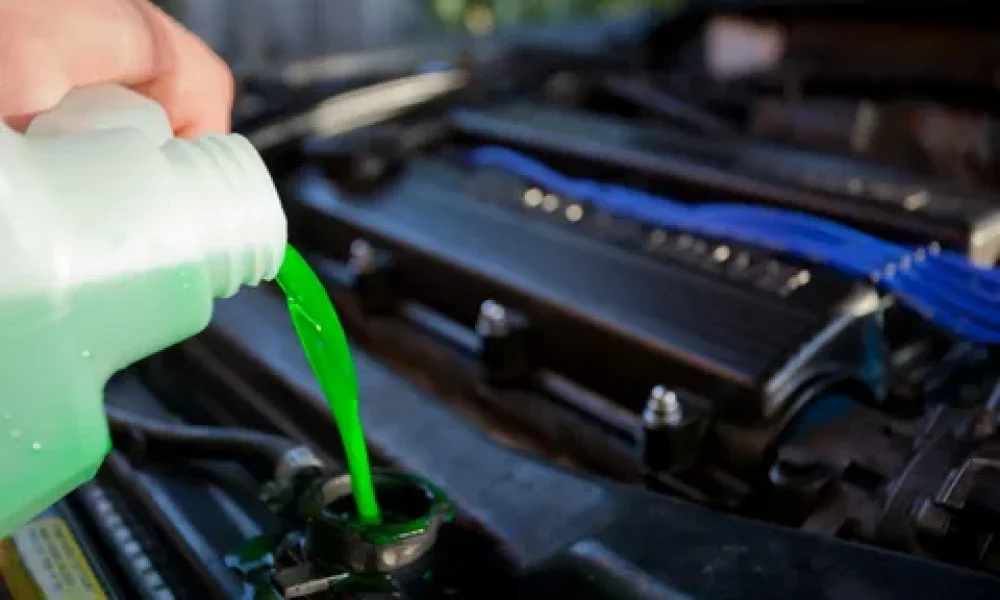
The EV coolant industry, valued at USD 297.2 million in 2023, is expected to grow significantly, reaching an estimated USD 3,704.9 million by 2033. This growth is projected to occur at a robust compound annual growth rate (CAGR) of 28.7% over the forecast period.
The EV Coolants Market is witnessing significant growth as electric vehicles (EVs) become increasingly mainstream. The demand for efficient and sustainable coolants is driven by the expansion of the EV industry, where maintaining optimal battery temperature is critical for performance and longevity. EV coolants are formulated to enhance battery life, ensure safety, and improve the overall efficiency of the vehicle. These coolants offer a high thermal conductivity, non-flammability, and low environmental impact, making them ideal for the next-generation electric vehicle powertrains.
The increasing adoption of electric vehicles, along with the advancement in battery technology, has necessitated the development of high-performance coolants. Manufacturers are focusing on developing specialized EV coolants that meet the specific requirements of lithium-ion batteries used in electric vehicles. Key players in the market are also working on enhancing the formulation of coolants to improve thermal management, reduce energy loss, and increase the overall energy efficiency of EVs.
The rise in government initiatives promoting electric mobility and the growing concerns regarding greenhouse gas emissions are further fueling market growth. As automakers continue to innovate in battery and powertrain technologies, the demand for advanced EV coolants that cater to these advancements will only intensify.
Get Ahead with Our Report: Request Your Sample Now!
Key Takeaways:
- Growth Drivers: The rise in EV adoption, advancements in battery technology, and government incentives for electric mobility are major factors driving the demand for EV coolants.
- Key Features: EV coolants are designed to provide excellent thermal conductivity, non-flammability, and environmental friendliness, ensuring better battery performance and safety.
- Market Opportunities: The increasing development of high-performance EV batteries creates opportunities for coolant manufacturers to innovate and cater to the specific needs of the evolving EV market.
- Regional Insights: North America, Europe, and Asia-Pacific are witnessing high growth rates, driven by strong adoption of EVs and the establishment of robust electric vehicle infrastructures in these regions.
- Sustainability Focus: Manufacturers are focusing on creating eco-friendly coolants that are biodegradable and non-toxic, meeting both regulatory standards and consumer expectations for sustainable products.
- Competitive Landscape: Leading players in the EV coolant market are innovating with new formulations and expanding their product portfolios to cater to the diverse needs of the electric vehicle sector.
Category-wise Insights
Glycol-based to be the Top Priority Product for the Global EV Coolants Market
In comparison, driveline fluids and coolants make up the majority of the EV coolants used in most types of electric vehicles. While dielectric EV coolants provide a greater profit margin of USD 2 to 3 per litre and have faster cooling efficiency and protection characteristics. Based on coolant type, FMI experts find that glycol-based coolants capture a huge share of the overall market at present. In the previous year 2022, this segment generated a revenue of around USD 168.36 million which was around 73.2%.
Aqueous EV coolant is generally regarded by EV OEMs as practically adequate since it can effectively segregate batteries from the coolant to prevent interference. However, certain electric vehicles may still use dielectric EV coolants as an added measure of safety in the event of an accident. According to an optimistic projection by FMI, more than half of these cars might employ dielectric coolants and favour this segment’s growth.
Explore Now: How Automotive Technologies Are Shaping Tomorrow’s
Key Players
- BASF SE
- Dober Chemical Corporation
- Shell plc
- TotalEnergies SE
- Valeo SA
- Chevron Corp.
- Exxon Mobil Corp.
- Lukoil Petronas
- Ashland Corporation
- Sinclair Oil Corporation
- Blue Star Lubrication Technology
Key Segmentations
By Vehicle Type:
- Battery Electric Vehicle (BEV)
- Hybrid Electric Vehicle (HEV)
- Plug-in Hybrid Electric Vehicle (PHEV)
- Fuel Cell Electric Vehicle (FCEV)
By Category:
- Coolants for Electric Passenger Cars
- Coolants for Electric Commercial Vehicles
- Coolants for Electric Two Wheelers
- Others
By Coolant Type:
- Ethylene Glycol
- Polypropylene Glycol
- Others
By Region:
- North America
- Latin America
- Europe
- East Asia
- South Asia and Pacific
- The Middle East and Africa (MEA)




