
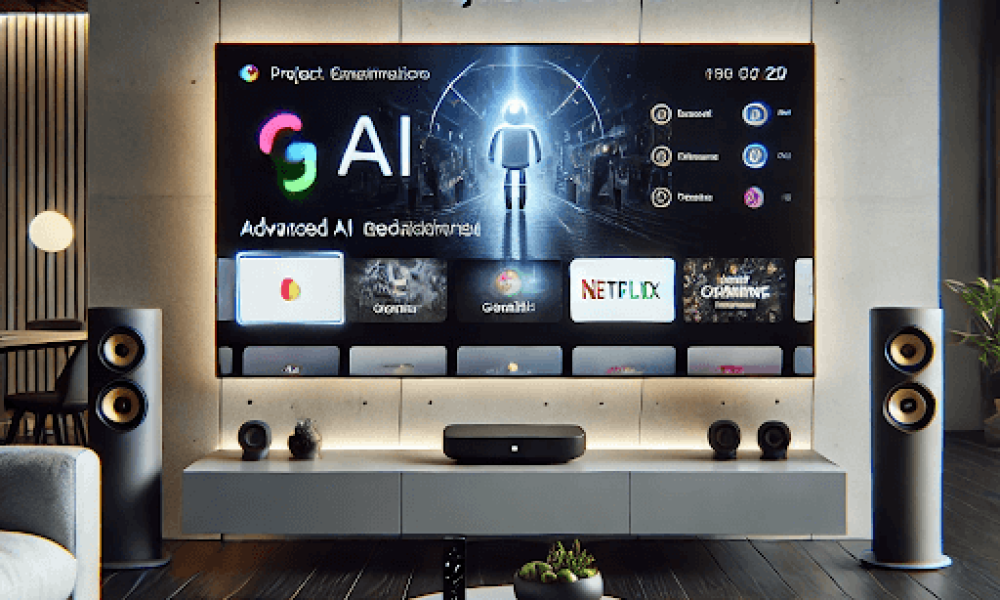
Google has unveiled its latest innovation in smart entertainment, combining the power of its Google TV platform with a groundbreaking initiative known as Project Gemini. This integration aims to revolutionize how users interact with their televisions by blending advanced artificial intelligence, seamless connectivity, and an enriched content experience. As the tech giant doubles down on its efforts in the home entertainment space, consumers can expect significant improvements in convenience, personalization, and engagement.
Google TV, first introduced as an evolution of the Android TV platform, has steadily gained traction among users for its intuitive interface and robust ecosystem. The platform aggregates content from various streaming services, providing a unified hub for movies, TV shows, and live broadcasts. With the introduction of Project Gemini, Google appears poised to enhance the functionality of Google TV, leveraging AI to deliver a more dynamic and intelligent user experience.
Project Gemini, a cutting-edge initiative at the intersection of generative AI and consumer technology, is rumored to integrate capabilities such as conversational AI, predictive analytics, and multimodal learning into Google TV. These advanced technologies would allow Google TV to go beyond basic content aggregation. For instance, conversational AI could enable users to interact with their TV more naturally, asking questions like “What’s the best comedy to watch right now?” or “Show me documentaries about space exploration,” and receiving tailored responses. Predictive analytics might use viewing habits, search history, and even external factors like time of day to suggest highly relevant content.
The platform’s AI-powered algorithms may also analyze visual, textual, and audio metadata of movies and shows to generate unique previews or summaries. This means a user could hover over a title and receive an AI-curated glimpse into the storyline, key scenes, or themes—all tailored to their preferences. Such features would not only simplify the decision-making process but also reduce the time spent browsing, a common pain point for many smart TV users.
In addition, Project Gemini could enhance Google TV’s integration with smart home ecosystems. By connecting seamlessly with Google’s Assistant and other smart devices, the TV could serve as a central hub for the home. Users might control lighting, adjust the thermostat, or monitor security cameras directly from their TV interface—all powered by Gemini’s advanced AI. This deep connectivity could also enable contextual actions, such as dimming the lights automatically when a movie starts or switching to a child-friendly mode during specific hours.
Another area where Gemini could excel is in dynamic ad delivery and content monetization. By utilizing machine learning, the platform could display hyper-targeted ads based on user demographics, viewing patterns, and real-time data. While this might enhance advertising efficiency and revenue for Google, it also raises critical questions about privacy and data security. Advanced encryption protocols and transparent opt-in mechanisms may be necessary to reassure users and address concerns about excessive data collection.
Google’s focus on Gemini-driven innovation aligns with CEO Sundar Pichai’s broader vision for AI-first products. The company’s expertise in search and data processing provides a unique advantage, allowing Google TV to integrate Gemini’s capabilities at a scale few competitors can match. This combination of generative AI, machine learning, and cloud computing enables a level of sophistication that could redefine smart TV interfaces.
As with any technological leap, challenges remain. The complexity of Gemini’s AI models requires significant computational power, which could increase production costs for Google TV-compatible devices. Furthermore, ensuring the responsiveness of AI features without lag—especially in regions with slower internet speeds—will be critical. To address these issues, Google is likely to leverage its extensive cloud infrastructure and edge computing solutions, enabling devices to handle some AI processing locally while offloading more intensive tasks to the cloud.
The impact of Project Gemini on the broader smart TV market could be profound. Competitors like Amazon Fire TV and Apple TV, which already incorporate features like voice assistants and smart home integrations, may need to innovate further to keep up. Traditional TV manufacturers like Samsung and LG, which rely on proprietary platforms, could also face increased pressure as Google TV becomes more sophisticated and widely adopted.
For consumers, the convergence of Google TV and Project Gemini promises a smarter, more intuitive experience. Whether it’s personalized content recommendations, seamless integration with other smart devices, or the ability to interact with their TV in a conversational manner, users are likely to benefit from Gemini’s capabilities in meaningful ways. At the same time, Google’s success will depend on its ability to address privacy concerns, ensure compatibility, and deliver consistent performance across a diverse range of devices.
In the rapidly evolving landscape of home entertainment, Google TV and Project Gemini represent a bold step forward. By combining state-of-the-art AI with a proven platform, Google aims to set a new standard for smart TVs. As the technology matures, it has the potential to redefine what consumers expect from their viewing experience, cementing Google’s position as a leader in the smart home ecosystem.