
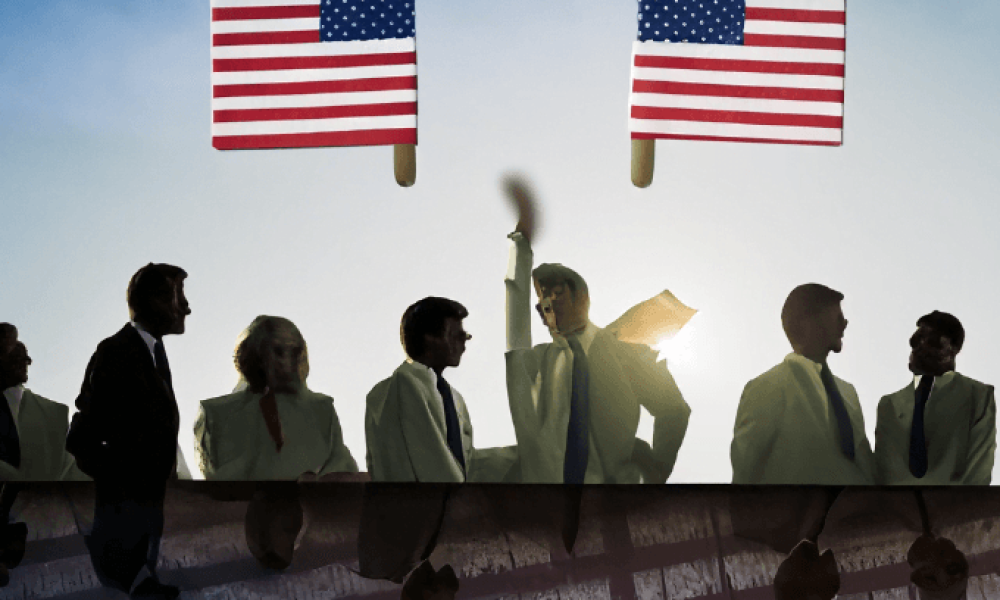
In the realm of American politics, narratives often take center stage, shaping public perception and influencing voter decisions. One narrative that has persistently echoed is the assertion that the GOP, or Grand Old Party, is unequivocally the party of business. While this characterization holds some truth, delving into the intricate history, policy dynamics, and economic outcomes reveals a more complex relationship between the GOP and the business world.
The notion that the GOP is synonymous with pro-business policies has deep historical roots. Dating back to the early 20th century, the Republican Party gained a reputation for advocating limited government intervention, reduced taxation, and deregulation. These principles aligned well with the interests of businesses, as they aimed to create an environment conducive to economic growth and entrepreneurship. This legacy continues to shape the party’s identity.
Over the decades, GOP leaders have championed tax cuts as a means to stimulate economic growth and job creation. The Reagan administration’s implementation of supply-side economics, often referred to as “Reaganomics,” exemplified this approach. Tax cuts for both individuals and corporations were intended to bolster investment, leading to an uptick in economic activity. While the effectiveness of such policies remains a subject of debate, there is no denying their appeal to business interests.
Furthermore, the GOP’s support for deregulation has been a cornerstone of its pro-business reputation. Advocates argue that reducing bureaucratic red tape allows businesses to thrive by fostering innovation and flexibility. The Trump administration’s efforts to roll back regulations across various sectors are a testament to this belief. However, critics contend that excessive deregulation can lead to environmental degradation and consumer vulnerabilities, underscoring the complexity of balancing business interests with broader societal concerns.
Despite these pro-business stances, the GOP’s relationship with the business world is far from unilateral. In reality, the party’s economic policies often intersect with social and environmental considerations. One of the most notable examples is the ongoing debate over climate change and environmental regulations. While some GOP members have called for loosening restrictions on businesses to stimulate economic growth, others within the party recognize the importance of sustainability and responsible resource management.
This internal diversity of perspectives reflects a broader reality: the GOP is not a monolithic entity but a coalition of individuals with varying priorities. Business interests often align with the party’s economic principles, but the intricacies of other policy matters can lead to nuanced debates and differing viewpoints. Dismissing the party’s complexity oversimplifies the intricacies of its political identity.
Critics of the GOP’s claim to be the party of business also point to historical instances of Democratic support from specific business sectors. Certain industries, such as technology and entertainment, have found resonance with Democratic positions on social issues, education, and healthcare. These examples underscore the need to move beyond binary narratives and recognize that business interests are not exclusively tethered to a single political affiliation.
Furthermore, economic indicators such as GDP growth, job creation, and stock market performance are influenced by a myriad of factors beyond just political party affiliation. Global economic trends, technological advancements, and unforeseen events all play pivotal roles in shaping economic outcomes. It is an oversimplification to attribute the entirety of economic success or failure to the policies of a single party.
In today’s polarized political landscape, it is essential to approach narratives with a critical lens. The portrayal of the GOP as the unwavering champion of business interests is a simplification that glosses over the nuanced realities of economic policy-making. While historical alignments and certain policy tendencies do exist, the GOP’s relationship with the business world is influenced by a multitude of factors, including internal party dynamics and evolving societal expectations.
In conclusion, the narrative that the GOP is exclusively the party of business is a tale of partial truths and intricate complexities. While the party has historically advocated for pro-business policies, its identity and priorities span a broader spectrum of issues. The intersection of economic, social, and environmental considerations within the GOP highlights the need for a more comprehensive understanding of the party’s relationship with the business world. As citizens engage in political discourse, embracing nuance and rejecting oversimplifications is crucial for a more informed and accurate understanding of the political landscape.




