
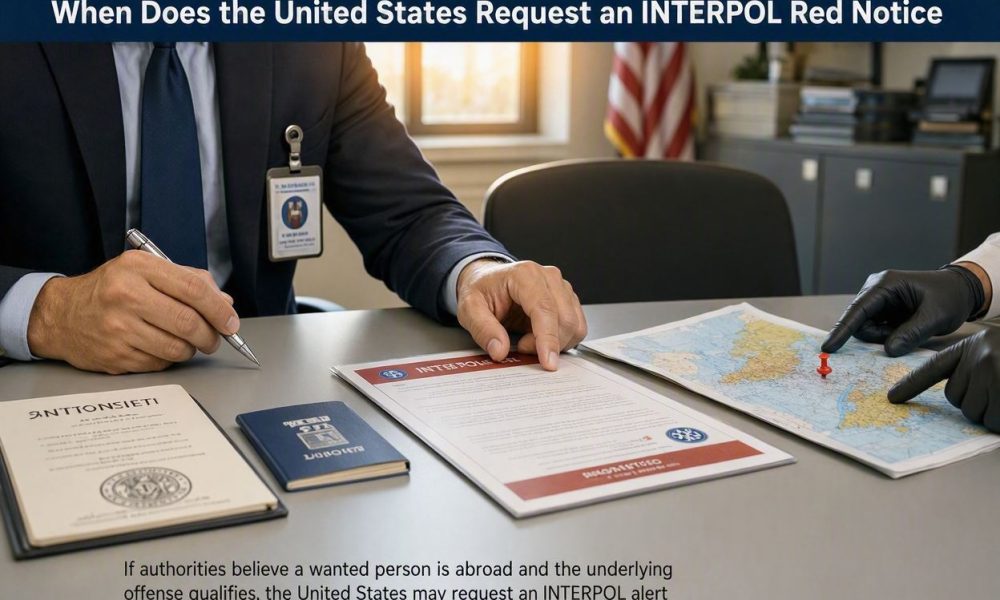
International cases can face lengthy evidentiary reviews, treaty requirements, court hearings, appeals, diplomatic procedures, and human-rights arguments, allowing some wanted individuals to remain abroad long after American prosecutors first obtain valid arrest warrants.
WASHINGTON, D.C., September 5, 2026
An American arrest warrant can be issued in an afternoon, yet bringing a defendant home from another country may require years because Extradition is not a global police pickup, but a sequence of legal decisions controlled by two sovereign governments.
The issuing judge decides whether domestic grounds support an arrest. In contrast, the foreign country separately decides whether its treaty obligations, criminal laws, constitutional protections, evidence rules, and public-policy limits permit officials to surrender the person to the United States.
That separation explains the frustrating gap between a headline announcing that someone is wanted and a later photograph showing the defendant arriving in federal custody, because investigators can locate a fugitive long before prosecutors secure lawful authority to remove them.
For families, witnesses and businesses following a major prosecution, the waiting can resemble institutional paralysis. However, the file may actually be moving through translations, diplomatic notes, sealed hearings, appellate briefs and ministerial reviews that remain largely invisible outside government offices.
A Warrant Starts the Process, but It Does Not Finish It
A federal warrant authorizes arrest under American law. Still, it ordinarily has no automatic coercive force inside another sovereign nation, where local officials require a treaty request, domestic arrest authority, or another recognized legal mechanism before restraining the fugitive.
The United States Department of Justice explains in its international Extradition guidance that prosecutors generally work through the Office of International Affairs, which evaluates treaty requirements and coordinates requests with the Department of State and foreign counterparts.
Before transmission, lawyers must identify the correct treaty, confirm that it was in force during the relevant period, examine reservations or later protocols, and determine whether the requested country applies additional statutes that modify how the agreement operates domestically.
If no bilateral treaty applies, surrender may still be possible through reciprocity, deportation, expulsion, or a multilateral convention. Still, those alternatives depend heavily on local law and political discretion, making timelines less predictable and outcomes more vulnerable to changing circumstances.
Every Treaty Creates Its Own Legal Checklist
Modern Extradition treaties often cover offenses punishable above a stated threshold. Yet, prosecutors must still show that the charged conduct fits the agreement, satisfies any limitation period, and remains prosecutable under the laws identified by the treaty.
Dual criminality can become a central dispute because the requested country may ask whether the underlying conduct would constitute an offense there, even when the two nations use different crime names, statutory elements, or theories of corporate and accomplice liability.
The rule of specialty can require assurances that the surrendered person will be prosecuted only for approved offenses, encouraging careful charge selection and sometimes forcing American prosecutors to postpone superseding counts until foreign authorities consider an expanded request.
Treaties may also contain nationality provisions, military-offense exclusions, political-offense exceptions, capital-punishment conditions or requirements governing trials conducted in absentia, and each provision can generate factual submissions, legal opinions and litigation before surrender becomes permissible.
Evidence Must Survive a Second Legal System
An indictment may establish probable cause for an American warrant. Still, some foreign courts demand a more detailed showing before Extradition, requiring witness statements, exhibits, certified records or a coherent narrative connecting the accused person to each alleged offense.
Prosecutors therefore assemble materials that may include charging instruments, warrants, sworn summaries, financial records, communications, corporate documents and explanations of unfamiliar American statutes, while protecting witnesses and avoiding disclosures that could damage the eventual criminal trial.
Every important document may need certification, authentication and translation, and specialized translators must preserve legal meaning across different terminology because a small ambiguity involving intent, conspiracy, jurisdiction or limitation periods can become the foundation for a defense challenge.
Evidence gathered in several countries creates further delays because bank records, travel data, electronic communications and testimony may arrive through separate mutual legal-assistance procedures, each governed by distinct privacy rules, disclosure standards and judicial authorization requirements.
Provisional Arrest Creates Speed and Pressure
When officials believe a located fugitive may flee again, the United States can seek provisional arrest under the applicable treaty, asking the foreign country to detain the person temporarily. At the same time, the complete diplomatic request is being prepared and delivered.
That urgent procedure accelerates the opening stage but creates a strict deadline, frequently measured in weeks, during which prosecutors must finalize evidence, certifications, translations and diplomatic papers or risk the person being released when the treaty period expires.
Officials may instead prefer a complete request before arrest when flight risk appears manageable, because haste can introduce translation errors, missing certifications or poorly framed charges that later consume far more time through corrective submissions and contested hearings.
Even after provisional arrest, local judges may grant bail, impose residence restrictions, or require financial security, meaning a wanted person can remain visibly present in the requested country for years while courts consider whether the legal basis for surrender is sufficient.
Foreign Courts Conduct Their Own Review
An Extradition hearing is generally not a criminal trial deciding guilt or innocence. However, it can still involve extensive argument over identity, treaty coverage, evidentiary sufficiency, procedural fairness, and whether the request was presented through the proper governmental channels.
Defense counsel may contend that prosecutors identified the wrong person, described conduct outside American jurisdiction, relied on unreliable evidence, missed a deadline, violated specialty protections, or requested surrender for an offense excluded by the controlling agreement.
The requested country applies its own statutes and precedents during that examination, so an argument that appears settled in an American courtroom can raise an unresolved constitutional question abroad, especially when legal traditions assign different roles to judges and ministers.
Courts may request clarifications or supplemental assurances instead of deciding immediately, sending papers back through central authorities and diplomatic channels before scheduling another hearing, a seemingly modest procedural step that can add months to a complex international record.
Human Rights Can Become the Central Question
Extradition cases increasingly include claims that surrender would expose the individual to torture, persecution, an unfair trial, discriminatory prosecution, inadequate medical treatment, extreme prison conditions or punishment that conflicts with the requested country’s constitutional and international obligations.
The treaty checklist does not necessarily resolve those arguments because domestic constitutions, refugee law and regional human-rights conventions may impose separate protections, allowing courts or administrative bodies to examine risks that traditional Extradition provisions do not expressly address.
American authorities may respond with diplomatic assurances describing detention arrangements, medical access, trial protections, sentencing limits or monitoring conditions, but foreign judges can examine whether those promises are sufficiently specific, reliable and enforceable under the circumstances presented.
The resulting inquiry can require expert reports, prison evidence, medical assessments and extensive briefing about conditions in a particular facility, transforming what began as a documentary surrender request into a detailed proceeding about future treatment and governmental trust.
Appeals Add Years Because the Stakes Are Irreversible
A person who loses the first Extradition hearing may pursue review in intermediate and supreme courts, challenge detention separately, reopen proceedings when new evidence appears, and seek protection from constitutional or regional human-rights tribunals where local law permits those routes.
Governments can also appeal adverse rulings, which means one lower-court decision rarely tells observers whether the case has ended, particularly when procedural defaults, newly discovered documents or changes in controlling precedent create additional questions for higher judges.
Appellate schedules include time for record preparation, translations, written arguments, responses, oral hearings and deliberation. At the same time, crowded dockets and requests for extensions can turn several individually reasonable intervals into a delay measured across multiple calendar years.
Because physical surrender may make an appeal practically meaningless, courts sometimes prohibit removal. At the same time, review continues, leaving the fugitive on bail, under house arrest or in custody until every authorized challenge reaches a final and enforceable conclusion.
Judges and Ministers Answer Different Questions
In many countries, a court first determines whether Extradition is legally permissible, after which a justice minister, interior minister, or other executive official decides whether surrender should actually occur under the treaty and national law.
The judicial stage may focus on evidence and legal bars. In contrast, the executive stage can consider humanitarian circumstances, competing requests, foreign-policy consequences and required assurances, producing two distinct proceedings with different records and standards of review.
A favorable court ruling for the United States therefore may represent only an important midpoint, because ministerial authorization can face its own submissions, political scrutiny and judicial challenge before officers receive permission to place the individual on an aircraft.
Diplomacy cannot simply erase an adverse legal Judgment. Yet, diplomatic engagement remains essential for transmitting papers, obtaining assurances, solving logistical problems and explaining why the requesting government believes the case satisfies both nations’ obligations.
Asylum and Immigration Cases Run on Parallel Tracks
A fugitive may apply for asylum or other protection by alleging political persecution, torture risk, or protected status, creating an immigration proceeding that overlaps with Extradition but follows different statutes, evidentiary rules, decision-makers, and appeal mechanisms.
Officials must then coordinate outcomes without assuming that success in one system automatically resolves the other, since an Extradition court might approve surrender. At the same time, an asylum tribunal continues examining whether removal would breach refugee or human-rights protections.
Citizenship disputes, residence rights and pending deportation cases can further complicate the sequence, particularly when authorities must decide which legal mechanism controls custody and whether administrative removal would respect treaty protections governing prosecution after return.
The psychology of an international fugitive also matters in practice, because prolonged residence abroad can create family ties, health issues, business relationships, and public campaigns that later appear in formal humanitarian submissions opposing surrender.
Competing Countries Can Seek the Same Person
Timelines become more complicated when several governments want the same defendant, because the custodial country may compare offense seriousness, crime locations, request dates, victim interests, nationality, and the prospect of later Extradition from one requesting state to another.
The person may also face local charges in the country of arrest. That government can postpone Extradition until it completes its own prosecution and sentence, even after American officials have prevailed on every issue in the surrender case.
Temporary surrender can sometimes permit an American trial before the foreign sentence ends. Still, negotiating custody conditions, credit for confinement, transportation responsibilities and the defendant’s eventual return requires detailed agreement between prosecutors, diplomats, prison authorities and courts.
International crises, broken diplomatic relations, war, sanctions or governmental transitions can delay communication and reshape official priorities. At the same time, an election or cabinet change may place a politically sensitive surrender decision before entirely new ministers and advisers.
A Recent Austrian Case Shows How Time Accumulates
The long-running case involving Ukrainian businessman Dmytro Firtash illustrates how multiple layers can stretch an Extradition dispute. However, indictment allegations remain accusations, and a defendant is presumed innocent unless proved guilty in court.
Firtash was arrested in Austria during 2014 after American prosecutors accused him of participating in a bribery conspiracy connected to mining permits in India, and he denied wrongdoing while challenging jurisdiction, evidence, and the legitimacy of the request.
Over the following years, Austrian courts reached different conclusions, higher judges reviewed earlier decisions, ministerial approval entered the process, and litigation reopened, showing how one case can move repeatedly between judicial levels without producing physical surrender.
In December 2025, The Associated Press reported that an Austrian appeals court rejected the American request and described its ruling as final, more than eleven years after the arrest that initiated the public Extradition battle.
The Austrian court relied on an international-law immunity issue connected to a diplomatic role, according to the report, showing how a ground that differs from the underlying criminal allegations can ultimately determine whether a requested person is surrendered.
That outcome does not mean every Extradition lasts a decade. Still, it reveals how bail, revised findings, appellate review, ministerial action, reopening requests, and procedural questions can accumulate even when the person’s identity and physical location have long been known.
Delay Does Not Make the Warrant Disappear
While litigation continues abroad, American prosecutors generally maintain the indictment and warrant, preserve evidence, monitor limitation issues, update foreign partners, and prepare for trial. However, witness availability and fading memories can make an aging prosecution more difficult.
Investigators may keep tracking travel, financial activity, and associates because the fugitive could enter another jurisdiction with a different treaty, lose legal status, violate bail conditions, or become subject to a new arrest opportunity after circumstances change.
Defense lawyers also examine whether the delay impaired fair-trial rights, whether the evidence remains reliable, and whether the government exercised adequate diligence. Still, flight from prosecution can significantly affect how American courts evaluate responsibility for elapsed time.
Companies and relatives should avoid assuming that years abroad have resolved the danger, because an active warrant can disrupt border crossings, financial transactions, and residency proceedings even when the Extradition litigation has attracted little recent news coverage.
Why Some Cases Move Faster Than Others
Straightforward cases can conclude within months when the person consents to surrender, the charged conduct clearly satisfies the treaty, evidence is organized, translations are accurate, and neither asylum claims nor appellate litigation obstructs the transfer.
Cases move more slowly when charges are politically sensitive, conduct spans many jurisdictions, local law differs sharply from American law, the defendant has substantial resources, or courts require detailed assurances concerning punishment, confinement, and medical care.
The quality of the original submission also matters because a disciplined package can prevent avoidable questions. At the same time, missing exhibits, inconsistent dates, or unclear legal explanations may prompt supplemental requests that expose the government to deadlines and repeated defense objections.
Specialized counsel reviewing Extradition procedures and cross-border exposure can help affected individuals understand the difference between a warrant, an international alert, provisional arrest, judicial approval, and actual surrender, which are related events rather than interchangeable labels.
The Final Transfer Still Requires Coordination
Once all legal challenges end and executive authorization takes effect, officials must confirm travel documents, medical fitness, escort arrangements, flight security, and that the American court is prepared to receive the defendant immediately upon arrival.
United States Marshals or other authorized officers usually coordinate the physical return with foreign police. However, weather, transit permissions, aviation restrictions, health emergencies, or disputes about the exact surrender conditions can still postpone an expected departure.
Upon arrival, the defendant enters the American judicial process, appears before a court, and can contest detention or the charges, because Extradition determines whether surrender is lawful rather than whether the prosecution has proved criminal guilt.
Treaty assurances and specialty restrictions continue to matter after transfer, requiring prosecutors to respect conditions accepted during the Extradition case and sometimes limiting charges, punishment, or detention arrangements throughout the resulting American proceedings.
The Practical Meaning of a Multiyear Extradition
For the public, the essential distinction is between finding a fugitive and obtaining lawful custody, since investigators may accomplish the first task quickly. At the same time, lawyers, judges,s and diplomats spend years resolving the second under several overlapping systems.
For prosecutors, speed must be balanced against durability because an incomplete request can collapse after extensive litigation. In contrast, careful evidence review and treaty compliance create a record better able to survive appeals and scrutiny in the requested country.
For defendants, Extradition proceedings offer meaningful opportunities to challenge unlawful surrender. Yet, those protections can also create long periods of uncertainty, restricted movement, expensive representation, and detention without any decision on the underlying criminal accusation.
For victims and witnesses, delay can feel like denied justice. However,h the procedures reflect a fundamental international principle: one nation cannot exercise police power inside another simply because its own court has issued a valid warrant.
The years between warrant and return are therefore not space, but the visible cost of reconciling sovereign authority, treaty promises, reliable evidence, individual rights and diplomatic responsibility before a human being is forcibly transferred across an international border.




