
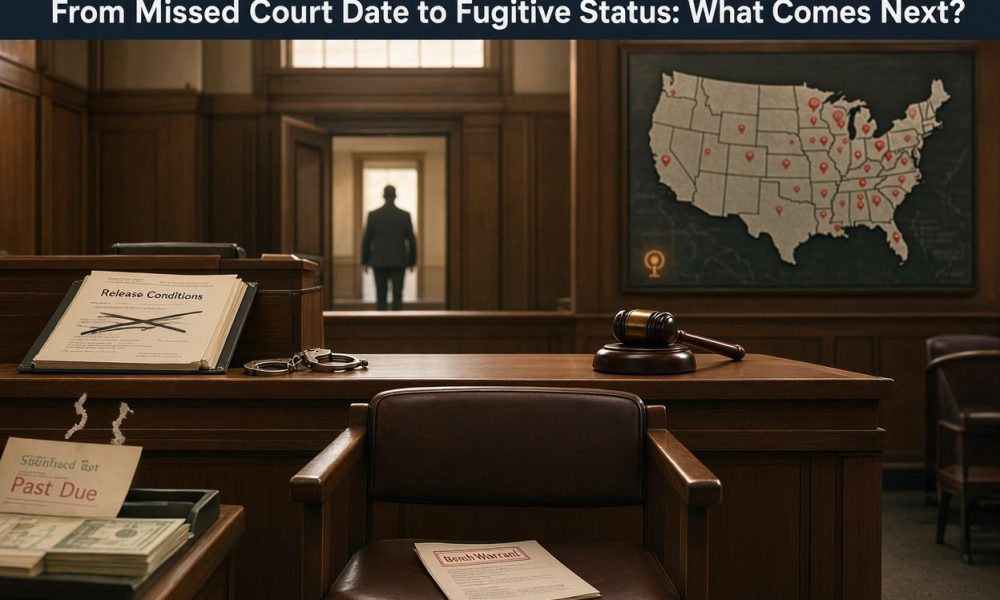
Authorities may begin within days by securing or confirming an arrest warrant, preserving evidence, reviewing travel information, and notifying relevant agencies, though locating, arresting, and returning the suspect can take months, years, or depend on unexpectedly favorable circumstances.
WASHINGTON, D.C., September 5, 2026
When a criminal suspect disappears, the visible search may appear slow from the outside. Yet, prosecutors, court officials, pretrial officers, and law-enforcement agencies can begin consequential steps within hours of confirming that the person has violated release conditions or deliberately avoided proceedings.
The first government response usually focuses on protecting the legal case rather than launching an immediate international spectacle, because authorities must confirm the warrant, preserve evidence, document the suspected flight, evaluate danger, verify identity information, and determine which agency has jurisdiction and operational responsibility.
What happens afterward depends upon the seriousness of the alleged crime, the quality of available location information, the suspect’s resources and citizenship, the countries involved, competing investigative priorities, and whether foreign authorities recognize a legal basis for detention and eventual return.
That combination explains why one suspect may be found during a traffic stop within several days, while another remains outside American custody for years before a border inspection, immigration violation, financial transaction, public tip, or change in foreign government cooperation creates an arrest opportunity.
The First Twenty-Four Hours
The earliest phase begins with verification, because officials must distinguish deliberate flight from a medical emergency, communication failure, scheduling mistake, detention in another jurisdiction, or other circumstance that might explain why a defendant stopped reporting, removed monitoring equipment, abandoned a residence, or missed court.
Pretrial services personnel, probation officers, defense counsel, prosecutors, court clerks, and investigators may compare recent communications, reporting obligations, monitoring data, hearing notices, travel restrictions, and emergency contacts before recommending whether a judge should issue a warrant or revoke existing release conditions.
If a suspect appears dangerous, threatens witnesses, possesses weapons, or shows preparations for immediate international travel, agencies can quickly elevate the response, warn affected personnel, secure vulnerable locations, and direct trained officers toward time-sensitive leads before those opportunities disappear.
Authorities may also preserve surveillance recordings, electronic records, financial information, border data, rental documents, telephone evidence, and communications through appropriate legal procedures, because some information can be overwritten, deleted, transferred, or made substantially harder to obtain as time passes.
These preliminary steps may remain confidential to protect the investigation, meaning relatives, victims, journalists, and the wider public might see no obvious activity even while officials assemble a timeline, confirm identifiers, and determine whether the person has crossed a significant jurisdictional boundary.
A Warrant Can Move Faster Than the Search
An arrest or bench warrant can be issued, confirmed, and entered into appropriate systems far faster than officers can locate the person named in it, especially when the suspect has already traveled, changed communications, concealed transportation, or entered an unknown residence before authorities recognize the flight.
The warrant establishes lawful authority for arrest, but investigators must still identify an actionable location, confirm that the warrant remains valid, evaluate pickup or extradition limitations, and prepare an operation that protects officers, bystanders, witnesses, and the suspect from unnecessary danger.
Federal warrants may be supported by identifying information, including photographs, fingerprints, known aliases, birth details, physical characteristics, citizenship, vehicle information, and caution indicators. However, incomplete or inaccurate records can create false matches and slow confirmation across agencies.
The United States Marshals Service reports that it arrested more than seventy-three thousand fugitives during 2025, demonstrating the extraordinary volume handled through federal, state, local, tribal, and territorial partnerships while also explaining why operational priority must reflect danger, seriousness, available leads, and public-safety consequences.
A lower-priority warrant does not become meaningless, because it can remain discoverable during later police encounters, court checks, employment screening where authorized, border inspections, or unrelated investigations, allowing a seemingly dormant case to produce an arrest long after the initial search loses public attention.
The First Several Days
During the first several days, investigators typically build a reliable movement chronology that separates confirmed events from assumptions, identifying when the suspect was last seen, which devices or accounts remained active, what transportation was available, and whether travel preparations began before the triggering event.
Officers may interview family members, employers, neighbors, associates, landlords, transportation personnel, and other relevant witnesses, while remaining alert to innocent misunderstandings, deliberate misinformation, coordinated assistance, or statements revealing that the suspect announced plans to flee before disappearing.
Prosecutors can seek subpoenas, search warrants, preservation requests, court orders, or other lawful process when private records may establish location or intent, ensuring that evidence collection complies with constitutional requirements, statutory protections, provider rules, and the particular facts supporting judicial authorization.
Investigators may review authorized banking, travel, telecommunications, postal, vehicle, property, immigration, and commercial information. Still, no individual record necessarily identifies a current address, because delayed reporting, shared accounts, automated charges, nominees, and ordinary background activity can generate misleading impressions.
Experienced teams therefore corroborate important leads through multiple sources before committing personnel, notifying foreign governments, or making an arrest, since acting on an unverified digital trace can expose innocent people, alert the suspect, waste limited resources, and undermine confidence in the investigation.
Domestic Flight Usually Produces the Fastest Response
When authorities believe the suspect remains within the United States, existing police networks and shared legal frameworks can permit rapid coordination, particularly when reliable information identifies a vehicle, hotel, workplace, family property, medical facility, transportation hub, or other specific location.
State and local officers can confirm warrants through established channels. At the same time, federal fugitive task forces combine personnel from participating agencies, enabling teams to cross ordinary organizational boundaries and pursue subjects whose movements extend beyond the territory of the original police department or court.
If the person is found in another state, officials still must follow applicable interstate procedures and transportation requirements. Still, those arrangements are generally more standardized than international extradition because American jurisdictions operate within connected constitutional, statutory, and law-enforcement systems.
Even domestically, distance and custody logistics can create delays when the originating jurisdiction must send officers, secure transportation, obtain medical clearance, resolve competing local charges, or wait for another court to complete proceedings arising from conduct committed after the suspect fled.
The quickest arrests frequently result from ordinary exposure rather than specialized technology, because driving violations, domestic disputes, workplace incidents, emergency medical care, new arrests, and inaccurate identity claims can prompt officers to check databases and discover an outstanding warrant.
Border Alerts Can Produce Immediate Consequences
When investigators believe international travel is imminent, relevant identity and warrant information may quickly reach border or transportation authorities. However, the precise effect depends upon citizenship, travel direction, location, agency authority, database configuration, documentation, and whether the warrant supports detention at that encounter.
Airline reservations and passenger information can be valuable when lawfully accessible. Still, investigators must interpret those records carefully because bookings can be canceled, tickets can remain unused, connecting routes can change, and another traveler may possess a similar name or biographical profile.
Biometric comparison can strengthen identity confirmation where systems are deployed, and Amicus International Consulting’s analysis of how biometric exit systems identify wanted travelers describes the growing relationship among facial images, travel records, identity verification, and border-security screening within modern departure environments.
Technology nevertheless remains a collection of tools rather than an all-seeing global net, because coverage differs across airports and land crossings, databases can contain incomplete information, foreign systems follow national rules, and a match usually requires human review before coercive action proceeds.
A suspect who crosses a border before the warrant or alert becomes available may avoid immediate interception. However, the resulting travel record can still provide investigators with a destination, transit point, document number, timeline, or investigative direction that becomes important during later international coordination.
The First Several Weeks
As days become weeks, the investigation generally shifts from emergency lead-chasing to structured fugitive work, with agencies assigning responsibilities, analyzing patterns, prioritizing credible locations, updating photographs and identifiers, and deciding whether publicity would generate assistance or merely drive the suspect deeper underground.
Public appeals, wanted posters, reward announcements, and media coverage can produce valuable tips. Yet, agencies usually weigh those benefits against operational concerns, witness safety, investigative secrecy, reputational fairness, and the possibility that releasing inaccurate or excessive information could contaminate later testimony.
Financial activity can become increasingly informative over time because housing, utilities, transportation, insurance, medical care, communications, and ordinary consumption create recurring needs. However,h investigators require lawful access and must distinguish activity initiated by the suspect from automatic payments or transactions conducted by someone else.
Social relationships also create patterns, since birthdays, illnesses, deaths, family emergencies, business obligations, romantic ties, and financial dependencies may prompt communication or movement. Still, authorities cannot assume that relatives know the suspect’s location or are participating in concealment without supporting evidence.
At this stage, prosecutors may also evaluate separate charges arising from the flight, including failure to appear, obstruction, false statements, document fraud, escape, or assistance by others, while recognizing that each proposed offense requires proof of specific legal elements and criminal intent.
When Foreign Authorities Enter the Investigation
International coordination usually begins after investigators develop credible information that the suspect entered or resides within a particular country, because a focused request supported by verified identity material is more useful than a speculative alert distributed without a reliable location or legally sustainable objective.
American officials may communicate through law-enforcement attachés, diplomatic channels, treaty mechanisms, liaison officers, immigration authorities, or INTERPOL structures, depending upon the case, the requested assistance, the foreign country’s procedures, and whether the objective involves location, evidence, provisional arrest, or extradition.
An INTERPOL Red Notice can help circulate information about a person sought for prosecution or punishment. Still, it is not an international arrest warrant, and each member country determines whether its domestic law permits detention or another response based on the available notice.
Foreign authorities may quietly verify an address before making an arrest, particularly when prosecutors require time to prepare extradition documents, when premature action could prompt renewed flight, or when the requested country demands additional evidence before exercising compulsory authority over the person located there.
Other cases move unexpectedly fast because the suspect violates immigration law, attempts international travel, becomes involved in local criminal activity, or reaches a cooperative jurisdiction whose authorities already possess sufficient legal grounds to detain the individual while formal arrangements develop.
Extradition Creates a Separate Timeline
Locating and arresting a suspect abroad does not complete the American recovery process, because extradition normally requires a formal legal package containing the warrant, charges, statutes, identity evidence, factual allegations, certifications, translations, and assurances required by the relevant treaty and foreign law.
The requested country may examine dual criminality, evidentiary sufficiency, nationality restrictions, limitation periods, human-rights concerns, political-offense arguments, specialty protections, competing prosecutions, medical issues, and procedural fairness before deciding whether it can lawfully surrender the individual to American authorities.
Amicus International Consulting’s overview of extradition and Red Notice proceedings explains why a case can take several months or even years after a location becomes known, especially when appeals, documentation disputes, asylum applications, or political decisions extend the foreign process.
The recent Associated Press report concerning Abdul Zahir Qadeer’s extradition from Kenya illustrates how an overseas arrest, formal transfer, and American court appearance can emerge from coordinated international action while leaving the underlying allegations to be tested through judicial proceedings.
Even after surrender receives final approval, agencies must arrange escorts, travel documentation, secure routing, transit permissions, medical accommodations, custody transfers, and a prompt court appearance, converting a diplomatic and judicial decision into a carefully controlled physical return.
Why Some Searches Last for Years
Long-running fugitive investigations are not necessarily inactive investigations, because authorities may preserve warrants, update database records, reexamine old leads, compare new identity information, maintain foreign contacts, and wait for travel or life events that create a lawful opportunity for intervention.
Some suspects settle into stable routines under their own names in countries where extradition remains difficult. In contrast, others use aliases, false histories, intermediaries, cash transactions, or borrowed documents, creating identity disputes that prosecutors must resolve before asking foreign courts to authorize surrender.
Political relations can change more quickly than a fugitive’s circumstances, and a country that once resisted cooperation may later adopt an extradition treaty, revise domestic legislation, remove nationality protections, change leadership, or become more receptive to a carefully documented American request.
Evidence also improves over time when witnesses cooperate, seized devices reveal communications, financial institutions update customer records, facial-recognition tools mature, databases become interoperable, or investigators connect a minor local incident with an older warrant issued thousands of miles away.
Conversely, time can create serious obstacles when witnesses die, records disappear, memories weaken, political conditions deteriorate, and foreign courts demand materials that were never preserved, which is why the government’s earliest evidence-protection decisions can influence a recovery effort many years later.
Priority Determines Intensity, Not Validity
Law-enforcement agencies cannot pursue every wanted person with equal resources, so operational intensity commonly reflects violence, immediate danger, victim vulnerability, national-security implications, organized-crime connections, criminal history, likelihood of continued offending, and the availability of trustworthy information indicating where an arrest can occur safely.
A person accused of a serious violent offense may prompt continuous task-force activity and public rewards. In contrast, someone wanted for a lower-level nonviolent offense may receive episodic attention, database monitoring, and renewed investigation whenever credible information or an enforcement opportunity appears.
These differences affect speed, but they do not automatically determine whether the underlying warrant remains legally enforceable, since a valid warrant can survive periods of limited operational attention and become decisive during an unrelated encounter years after issuance.
Victims and relatives may understandably interpret silence as abandonment. Yet, agencies sometimes withhold details because disclosure could reveal sources, alert the suspect, compromise surveillance, endanger cooperating witnesses, prejudice a future trial, or interfere with confidential negotiations involving another government.
Responsible public communication therefore distinguishes confirmed investigative developments from speculation, protecting the presumption of innocence while recognizing that a suspect’s disappearance can impose substantial emotional, financial, logistical, and institutional costs on victims, courts, witnesses, and communities.
Technology Accelerates Searches Without Eliminating Legal Limits
Contemporary investigations can connect border entries, facial images, financial identifiers, telephone records, vehicle data, public posts, and government applications more efficiently than earlier systems, enabling analysts to identify relationships and inconsistencies that once required weeks of manual comparison across disconnected files.
However, technological speed does not remove the need for warrants, subpoenas, statutory authority, privacy safeguards, data verification, foreign consent, and human Judgment, because rapidly produced information can still be inaccurate, legally inaccessible, misleading, outdated, or attributable to an innocent person.
Investigators must particularly guard against similar names, shared devices, recycled telephone numbers, manipulated photographs, synthetic media, compromised accounts, and identity theft, since a technically sophisticated false lead can appear persuasive until compared with fingerprints, original records, travel history, and reliable witnesses.
The most effective systems combine technology with traditional investigation, allowing officers to test digital findings against physical observations, documentary evidence, personal relationships, and legally obtained records before seeking arrest authority or presenting identity claims to a foreign court.
As screening networks expand, remaining outside custody increasingly depends upon avoiding ordinary institutions indefinitely, an unstable proposition when medical needs, financial access, immigration renewals, employment, property ownership, family obligations, and international travel repeatedly demand verified identity information.
What Happens When the Suspect Is Finally Arrested
After a domestic arrest, officers confirm the warrant, establish identity, notify the originating agency, document the circumstances, and bring the person before a judicial officer, where prosecutors and defense counsel address detention, transfer, bond, and any new allegations connected with flight.
An overseas arrest adds foreign proceedings before the American case resumes, and the suspect may contest identity, extradition eligibility, document sufficiency, treaty requirements, medical conditions, or human-rights concerns while remaining subject to the requested country’s custody and procedural rules.
Once returned, prosecutors may argue that flight demonstrates increased risk or consciousness of guilt, but judges and juries must still evaluate admissibility, alternative explanations, and the government’s burden of proving every element of every charge beyond the standards required by law.
The original accusation does not become proven merely because the defendant disappeared, and constitutional protections remain applicable. However, documented evasion can affect release decisions, credibility assessments, sentencing arguments, plea negotiations, and exposure to properly charged failure-to-appear or obstruction offenses.
Courts may also address forfeited bonds, violated supervision conditions, delayed trials, transportation expenses, and the treatment of time spent in foreign custody, creating a procedural aftermath that can remain complicated long after the search ends.
The Practical Answer Is Hours, Days, Months, and Years
The government can act within hours by verifying noncompliance and preserving vulnerable evidence, within days by obtaining warrants and circulating information, within weeks by building coordinated location strategies, and across months or years by pursuing foreign arrests, extradition litigation, and changing investigative opportunities.
Speed depends less upon a single national timetable than upon the relationship among legal authority, accurate intelligence, agency priority, geography, identity certainty, public safety, foreign cooperation, and the unpredictable moments when a concealed person must interact with ordinary institutions.
For a suspect, assuming that an initially quiet response means the case has disappeared can be a profound miscalculation, because investigative steps are frequently confidential and a warrant may remain active. At the same time, authorities wait for evidence, jurisdiction, or circumstances to align.
For families, victims, and the public, the absence of immediate arrest likewise does not prove official inaction. However, difficult cases may genuinely face limited resources, weak leads, legal barriers, competing priorities, and foreign proceedings that American agencies cannot control.
Ultimately, the government may begin reacting almost immediately after confirmed flight. Still, the final measure of speed is not when officials open a file or issue an alert, because success requires locating the correct person, obtaining lawful custody, completing every necessary transfer process, and returning the accused to court.
This article offers general information about warrants, fugitive investigations, border screening, and extradition. At the same time, anyone facing an actual criminal case, missed appearance, or arrest request should consult qualified counsel familiar with the controlling jurisdictions and specific court record.




