
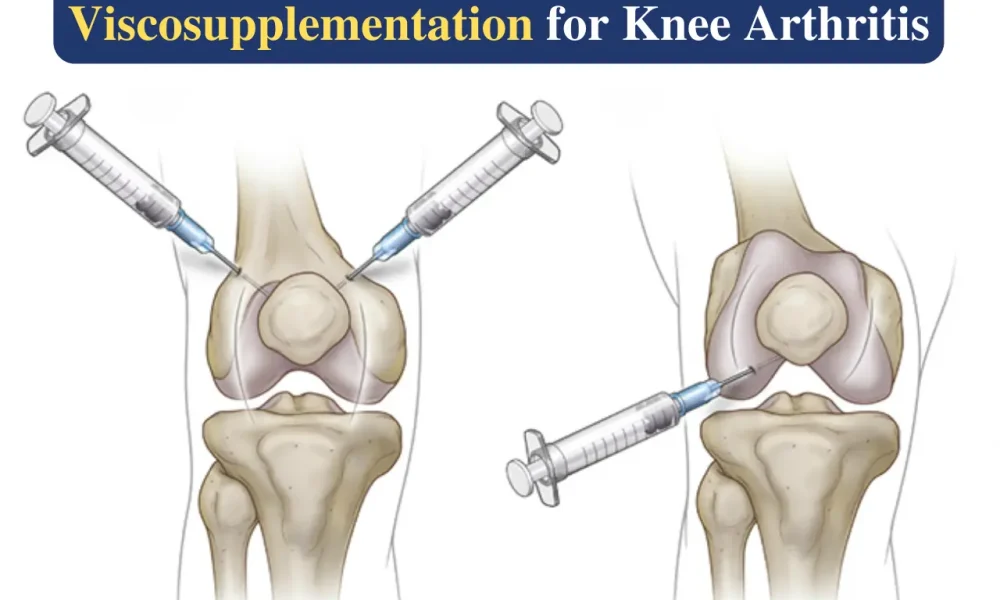
The viscosupplementation market is a key segment within the global orthopedic industry, driven by the increasing demand for minimally invasive treatments that aim to alleviate pain and improve mobility in individuals suffering from osteoarthritis (OA). The market primarily focuses on injectable hyaluronic acid-based therapies, designed to restore joint lubrication and shock absorption, especially in the knee, which is the most commonly affected joint by OA. These therapies are becoming increasingly popular due to their non-surgical nature, short recovery times, and ability to delay or even avoid the need for more invasive interventions such as joint replacement surgery.
As of 2026, the global viscosupplementation market is projected to reach a value of US$3.4 billion, and by 2033, it is expected to grow to US$5.2 billion, expanding at a compound annual growth rate (CAGR) of 6.2% during the forecast period from 2026 to 2033. Several key factors are propelling this growth, including the rising prevalence of osteoarthritis, an aging global population, and an increasing preference for non-surgical, minimally invasive treatments. The demand for viscosupplementation is further supported by advances in hyaluronic acid formulations, such as cross-linked and single-injection products, which have significantly improved patient compliance and clinical outcomes.
Download Your Free Sample & Explore Key Insights: https://www.persistencemarketresearch.com/samples/33245
Key Market Segments and Leading Geographies
The viscosupplementation market is highly dynamic, with a variety of segments contributing to its growth. Knee osteoarthritis (OA) remains the leading application for viscosupplementation, accounting for the highest market share. This is due to the widespread prevalence of knee OA, particularly among aging populations and those with obesity or sedentary lifestyles. Other applications, such as hip, shoulder, and ankle viscosupplementation, are gradually expanding, driven by new clinical evidence and regulatory approvals.
In terms of geographical regions, North America is currently the largest market for viscosupplementation. The region benefits from a high level of awareness regarding osteoarthritis and joint health, as well as favorable reimbursement policies and a strong healthcare infrastructure. The United States, in particular, stands out due to its large elderly population, growing preference for minimally invasive treatments, and the presence of leading viscosupplementation manufacturers. Meanwhile, the Asia-Pacific region is witnessing the fastest growth, fueled by rising osteoarthritis prevalence, an aging population, urbanization, and improving healthcare access.
Key Highlights from the Report
• The global viscosupplementation market is forecast to grow from US$3.4 billion in 2026 to US$5.2 billion by 2033, with a CAGR of 6.2%.
• Knee osteoarthritis remains the dominant segment due to the joint’s susceptibility to wear and tear, driving demand for hyaluronic acid-based treatments.
• Single-injection viscosupplementation products are gaining traction because they reduce hospital visits, needle anxiety, and procedural complexity.
• Technological advancements, such as ultrasound-guided injections and precision delivery systems, are enhancing treatment accuracy and patient outcomes.
• North America leads the viscosupplementation market, driven by high disease awareness, favorable reimbursement, and a robust healthcare system.
• The Asia-Pacific market is the fastest-growing, supported by increasing healthcare access and rising osteoarthritis rates in aging populations.
Market Segmentation
The viscosupplementation market can be segmented based on product type, application, end-user, and regional demand.
Product Type
Viscosupplementation products primarily consist of hyaluronic acid injections, which vary based on their molecular weight and the number of injections required. Single-injection viscosupplementation has become the dominant segment due to its high patient compliance and convenience. Single-injection treatments, such as monovisc and synvisc, are particularly popular because they reduce the number of visits to healthcare providers and allow patients to resume daily activities more quickly. Multi-injection therapies still hold a share of the market but are gradually being replaced by more convenient alternatives.
Application
By application, knee osteoarthritis remains the largest and most established segment for viscosupplementation treatments. Knee OA is a prevalent condition, especially among older adults, and the knee joint is one of the easiest joints to treat with injections. However, other applications such as hip, shoulder, and ankle osteoarthritis are gradually expanding due to increasing clinical evidence supporting the efficacy of viscosupplementation in these joints. Research in these areas is ongoing, and clinical trials are continuously broadening the therapeutic potential of viscosupplementation.
End-User
The end-user segment includes hospitals, orthopedic clinics, and ambulatory surgical centers. Hospitals and orthopedic clinics dominate the market, primarily due to their ability to manage larger patient volumes and provide specialized services such as imaging-guided injections, which improve the accuracy of viscosupplementation administration. Ambulatory surgical centers are also emerging as key players in the market, especially in regions like North America and Europe, where healthcare systems are increasingly focused on outpatient care to improve efficiency and reduce costs.
Get Custom Insights Designed for Your Business: https://www.persistencemarketresearch.com/request-customization/33245
Regional Insights
North America
North America is the largest market for viscosupplementation, led by the United States. The region’s dominance is primarily attributed to high disease awareness, advanced healthcare infrastructure, and favorable reimbursement policies. The aging population in North America is driving demand for non-surgical pain management treatments like viscosupplementation. Moreover, there is a growing preference for minimally invasive treatments, particularly for knee OA, as they allow patients to delay or avoid joint replacement surgery. Technological advancements, such as ultrasound-guided injections and the introduction of single-injection formulations, have further supported the growth of the viscosupplementation market in North America.
Asia Pacific
The Asia Pacific region is witnessing the fastest growth in the viscosupplementation market. Key countries such as China, Japan, and India have large and aging populations, leading to a growing prevalence of osteoarthritis. With increasing disposable incomes and improving healthcare access, more patients in the region are opting for non-surgical treatments to manage joint pain. Additionally, technological advancements like image-guided injections are gaining traction, making viscosupplementation therapies more effective. Government initiatives to promote joint health and better orthopedic care are also contributing to the growth of the market in this region.
Market Drivers
Several factors are contributing to the expansion of the viscosupplementation market. One of the primary drivers is the rising preference for joint-preserving therapies over surgical options. In particular, patients are increasingly seeking treatments that help delay the need for joint replacement surgery, especially younger patients who wish to remain active. Viscosupplementation offers a viable option for pain relief and improved joint function, allowing patients to maintain their quality of life while avoiding invasive surgery. Additionally, technological innovations in injection systems, such as ultrasound-guided delivery, have made the treatment more precise, further driving market adoption.
The aging population worldwide is also a significant contributor to the market’s growth. As people live longer, the prevalence of osteoarthritis and other degenerative joint diseases increases. As a result, there is a higher demand for treatments like viscosupplementation that can manage symptoms without the need for major surgeries. The growing awareness of the benefits of minimally invasive therapies, combined with the increasing availability of treatment options, is accelerating market adoption.
Market Restraints
Despite the promising growth, the viscosupplementation market faces certain challenges. One of the major restraints is the safety concerns linked to avian-derived formulations, which are often derived from rooster combs. These formulations may contain trace amounts of avian proteins, which can lead to allergic reactions in patients with sensitivities to eggs or poultry. While these reactions are rare, the perception of risk can deter both patients and clinicians from opting for avian-based viscosupplementation products, particularly in regions with strict safety regulations, such as Europe.
Another restraint is the high cost of viscosupplementation treatments, which can limit access in lower-income regions or among patients with insufficient insurance coverage. Although reimbursement policies are favorable in regions like North America, they may not be as comprehensive in emerging markets, limiting the market’s expansion in these regions.
Market Opportunities
The viscosupplementation market also presents several significant opportunities. One of the most notable is the development of smart injection systems and image-guided delivery technologies, which promise to enhance the precision and effectiveness of viscosupplementation treatments. These innovations address one of the key limitations of traditional injection methods—variable placement accuracy—and improve clinical outcomes, particularly in complex joint areas like the hip or shoulder.
Furthermore, the growing adoption of single-injection formulations presents a lucrative opportunity. These products offer greater convenience for patients, reduce procedural burdens on healthcare providers, and help improve patient compliance. The development of long-acting formulations that extend the duration of pain relief could also contribute to market growth, as they reduce the need for frequent injections and improve overall treatment satisfaction.
Checkout Now & Download Complete Market Report: https://www.persistencemarketresearch.com/checkout/33245
Company Insights
The viscosupplementation market is highly competitive, with several established players vying for market share. Some of the key companies operating in this space include:
• Sanofi S.A.
• Zimmer Biomet Holdings Inc.
• Bioventus LLC
• Anika Therapeutics Inc.
• Fidia Pharma USA Inc.
• Ferring B.V.
• Seikagaku Corporation
• OrthogenRx Inc.
• Medical Device Business Services, Inc. (J&J)
• AVNS
• Searchlight Pharma Inc.
• Aptissen GmbH
• Teva Pharmaceutical Industries Ltd.
• TRB Chemedica International SA
• IBSA Institut Biochimique SA
Global Viscosupplementation Market Segmentation
By Product
- Single Injection Viscosupplementation
- Three Injection Viscosupplementation
- Five Injection Viscosupplementation
By Application
- Knee Osteoarthritis
- Shoulder Osteoarthritis
- Hip Osteoarthritis
- Others
By Distribution Channel
- Hospital Pharmacies
- Retail Pharmacies
- Online Pharmacies
By Region
- North America
- Europe
- East Asia
- South Asia and Oceania
- Latin America
- Middle East and Africa
Recent Developments:
In February 2024, IBSA UK launched its advanced SINOVIAL range, a new hyaluronic acid product that combines high and low molecular weight hyaluronic acid for enhanced joint lubrication and improved therapeutic performance.
In January 2024, Zimmer-Biomet introduced VISCO-3, a high-molecular-weight hyaluronate therapy for knee osteoarthritis, which demonstrated a 52% reduction in pain within 12 weeks in clinical trials.
Conclusion
The viscosupplementation market is experiencing robust growth, driven by an aging population, rising osteoarthritis prevalence, and increasing demand for minimally invasive joint therapies. With innovations in product formulations, delivery systems, and clinical applications, the market holds substantial promise for continued expansion. However, challenges such as safety concerns related to avian-derived products and high treatment costs remain. Companies that can leverage technological advancements and meet patient demands for convenience and efficacy will likely continue to lead the market in the coming years.




