
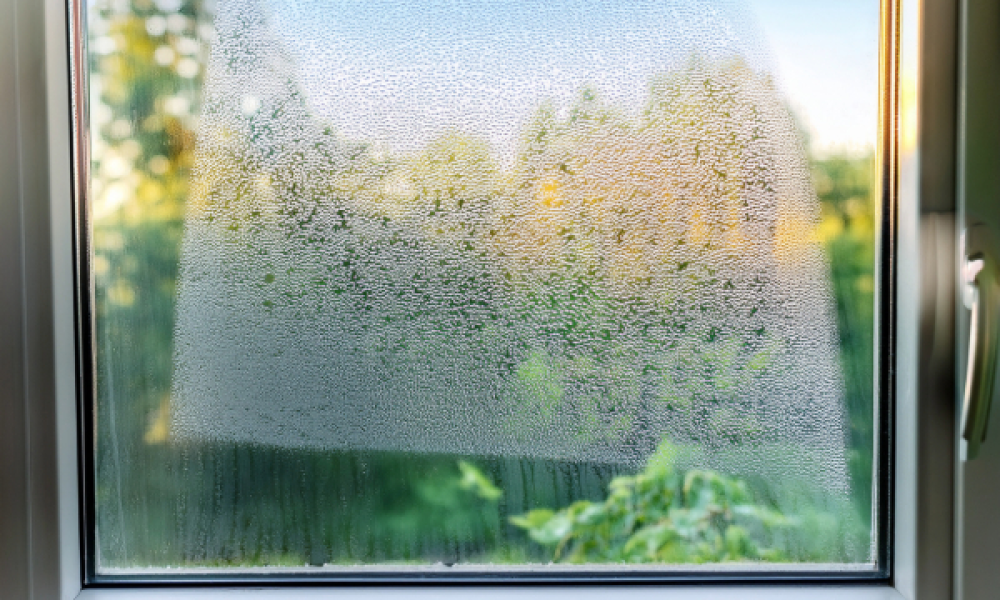
Vinyl window condensation moisture problems are one of the most commonly misunderstood issues homeowners encounter — and the misunderstanding matters because the appropriate response depends entirely on where the condensation is appearing. Moisture on the interior surface of a window, moisture between the panes, and moisture on the exterior surface each point to completely different conditions and warrant completely different responses. Treating an interior condensation problem the same way as a seal failure between panes wastes time and money while leaving the actual issue unresolved.
Interior Condensation: Usually Not a Window Problem
Condensation forming on the interior surface of a window — the glass surface facing into the room — is almost always a sign of high indoor humidity rather than a window defect. Windows are the coldest surfaces in most rooms, which means warm, humid indoor air reaching its dew point deposits moisture there first and most visibly. The window is revealing a humidity problem, not causing one.
This type of condensation is most common in winter when indoor heating raises the temperature while outdoor cold drops the window surface temperature. Kitchens, bathrooms, and laundry areas generate significant moisture that accumulates if ventilation is inadequate. Homes that are tightly sealed for energy efficiency — including homes with newer energy efficient vinyl windows — sometimes experience more visible interior condensation than older, leakier homes simply because the tighter envelope traps indoor moisture more effectively.
The solution to interior condensation is managing indoor humidity rather than changing windows. Exhaust fans in high-moisture areas used consistently during and after cooking, bathing, and laundering, whole-home dehumidification if humidity levels are persistently high, and ensuring adequate ventilation throughout the home address the root cause rather than the symptom.
Between-Pane Condensation: This Is a Window Problem
Moisture or fogging appearing between the panes of a double or triple-pane window is a different situation entirely — and one that does indicate a window defect. The sealed air or gas space between panes is what provides the window’s insulating value. When the seal around that space fails, outdoor air and moisture infiltrate the gap, producing the foggy or hazy appearance that’s visible from inside.
Seal failures between panes eliminate the insulating gas fill and introduce moisture that’s visible as fogging and that can produce mineral deposits on the interior glass surfaces over time. A window with a failed seal is no longer performing at its specified insulating value — it’s conducting heat at a rate closer to single-pane glass than the rated double or triple-pane performance.
For windows still within their warranty period, seal failure is typically a covered defect. Vinyl replacement windows from quality manufacturers carry glass unit warranties specifically for seal failure — which is one of the reasons warranty terms matter when selecting replacement windows rather than defaulting to the lowest-cost option whose warranty coverage may be narrower.
Exterior Condensation: Actually a Good Sign
Condensation forming on the exterior surface of a window — the outside glass surface — often alarms homeowners who assume it indicates a problem. It’s actually the opposite. Exterior condensation forms when the glass surface temperature drops below the outdoor dew point, which happens when the glass is well-insulated enough that it stays cooler than the surrounding outdoor air on humid nights.
This phenomenon — sometimes called cool glass condensation — is more common with higher-performance glass packages because the improved insulation keeps the exterior glass surface closer to outdoor temperatures rather than warmed by indoor heat conducting through a less efficient window. A window that develops exterior condensation under the right humidity and temperature conditions is performing as a good thermal barrier should.
No remediation is needed for exterior condensation — it clears on its own as temperature and humidity conditions change throughout the day.
When Condensation Around the Frame Indicates a Different Problem
Condensation or moisture appearing at the edges of a window, around the frame perimeter, or on the wall adjacent to a window rather than on the glass surface itself points to a different category of issue — either air leakage around the frame allowing warm humid air to contact cold surfaces, or water infiltration from outside getting past the window’s weatherproofing.
Air leakage around an older window frame that has separated from the wall opening or where weatherstripping has deteriorated can cause localized condensation in the frame area and potentially moisture damage to the surrounding wall if it persists. This kind of frame air leakage is one of the performance problems that custom vinyl windows replacement addresses directly — the new frame installation includes proper flashing, sealing, and weatherstripping that eliminates the infiltration paths the old installation developed over time.
Water infiltration from outside — rain or snowmelt getting past the window’s exterior weatherproofing — shows up as moisture in the frame or wall rather than condensation on the glass, and requires inspection of the exterior installation, flashing, and caulking rather than evaluation of the window unit itself.
Getting the Right Diagnosis Before Acting
The most practical first step when any vinyl window condensation moisture problem appears is correctly identifying which surface the moisture is on and what pattern it follows. Interior glass condensation that appears consistently on cold mornings and clears as temperatures rise during the day is almost certainly a humidity management issue. Fogging between panes that persists regardless of temperature or time of day is seal failure. Moisture at the frame edges or on adjacent walls warrants inspection of the installation rather than the glass unit.
The where to buy resource connects homeowners with dealers who can evaluate window performance and determine whether a condensation issue reflects a window defect covered under warranty or a humidity and ventilation issue that needs to be addressed through other means.




