

Overview
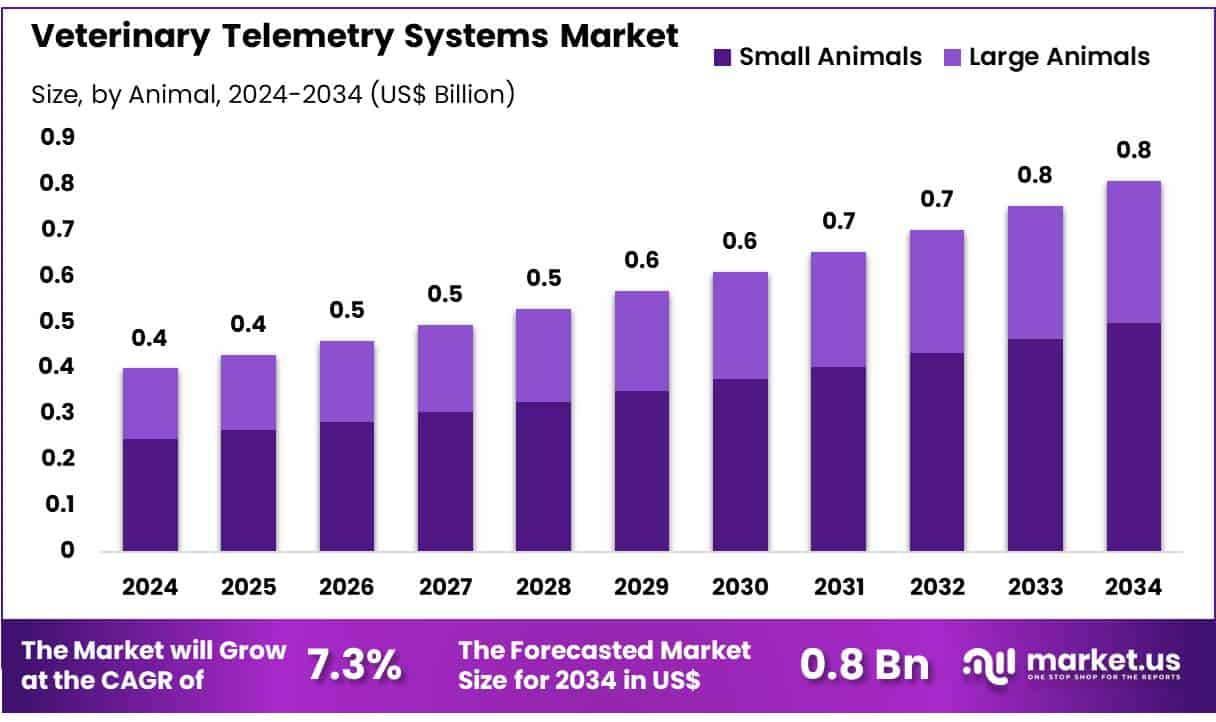
Global Veterinary Telemetry Systems Market size is expected to be worth around US$ 0.8 Billion by 2034 from US$ 0.4 Billion in 2024, growing at a CAGR of 7.3% during the forecast period 2025 to 2034. In 2024, North America led the market, achieving over 38.9% share with a revenue of US$ 0.2 Billion.
The global veterinary telemetry systems market is witnessing notable growth, driven by the rising demand for real-time animal health monitoring and the increasing prevalence of chronic conditions in companion and livestock animals. Telemetry systems, which include wireless monitoring devices that transmit physiological data such as heart rate, temperature, and respiratory patterns, are increasingly adopted in veterinary hospitals, academic institutions, and animal research facilities to enhance diagnostic precision and improve animal welfare.
Technological advancements in wearable sensors, mobile health integration, and cloud-based telemetry platforms are transforming veterinary care by enabling continuous monitoring and early intervention. These systems are particularly valuable in post-operative recovery, intensive care units, and field-based wildlife monitoring.
North America dominates the veterinary telemetry systems market due to the high level of pet healthcare expenditure, rising pet ownership, and growing awareness of advanced veterinary diagnostics. Meanwhile, Asia Pacific is expected to witness the fastest growth rate over the forecast period, supported by expanding veterinary infrastructure and increasing livestock health management initiatives.
The market is segmented by animal type (companion animals and livestock), application (cardiology, neurology, critical care, others), and end-user (veterinary clinics, research institutions, and others). As veterinary care continues to modernize, the demand for reliable and efficient telemetry solutions is expected to grow significantly, enhancing both clinical outcomes and operational efficiency in veterinary settings.
Click here to get a Sample report copy @ https://market.us/report/veterinary-telemetry-systems-market/free-sample/
Key Takeaways
- In 2024, the global veterinary telemetry systems market was valued at approximately US$ 0.4 billion and is projected to reach around US$ 0.8 billion by 2034, growing at a compound annual growth rate (CAGR) of 7.3% during the forecast period.
- By product type, the market is segmented into vital signs monitors, wearables, ECG/EKG monitors, anesthesia machines, accessories, and others. Among these, vital signs monitors emerged as the leading segment in 2023, accounting for a 31.3% share of the total market.
- Based on technology, the market is categorized into compact/tabletop, floor standing, and portable systems. Compact/tabletop telemetry systems held the largest market share, contributing 43.1% to the total revenue in 2023.
- In terms of application, the market is divided into respiratory, neurology, cardiology, and others. The respiratory application segment dominated the market, holding a 36.4% share, driven by the growing need for respiratory monitoring in veterinary care.
- Regarding the animal type, the market is segmented into small animals and large animals. Small animals represented the dominant segment, capturing 61.7% of the total revenue due to higher pet ownership and increasing demand for companion animal care.
- By end-user, veterinary hospitals and clinics held a major share of 68.9%, reflecting widespread adoption of telemetry systems in professional clinical settings.
- Regionally, North America led the global market, securing a 38.9% share in 2023, supported by advanced veterinary infrastructure and growing investments in animal health technologies.
Segmentation Analysis
- Product Type Analysis: The vital signs monitors segment accounted for 31.3% of the market due to increasing demand for continuous health tracking in veterinary settings. Clinics prioritize real-time monitoring during surgeries and intensive care, especially for heart rate, temperature, and blood pressure. Rising chronic conditions among pets and higher preventive care spending drive this demand. Enhanced portability, digital integration, and remote telemetry access contribute to wider adoption, supported by urban pet ownership and regulatory encouragement for advanced monitoring tools.
- Technology Analysis: Compact/tabletop telemetry systems held a 43.1% market share, driven by their space efficiency and affordability. Veterinary clinics, particularly those in urban and semi-urban regions, prefer compact solutions that support multi-parameter monitoring while occupying minimal space. Modular design and ease of integration with digital workflows enhance usability. These systems are increasingly adopted by mobile units and small practices due to their portability and diagnostic versatility, especially as demand for scalable, multi-species monitoring tools continues to grow in outpatient and rural settings.
- Application Analysis: The respiratory monitoring segment led with a 36.4% share due to rising respiratory disorders among pets and livestock. Conditions like asthma, pneumonia, and chronic pulmonary diseases necessitate accurate pulmonary tracking. Non-invasive, high-sensitivity devices now offer early detection, improving outcomes. Anesthesia use in surgeries further drives the need for oxygen saturation monitoring. Field-based and mobile veterinary care benefit from portable respiratory systems. Rising concern over zoonotic transmission also promotes respiratory health assessments across veterinary protocols and specialty clinics.
- Animal Type Analysis: Small animals accounted for 61.7% of revenue, fueled by rising pet ownership and increased healthcare spending for companion animals such as dogs and cats. Urbanization and emotional pet bonding encourage investments in advanced diagnostics. Shorter life spans in small animals necessitate regular telemetry use for early disease detection. Compact, species-specific devices have improved clinical precision. With telehealth growing, remote monitoring is more accessible, while expanding pet wellness centers and tailored breed-care protocols support strong segmental growth.
- End-user Analysis: Veterinary hospitals and clinics dominated with a 68.9% market share due to increasing adoption of advanced telemetry systems for complex care. These facilities use continuous monitoring for preoperative to postoperative phases, supported by cloud-based platforms and electronic health record integration. Expanding pet insurance enables broader access to high-end diagnostics. Corporate veterinary chains, emergency units, and specialty centers increasingly procure comprehensive telemetry setups. Collaboration between device manufacturers and clinical institutions ensures customized implementation and ongoing technology upgrades.
Market Segments
By Product Type
- Vital Signs Monitors
- Wearables
- ECG/EKG Monitors
- Anesthesia Machines
- Accessories
- Others
By Technology
- Compact/ tabletop
- Floor Standing
- Portable
By Application
- Respiratory
- Neurology
- Cardiology
- Others
By Animal
- Small Animals
- Large Animals
By End-user
- Veterinary Hospitals/Clinics
- Others
To Purchase this Premium Report @ https://market.us/purchase-report/?report_id=149988
Regional Analysis
North America dominated the global veterinary telemetry systems market with a revenue share of 38.9% in 2023. This growth is attributed to the increasing emphasis on comprehensive animal healthcare and the rapid adoption of advanced monitoring technologies. The American Veterinary Medical Association (AVMA) has recognized the importance of integrating technology to improve veterinary workflows and patient outcomes.
According to a 2023 AVMA survey, there is a rising interest among veterinarians in adopting remote patient monitoring tools. Additionally, the U.S. FDA’s Center for Veterinary Medicine (CVM) ensures the safety and regulatory compliance of veterinary devices, including telemetry systems, thereby fostering confidence among practitioners and accelerating market adoption.
Asia Pacific is projected to witness the fastest compound annual growth rate (CAGR) during the forecast period, driven by expanding veterinary infrastructure and a growing focus on animal health. The Asia-Pacific Veterinary Federation has reported increased technological integration in veterinary care across the region.
Moreover, digital expansion supports this trend, as evidenced by data from the Telecom Regulatory Authority of India showing that wireless internet subscribers rose to 927.86 million in September 2024. This surge in connectivity enhances accessibility to remote monitoring solutions, further supporting the adoption of telemetry systems in animal healthcare throughout Asia Pacific.
Key Players Analysis
Leading players in the veterinary telemetry systems market are actively pursuing growth through product innovation, strategic collaborations, and global market expansion. Significant investments are being directed toward research and development to introduce AI-enabled monitoring solutions with enhanced connectivity and real-time data integration. Companies are also engaging in mergers, acquisitions, and partnerships with veterinary clinics, academic institutions, and research organizations to strengthen their market presence and broaden their service offerings.
Zoetis Inc., a prominent U.S.-based animal health company, remains at the forefront of the market. The company provides a comprehensive range of diagnostic and monitoring solutions supported by decades of industry expertise, a diverse product portfolio, and an extensive global distribution network. Zoetis continues to drive innovation across both companion and livestock animal segments by integrating advanced technologies and expanding its service footprint through targeted collaborations and product development initiatives.
Market Key Players
- Zomedica Corp
- SunTech
- Smiths Medical
- Nonin
- Medtronic
- Masimo
- BIONET
- Aiforia Technologies Plc
Market Dynamics
- Market Driver: The growth of the veterinary telemetry systems market is primarily driven by the rising demand for continuous, real-time animal health monitoring. An increasing prevalence of chronic diseases among pets and livestock has prompted veterinarians to adopt advanced telemetry devices for improved diagnostics and care. Growing pet ownership, combined with higher spending on animal healthcare, particularly in developed regions, is further supporting market expansion. These factors collectively contribute to greater adoption of smart, data-driven veterinary monitoring solutions.
- Market Trend: A key trend shaping the veterinary telemetry systems market is the integration of AI and IoT technologies into monitoring devices. These innovations enable remote diagnostics, predictive analytics, and automated alerts, enhancing clinical efficiency and decision-making. The development of compact, wearable telemetry systems tailored for different animal species is also gaining traction. Moreover, rising interest in telemedicine and cloud-based platforms allows veterinarians to remotely access and share data, streamlining care delivery and enabling proactive animal health management.
- Market Opportunity: The expansion of digital infrastructure in emerging markets presents a significant growth opportunity for veterinary telemetry systems. Regions such as Asia Pacific are witnessing rapid increases in mobile internet penetration and veterinary service accessibility. These changes facilitate the adoption of portable, connected telemetry solutions, particularly in rural and semi-urban areas. Additionally, growing awareness of animal health and the rising number of veterinary clinics in these regions create favorable conditions for wider deployment of remote monitoring technologies.
Conclusion
The global veterinary telemetry systems market is poised for sustained growth, supported by advancements in monitoring technologies, increasing pet ownership, and a rising focus on animal health. Real-time, AI-integrated solutions are reshaping veterinary diagnostics and care, particularly in hospitals and clinics.
North America remains the leading region, while Asia Pacific is set to witness the fastest expansion due to digital infrastructure development and rising veterinary awareness. Strategic collaborations, product innovations, and increasing veterinary investments globally will continue to drive the adoption of telemetry systems, ensuring improved clinical outcomes and operational efficiency in animal healthcare settings.
View More Reports:
Healthcare Workforce Management Market to Expand at 13.3% CAGR
Healthcare Workforce Management Market to Expand at 13.3% CAGR
Home Health Hub Market to Reach US$ 16.6 Billion by 2034
Medical Recruitment Market to Hit US$ 1.2 Billion by 2034



